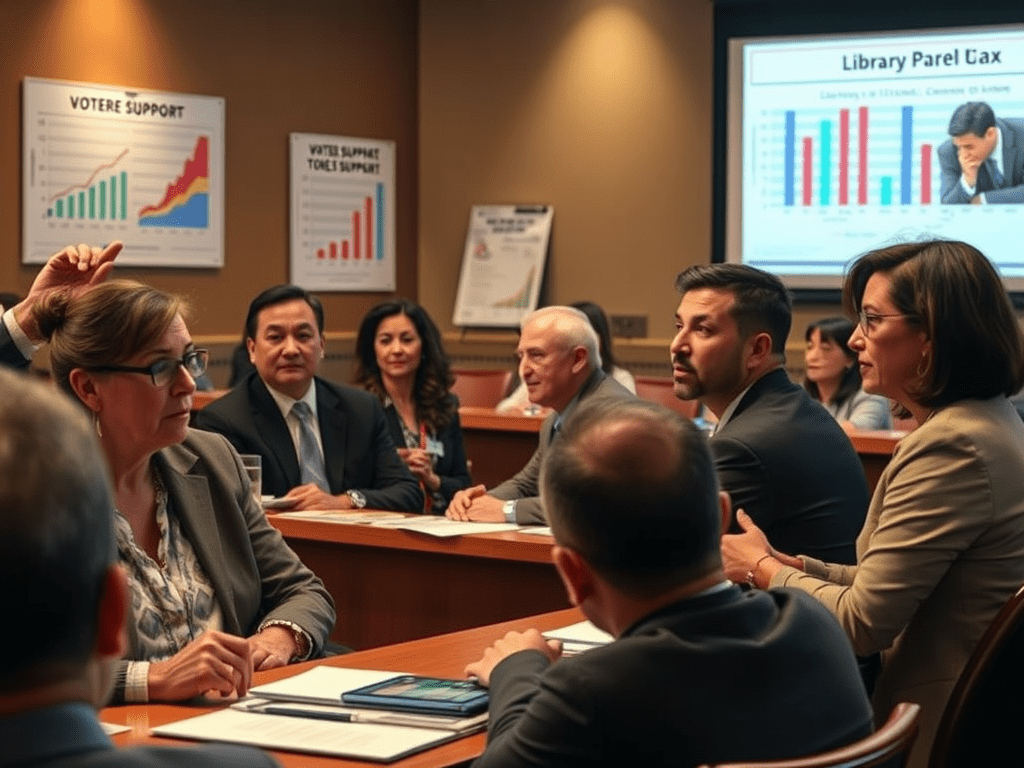
In recent months, the City of El Cerrito has repeatedly claimed to be “neutral” on the proposed parcel tax to fund a new city library. Yet, by the City’s own account, it hired two consulting firms — Godbe Research and the Lew Edwards Group — to measure voter support and assess the feasibility of a potential ballot measure. That’s not neutrality; that’s groundwork for a campaign. The City even hosted a 2024 “workshop” that drew an overflow crowd—an event that appeared more like public outreach than an effort to rally support for the Plaza Transit-Oriented Development (TOD) library project.
The Fine Line Between Information and Advocacy
Under California law, a city may use public funds to gather information, study public opinion, and assess community priorities. That’s legitimate — and often necessary for good governance. But there’s a bright line the law draws: public funds may not be used to advocate for or promote a ballot measure.
California Government Code §54964 makes it clear: cities can inform but not influence. And the state Supreme Court reaffirmed this in Vargas v. City of Salinas (2009):
“A public entity may disseminate factual information about a ballot measure, but may not engage in campaign activity — that is, materials that unambiguously urge the electorate to vote one way or another.”
So, while a city can commission a public-opinion survey, the purpose and tone matter. If the work is designed to test ballot language, identify persuasive messages, or gauge which emotional appeals will generate support, it’s not research anymore — it’s campaigning, paid for by taxpayers.
Who the City Hired Tells the Story
The City’s choice of consultants speaks volumes.
- Godbe Research is widely known for conducting “feasibility surveys” that don’t just measure satisfaction or priorities — they test ballot language, tax thresholds, and voter receptiveness.
- The Lew Edwards Group is one of California’s top political communications firms — and their specialty is running pro-tax ballot campaigns for local governments once measures are ready for the ballot. Both firms have long track records of helping cities win tax elections. They’re not public-policy analysts. They’re campaign strategists. So when El Cerrito hired both firms using public dollars, it wasn’t merely “gauging satisfaction” — it was laying the groundwork for a ballot campaign while maintaining the appearance of neutrality.
The Survey Results — and the Messaging Shift
According to the City’s website, the Godbe survey found that 61% of El Cerrito voters would support a 17-cent-per-square-foot parcel tax to fund a new library. That finding is now being cited as evidence of public backing. But notice what happened: a poll intended to “assess satisfaction and funding options” became the foundation for a political talking point. That shift — from research to narrative — is precisely why California law limits how public agencies use taxpayer-funded surveys.
When the government pays for opinion polling and then uses those results to build momentum for a future ballot measure, it blurs the line between information and advocacy.
Transparency Isn’t Optional
Residents have a right to know how their money is being spent. If the City is hiring campaign consultants under the guise of research, that deserves scrutiny. El Cerrito should release:
- The contracts and invoices for Godbe Research and the Lew Edwards Group.
- The survey instrument — every question asked, in full.
- The scope of work — to determine whether ballot language or message testing was part of the assignment. If these documents show that public funds were used to shape voter sentiment rather than inform internal planning, the City may have violated the spirit — if not the letter — of the law.
A Better Way Forward
A truly neutral approach would look very different. If city leaders believe a new library is essential, they can:
- Present the financial realities plainly, alongside existing infrastructure needs.
- Let citizen groups and independent committees champion a tax measure — using private funds, not public resources.
- Maintain the City’s role as an information provider, not a campaign partner.
Public trust depends on clear boundaries. When government agencies quietly hire political firms to “study” a tax that later appears on the ballot, residents see through the wordplay. They don’t see transparency — they see tactics.
What Residents Can Do
El Cerrito residents deserve a transparent process and honest communication about how public dollars are being used. If you share these concerns, here’s how to make your voice heard:
- Contact the City Council and City Manager
Email your questions and comments directly to El Cerrito’s elected officials and city leadership. Ask them to clarify:
- What was the scope and purpose of the Godbe Research and Lew Edwards Group contracts?
- Were public funds used to test ballot language or campaign messages?
- How is the City ensuring true neutrality around the proposed library tax?
City Council Members - Mayor Carolyn Wysinger: cwysinger@ci.el-cerrito.ca.us
- Mayor Pro Tem Gabe Quinto: gquinto@ci.el-cerrito.ca.us
- Councilmember Lisa Motoyama: lmotoyama@ci.el-cerrito.ca.us
- Councilmember Rebecca Saltzman: rsaltzman@ci.el-cerrito.ca.us
- Councilmember William Ktsanes: wktsanes@ci.el-cerrito.ca.us
City Leadership - City Manager: cmottern@ci.el-cerrito.ca.us
- Ask the City Clerk to Include Your Comments in the Public Record
Send your written comments to the City Clerk and request that they be included in the next City Council meeting packet. This ensures your concerns are part of the official public record.
📧 City Clerk: cityclerk@ci.el-cerrito.ca.us - Share This Information With Your Neighbors and Friends
Transparency starts with awareness. Share this post on community platforms and neighborhood groups. Encourage others to read the contracts, review the survey questions, and ask their own questions at City Council meetings.
Public accountability begins with informed citizens. If the City’s actions are truly neutral, it should have no hesitation answering these questions openly and on the record. Let’s make sure transparency in El Cerrito isn’t just a talking point — it’s a practice.
 El Cerrito Committee for Responsible Government (ECCRG)