Over the past several months, El Cerrito residents have heard several different numbers about the cost of a new library.
First we were told the project would cost about $21 million.
Later, that estimate changed to $37 million.
Neither number tells the full story. Both figures focus primarily on construction and do not include interest payments, long-term maintenance, or ongoing operating costs.
Because the estimates keep shifting, it makes more sense to look at the actual tax residents are being asked to approve.
When you do that, the scale of the proposal becomes much clearer.
The Tax Adds Up to About $186 Million
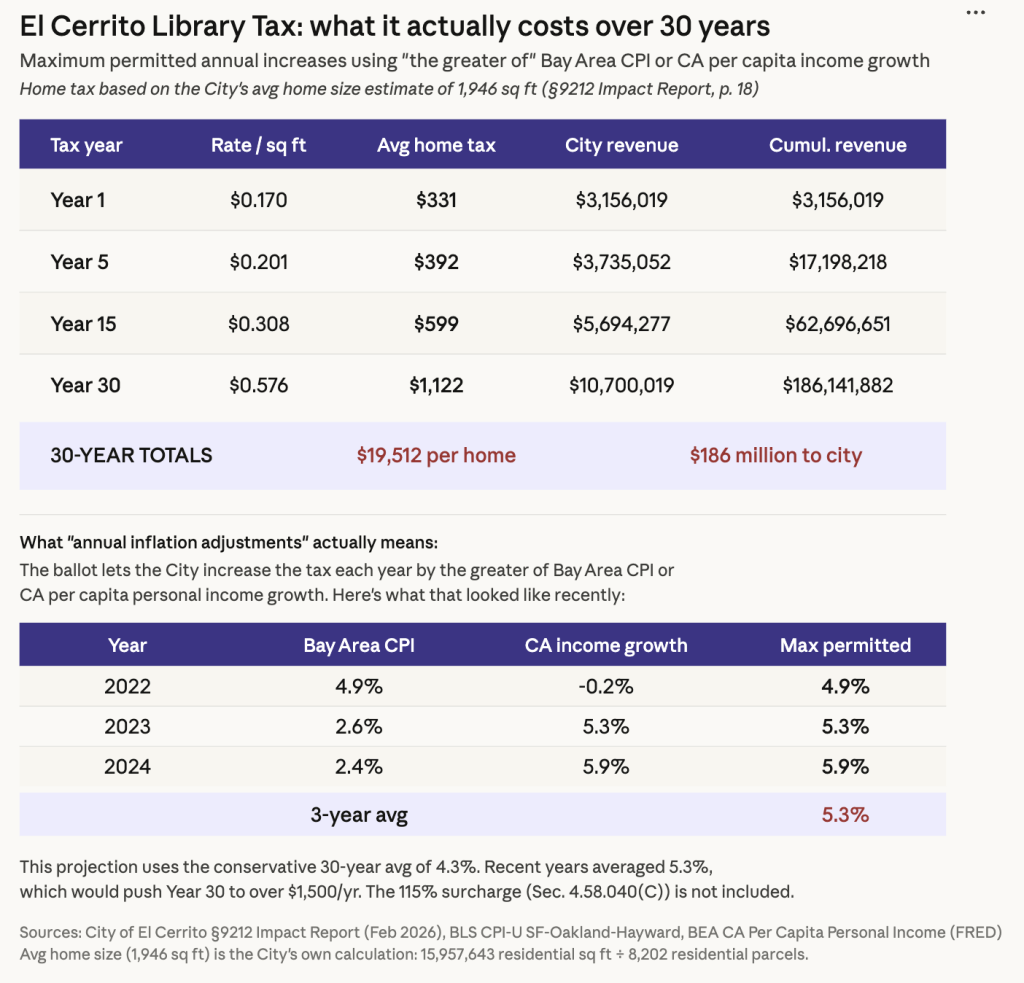
Based on calculations shared publicly by El Cerrito resident Wally, the proposed parcel tax is expected to generate approximately $186 million over 30 years.
For a typical homeowner, that works out to close to $20,000 over the life of the tax.
That number is dramatically larger than the construction estimates residents have been hearing.
Wally created a chart illustrating how the tax grows over time, which helps make the math much easier to understand.
Why the Total Gets So Large
The reason is simple: this tax is designed to increase every year.
Most parcel taxes and school bonds are fixed annual amounts. Once voters approve them, residents know exactly what they will pay each year.
This measure works differently.
It allows the City Council to increase the tax annually using whichever of two inflation indexes is higher. In other words, the tax is structured to automatically grow every single year.
Over a 30-year period, those increases compound. That is why the total revenue generated by the tax reaches roughly $186 million.
What Residents Should Understand
Libraries are important civic institutions, and El Cerrito residents clearly value them. But voters deserve clear and consistent information about the financial commitments being proposed.
When project estimates move from $21 million to $37 million, while the tax structure generates $186 million over time, it raises reasonable questions that deserve careful consideration.
Residents should understand:
• The total amount of tax revenue expected to be collected
• How the annual tax increases work
• Whether the project estimates reflect the full financial picture
Wally’s chart helps illustrate how the numbers add up over time and why the total tax burden is far larger than the construction estimates that have been discussed publicly.
Before voters are asked to approve a 30-year escalating tax, the community deserves a clear conversation about the full scope of the financial commitment.
 El Cerrito Committee for Responsible Government (ECCRG)