Where Did the Money Go?

El Cerrito’s Tax Trail—and Why Voters Should Demand Accountability Before Approving Another $3 Million a Year

For more than a decade, El Cerrito has asked residents to dig deeper into their wallets—promising better services, improved facilities, and stronger community programs. The problem? Despite layer upon layer of new taxes, residents still can’t see where the money went—or what it achieved. Let’s take a look at the record.

A Decade of Promises and General Fund Deposits

2014 – Measure R (Sales Tax Renewal)
Marketed as a way to “protect and maintain city services,” this 1% sales tax was supposed to safeguard police, fire, and library programs. What voters didn’t realize was that Measure R was a general tax—meaning all the revenue flowed into the City’s General Fund, where it could be spent on anything.

2018 – Measure V (Real Property Transfer Tax)
This measure allowed the City to tax home sales up to 1.2%, supposedly to help pay for 911 response, parks, senior services, and youth programs. Once again, the money went straight into the General Fund, without any line-item tracking or transparency on how those dollars were actually used.

2019 – Measure H (Recreation Facilities Tax)
This extended the special tax, initially meant to support the Swim Center and other recreation programs. Voters were told the funds would maintain and improve recreation facilities. Yet in 2025, City staff reported that they had already used unrestricted reserves to fund pool repairs and were now proposing to use even more. If the City collects a dedicated tax for the pool, why are unrestricted General Fund dollars still being diverted to cover the exact costs? What happened to the pool money?

2024 – Measure G (Permanent 1% Sales Tax)
Instead of letting old taxes expire—or showing what they accomplished—the City made the temporary sales tax permanent. They promised to maintain services and prevent cuts, but no clear accountability report has followed.

The Same Pattern, Over and Over

El Cerrito repeatedly tells voters that new taxes will preserve essential services, maintain facilities, and improve the quality of life. Yet every major measure since 2014—sales taxes, the transfer tax, and even the “temporary” ones—have become permanent and gone into the General Fund. That means there’s no guaranteed spending on pools, parks, libraries, or seniors—just a broad pot of money that’s spent however City Hall decides. Meanwhile, the Swim Center needs significant repairs, the Senior Center was shuttered, and the City continues to draw down its reserves while asking for more.

The New “Library Initiative”: A Familiar Story

Now, El Cerrito is asking voters to approve yet another **parcel tax—roughly $3 million per year—**to “fund a new library.” But here’s the truth:

  • The City has no finalized construction plan or guaranteed schedule.
  • The developer lacks full financing for the El Cerrito Plaza project.
  • The City plans to use taxpayer funds to issue bonds—effectively loaning money to the developer.
  • There’s no assurance that the library will ever be built.
    In other words, El Cerrito is asking taxpayers to take on debt and risk before it has demonstrated any track record of fiscal follow-through.

Trust Is Earned Through Transparency

El Cerrito doesn’t have a revenue problem—it has an accountability problem. Residents have shown good faith again and again, approving taxes to invest in their community. But without clear accounting, those votes amount to blank checks. If the City truly wants trust, it should:

  • Publish annual reports showing where every tax dollar was spent, measure by measure.
  • Demonstrate measurable results—before proposing new revenue.
  • Stop using unrestricted reserves to backfill restricted funds.
  • Prioritize fixing what’s broken, not funding what’s unplanned.

The Bottom Line

Until El Cerrito proves it can responsibly manage the money it already has, voters should be cautious about giving City Hall another $3 million a year. Ask yourself:
Where did the pool money go?


What happened to the Senior Center?


And why is the City still draining reserves despite record tax collections?
El Cerrito doesn’t need another tax—it requires a precise accounting and planning.


Do not sign the library campaign and Vote NO on the Library Initiative. Demand transparency first.

El Cerrito Plaza TOD: Delays and Community Concerns

Written by a group of concerned citizens

As concerned citizens of El Cerrito, we’ve followed the City’s plans for the El Cerrito Plaza Transit-Oriented Development (TOD) with great interest — and growing concern. This project was promoted as a showcase of smart growth, featuring dense housing near transit, new retail and public spaces, and a modern library at its heart. But as of November 7, 2025, the plan is years behind schedule. The library remains only a drawing on paper, and the City continues to downplay its own financial and operational involvement.


The City’s Strategic Plan clearly states that a new public library will be located on the ground floor of the Plaza development. Early materials described a six-phase project that would include six residential buildings, combining affordable and market-rate housing, ground-floor retail, and civic spaces, as well as a new library serving as the anchor amenity for the community. According to those same plans, Phase 1 — a 70-unit affordable housing building — was supposed to break ground in 2023 or 2024. The library would be included in Phase 6, the final stage of development.


Nearly two years after the first groundbreaking was expected, no construction has started. The City has celebrated a $39 million state grant and approved a $350,000 City loan to help launch the first phase of affordable housing. Yet the project remains in pre-development, with no building permits issued and no confirmed start date. Even the “late 2025” start once mentioned in City materials has quietly slipped. Every milestone that was supposed to occur before today has been missed. Despite these delays, there has been no comprehensive public update on the project’s financial impact, revised timeline, or the fate of the promised library.


The Plaza development is structured so that later phases depend on the completion and success of earlier ones. In a cooling housing market, developers often pause after the first affordable or mixed-income phases — meaning Phase 6 (the library) could be delayed for years, if not indefinitely. The initial affordable housing phases are expected to qualify for property-tax exemptions, providing minimal revenue to the City. If the market-rate phases stall, the City bears administrative and financial costs without the benefit of new tax income.

The City is not merely an observer. It has already provided a $350,000 loan and committed staff time and grant administration resources. These funds could be tied up for years if later phases are delayed or never built. Despite these investments, the City continues to act as though it’s simply “supporting” the project rather than funding and managing parts of it. Residents deserve accurate information about what has been spent, what has been delayed, and what financial risks exist.

We call on the City Council and City Manager to take the following steps: publish a revised phasing and finance schedule showing updated construction dates for all six phases, including when the library will actually be delivered; disclose all City financial contributions and liabilities, including loan terms, grant conditions, and repayment expectations; prepare a fiscal impact analysis comparing what happens if only the affordable housing phases move forward versus full build-out; and develop a stand-alone library plan, so the community is not forced to wait until the final development phase to see progress on a promised public facility.


This isn’t just about one project — it’s about credibility and fiscal responsibility. When the City commits taxpayer dollars, staff time, and long-term expectations to a private development, residents have a right to know the risks and the timeline. The Strategic Plan clearly promised a library “on the ground floor” of the new El Cerrito Plaza development. Two years later, there’s no foundation, no groundbreaking, and no revised schedule. It’s time for the City Manager to stop treating the Plaza TOD as someone else’s project. The City is financially invested — and so are we, the taxpayers. Until the City provides clear, transparent updates, we remain, respectfully but firmly, concerned citizens who expect accountability for promises made in our name.

🟦 El Cerrito Plaza TOD: Key Facts at a Glance

📍 Project Location: El Cerrito Plaza BART Station (Fairmount & San Pablo)
🏗️ Project Scope: Six-building Transit-Oriented Development (TOD) with affordable and market-rate housing, ground-floor retail, and a new public library.
📘 City’s Promise: The Strategic Plan states that the library will be located on the ground floor of the project.
📅 Original Timeline: Phase 1 (70 affordable units): Planned start 2023–24; Library (Phase 6): Final phase; As of Nov 7, 2025 → No construction has begun.
💰 Public Funds Committed: $39 million state grant for affordable housing; $350,000 City loan approved May 2025; Additional staff time and grant administration costs not publicly reported.
⚠️ Current Status: All major milestones delayed; No building permits or groundbreaking; No confirmed start date for any phase; Library phase several years away.
🏠 Housing Mix & Risk: Early phases: 100% affordable housing; Later phases: Market-rate housing (not yet funded); Affordable units typically exempt from property taxes, limiting revenue to the City.
📉 Fiscal Concerns: City has financial exposure through loans and grants; Project delays mean no new property-tax growth in the near term; Library funding tied to final phase, increasing risk of long delay.
🔍 What Citizens Are Asking For: 1) Transparent phasing and finance update; 2) Disclosure of City loans, grants, and risks; 3) Fiscal analysis for “affordable-only” vs. “full build-out” scenarios; 4) Independent plan to deliver the library.

El Cerrito’s Tax Burden Is Driving People Away

Let’s talk about what no one at City Hall wants to admit — El Cerrito’s taxes are out of control.

Our sales tax rate is among the highest in the region, making even everyday purchases feel like a penalty for shopping locally. Residents are voting with their wallets — going elsewhere to buy groceries, clothes, or hardware. Others have simply given up shopping here altogether. Many now shop online and have their purchases shipped to friends or family members outside of El Cerrito just to avoid paying our inflated local tax rate.

Then there’s property tax — already one of the highest in Contra Costa County — combined with a real property transfer tax that adds thousands of dollars to the cost of buying or selling a home. Together, these taxes make it harder for new families and first-time buyers to move in and build their lives here.

In the unlikely event that the City could make the glorified strip mall at the Plaza TOD a reality, it would never be downtown because sales taxes are prohibitive.

As of the most recent U.S. Census and 2023 American Community Survey estimates, about 27% of El Cerrito’s population is age 60 or older — roughly 7,000 residents out of a total population of about 25,800.

Here’s how that breaks down:

  • Ages 60–64: approximately 7%
  • Ages 65 and older: approximately 20%

In other words, one in every four El Cerrito residents is now over 60, underscoring how rapidly the city’s population is aging — and why attracting younger families is critical to keeping the community vibrant and economically strong.

Instead of raising taxes to hide years of mismanagement, El Cerrito needs leaders who will focus on economic growth, accountability, and efficient use of resources. Prosperity doesn’t come from squeezing residents harder — it comes from making this city a place where people want to live, shop, and invest.

It’s time to elect leaders who understand that strong communities are built on smart strategy — not endless taxation.

If you agree share this blog post with neighbors and friends.

El Cerrito: Tackling Excess Management and High Costs

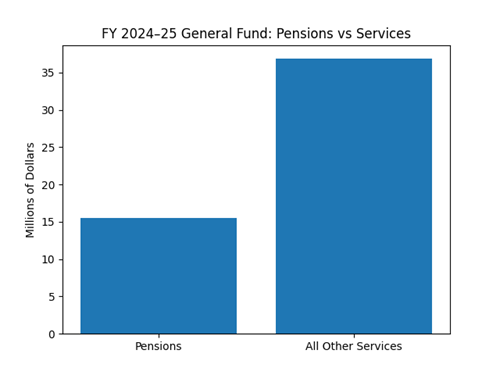
El Cerrito’s $53.8 million operating budget is being stretched thin by payroll and pension costs that far exceed those of neighboring cities. Each year, the city spends about $8.5 million on required pension contributions — nearly 16% of the total operating budget — while still carrying an unfunded pension liability of roughly $83 million. That means taxpayers are paying heavily for promises made long ago, with no clear plan to reduce those costs. This is not sustainable. And it’s not fair to residents who are being asked to pay more and get less.

Payroll Pressure and Pensions That Outpace the Region

The city’s workforce has become increasingly expensive — not because of front-line employees who keep services running, but because of a growing concentration of high-salaried management and supervisory positions. While essential city staff are stretched thin, top-level payroll and pension obligations continue to climb. To put that in perspective, El Cerrito spends more per capita on payroll than many peer cities of similar size, yet offers shorter public hours and fewer community programs. Pension contributions have grown faster than general revenues, crowding out funding for road repair, park maintenance, and library services. Each year the city taps into reserves to close the gap — a telltale sign of structural imbalance.

Too Many Chiefs, Too Little Efficiency

One of the most glaring examples lies in the Fire Department, which maintains four Battalion Chiefs — a structure more typical of larger regional fire districts serving populations two to three times El Cerrito’s size. By comparison, nearby agencies such as Kensington, Albany, and San Pablo rely on shared command structures through regional partnerships, delivering strong emergency response with fewer layers of management. These chiefs’ salaries, benefits, and pension liabilities represent a significant recurring expense. Reducing even one Battalion Chief position could save hundreds of thousands of dollars annually — funds that could instead support equipment upgrades, training, or community fire prevention programs.

City Management Should Model Fiscal Restraint

The City Manager’s Office is another area where the organizational chart has grown thicker without a corresponding increase in transparency or service delivery. The city currently employs a City Manager, Assistant City Manager, Executive Assistant, and additional administrative staff — while smaller or similarly sized cities manage to operate efficiently with fewer executive positions. Streamlining leadership doesn’t mean cutting effectiveness; it means aligning resources with outcomes. At a time when every dollar counts, management must lead by example. Fiscal discipline has to begin at the top — not by reducing library hours, deferring infrastructure, or charging residents more, but by rethinking whether every executive role is truly essential.

Accountability Is a Leadership Responsibility

If El Cerrito’s leaders are serious about long-term fiscal health, they must be willing to look inward. The city cannot continue to fund an oversized management structure while drawing down reserves and postponing capital investments. True accountability means evaluating every department — including leadership — for efficiency, necessity, and impact. Residents deserve to see that management is held to performance and productivity standards.

The Path Forward

The City Council must lead this conversation. That begins with a transparent, data-driven review of executive staffing, compensation, and pension exposure — not as a punitive exercise, but as a commitment to stewardship.

El Cerrito’s financial health depends on honest reflection and decisive action. Reducing administrative overhead, aligning leadership roles with service outcomes, and prioritizing community-facing services over bureaucracy are the building blocks of sustainable governance. Residents should expect — and demand — leadership that reflects those values.

Because fiscal responsibility is about trust.

Is El Cerrito’s Library Tax Too Vague? Key Concerns

The City of El Cerrito has released its official Notice of Intention regarding a proposed library tax measure. At first glance, it reads like a standard statement of purpose. But when you look closer, several key discrepancies emerge—raising questions about transparency, scope, and what residents are truly being asked to support.

The Notice Frames the Tax as a Library Investment, but It’s Actually Broadly Written

The language in the notice repeatedly frames the tax as funding a “new library” and “expanded library services.” However, the measure’s text is not limited to library construction. It allows revenue to be used for a broad array of purposes—including “supporting library services” and “related infrastructure improvements”—without specifying priority or allocation amounts. This leaves open the possibility that significant portions of the revenue could be diverted to other projects that have nothing to do with a new facilityLibrary Notice – Intent.

The City Emphasizes ‘Intent,’ but Provides No Binding Guarantees

The title of the notice itself—“Notice of Intention”—is telling. This is not a legally binding commitment. Nowhere in the measure does the city commit to actually building a new library at the Plaza site, retrofitting the current building, or presenting costed alternatives to the public before collecting the tax. Voter approval would give the city broad taxing authority without a specific deliverable attached.

In other words: the intent can change after the tax passes, and voters would have little recourse to hold the city to its early promises.

Critical Details Are Missing

For a measure that would authorize a long-term tax, the Notice is remarkably silent on key details:

  • Location: The notice doesn’t commit to a specific library site.
  • Costs: No construction cost estimate or lifecycle cost analysis is provided.
  • Timeline: There’s no timeline for planning, design, or construction.
  • Parking & Accessibility: There’s no mention of transportation, parking, or access—key concerns for residents, especially seniors and those living in the hills.

This absence of detail is not accidental; it allows maximum flexibility for the City but leaves voters in the dark.

The Language Suggests an Open-Ended Revenue Source

The measure’s structure suggests that the City could collect the tax for years before any new library is built—if one is ever built at all. By not tying the tax to specific milestones or a bond issuance, the City preserves the ability to use the revenue as a de facto general fund supplement under the banner of “library services.”

Pattern of Vagueness

This is not an isolated instance. El Cerrito has a history of vague ballot measures, followed by post-election pivots that diverge from the original narrative. This pattern erodes public trust. A transparent measure would include specific cost estimates, location options, and guarantees that tax proceeds will be restricted and audited for their intended purpose.


📌 Fact Box: El Cerrito’s Library Tax — Stated Intent vs. Actual Authority

What the City SaysWhat the Measure Actually Allows
“The tax will fund a new library.”The measure does not legally commit the City to building a library at any specific site—or to building one at all.
“Funds will support library services.”The language authorizes broad use of funds for “related infrastructure” and “library services,” leaving room for spending on other projects.
“This is about the Plaza Library project.”The Notice does not specify location, costs, size, parking, or timeline. These decisions could be made after the tax is approved.
“The City intends to build a modern facility.”“Intent” is not a binding obligation. The City can change course after voters approve the tax.
“It’s a library tax.”Without strict earmarks, the revenue can function as a flexible funding source, potentially supplementing the general fund over time.

Why This Matters

Residents are being asked to approve a major, long-term financial commitment based on aspirational language, not concrete plans. The City’s “intent” may sound good on paper, but intent is not a contract. Before signing off on new taxes, voters deserve:

  • Specific location and cost details
  • Clear allocation of funds with legal restrictions
  • A defined timeline with accountability measures
  • Transparency about alternatives and trade-offs

Until the City provides this level of clarity, residents should decline to sign any petitions and vote no on any tax measures tied to vague promises. It’s time for El Cerrito leadership to bring forward a fully developed, transparent plan—not another open-ended tax based on shifting intentions.

Successful Library Funding: Lessons from Nearby Cities

When nearby cities like Pinole, San Pablo, and Albany wanted new libraries, they didn’t rush to tax their residents indefinitely — nor did they ask for three times more than the project actually costs.

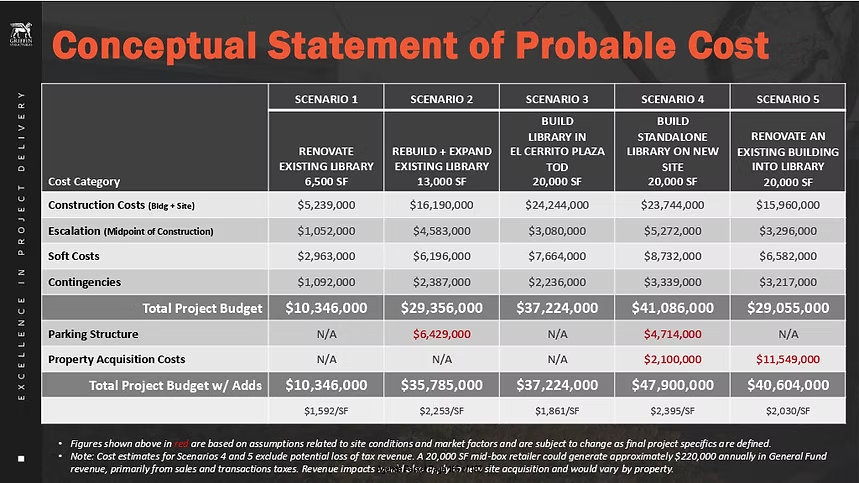
El Cerrito officials claim the new library will cost about $21 million, yet they’re asking voters to approve a tax that collects about $3 million per year for at least 30 years — more than $75 million in total. If the library truly costs $21 million, the question is simple: where does the rest of the money go?

Pinole: Smart Funding, Real Progress

Pinole’s 17,000-square-foot library was funded through a mix of state grants and local support, not an open-ended tax. In 2022, the city secured $2.6 million from the California State Library’s Building Forward program to renovate and modernize the facility — a perfect example of using available state resources before asking residents for more money.

San Pablo: New Library, No Blank Check

San Pablo’s 20,000-square-foot LEED-certified library opened in 2017 — fully funded through a defined $6.5 million capital project, managed within the city’s means. The city worked with Contra Costa County and the state to secure construction funding and avoided any permanent tax burden.

Albany: Sustainable Support Through Transparency

Albany has long supported its library through a time-limited parcel tax, first adopted in 1994, to maintain operations — not to enrich developers or take on speculative debt. The city has explored modest expansion plans, but only with clear costs, defined benefits, and a focus on community needs.

El Cerrito: A Tax Without a Library

El Cerrito is the that didn’t bother to apply for grants and is the only city proposing a forever tax. This proposed tax does not guarantee a library will ever be built. Instead, the city plans to use the new tax as a revenue stream to issue bonds, handing over more than $20 million to a private developer — a developer who still doesn’t have financing in place and whose project is already behind schedule.

The city’s approach is backwards: rather than applying for state and federal library grants — like Pinole did — El Cerrito wants taxpayers to front the first traunch of funding so the developer can try to secure the rest. There’s no plan, no guaranteed timeline, and no assurance the library will be completed in five years, ten years, or ever.

Don’t Be Misled —

The so-called “citizens group” pushing petitions for this tax is led by former mayor Greg Lyman who nearly bankrupted El Cerrito once before. Don’t let history repeat itself.

Vote NO on the library initiative.
Do not sign petitions for another blank-check tax. Demand accountability, transparency, and a library plan that actually serves residents — not developers.

Share this post with your neighbors and friends

El Cerrito Library Tax: Neutrality or Campaigning?

In recent months, the City of El Cerrito has repeatedly claimed to be “neutral” on the proposed parcel tax to fund a new city library. Yet, by the City’s own account, it hired two consulting firms — Godbe Research and the Lew Edwards Group — to measure voter support and assess the feasibility of a potential ballot measure. That’s not neutrality; that’s groundwork for a campaign. The City even hosted a 2024 “workshop” that drew an overflow crowd—an event that appeared more like public outreach than an effort to rally support for the Plaza Transit-Oriented Development (TOD) library project.

The Fine Line Between Information and Advocacy

Under California law, a city may use public funds to gather information, study public opinion, and assess community priorities. That’s legitimate — and often necessary for good governance. But there’s a bright line the law draws: public funds may not be used to advocate for or promote a ballot measure.
California Government Code §54964 makes it clear: cities can inform but not influence. And the state Supreme Court reaffirmed this in Vargas v. City of Salinas (2009):

“A public entity may disseminate factual information about a ballot measure, but may not engage in campaign activity — that is, materials that unambiguously urge the electorate to vote one way or another.”
So, while a city can commission a public-opinion survey, the purpose and tone matter. If the work is designed to test ballot language, identify persuasive messages, or gauge which emotional appeals will generate support, it’s not research anymore — it’s campaigning, paid for by taxpayers.

Who the City Hired Tells the Story

The City’s choice of consultants speaks volumes.

  • Godbe Research is widely known for conducting “feasibility surveys” that don’t just measure satisfaction or priorities — they test ballot language, tax thresholds, and voter receptiveness.
  • The Lew Edwards Group is one of California’s top political communications firms — and their specialty is running pro-tax ballot campaigns for local governments once measures are ready for the ballot. Both firms have long track records of helping cities win tax elections. They’re not public-policy analysts. They’re campaign strategists. So when El Cerrito hired both firms using public dollars, it wasn’t merely “gauging satisfaction” — it was laying the groundwork for a ballot campaign while maintaining the appearance of neutrality.

The Survey Results — and the Messaging Shift

According to the City’s website, the Godbe survey found that 61% of El Cerrito voters would support a 17-cent-per-square-foot parcel tax to fund a new library. That finding is now being cited as evidence of public backing. But notice what happened: a poll intended to “assess satisfaction and funding options” became the foundation for a political talking point. That shift — from research to narrative — is precisely why California law limits how public agencies use taxpayer-funded surveys.

When the government pays for opinion polling and then uses those results to build momentum for a future ballot measure, it blurs the line between information and advocacy.

Transparency Isn’t Optional

Residents have a right to know how their money is being spent. If the City is hiring campaign consultants under the guise of research, that deserves scrutiny. El Cerrito should release:

  • The contracts and invoices for Godbe Research and the Lew Edwards Group.
  • The survey instrument — every question asked, in full.
  • The scope of work — to determine whether ballot language or message testing was part of the assignment. If these documents show that public funds were used to shape voter sentiment rather than inform internal planning, the City may have violated the spirit — if not the letter — of the law.

A Better Way Forward

A truly neutral approach would look very different. If city leaders believe a new library is essential, they can:

  • Present the financial realities plainly, alongside existing infrastructure needs.
  • Let citizen groups and independent committees champion a tax measure — using private funds, not public resources.
  • Maintain the City’s role as an information provider, not a campaign partner.
    Public trust depends on clear boundaries. When government agencies quietly hire political firms to “study” a tax that later appears on the ballot, residents see through the wordplay. They don’t see transparency — they see tactics.

What Residents Can Do

El Cerrito residents deserve a transparent process and honest communication about how public dollars are being used. If you share these concerns, here’s how to make your voice heard:

  1. Contact the City Council and City Manager
    Email your questions and comments directly to El Cerrito’s elected officials and city leadership. Ask them to clarify:
  1. Ask the City Clerk to Include Your Comments in the Public Record
    Send your written comments to the City Clerk and request that they be included in the next City Council meeting packet. This ensures your concerns are part of the official public record.
    📧 City Clerk: cityclerk@ci.el-cerrito.ca.us
  2. Share This Information With Your Neighbors and Friends
    Transparency starts with awareness. Share this post on community platforms and neighborhood groups. Encourage others to read the contracts, review the survey questions, and ask their own questions at City Council meetings.
    Public accountability begins with informed citizens. If the City’s actions are truly neutral, it should have no hesitation answering these questions openly and on the record. Let’s make sure transparency in El Cerrito isn’t just a talking point — it’s a practice.

Why the City Manager Must Communicate Decisions Clearly

We don’t expect a city manager to answer every email. But we do expect her to lead — and that means explaining the why behind major decisions that affect the people she serves.

When residents ask legitimate questions about the library project, bond funding, or use of reserves, they deserve clear answers — not silence or redirection.

BART responded promptly and directly when asked about the project’s timeline, parking, and ground lease terms. They didn’t dodge questions or hide behind the process. They answered.

Our city manager did not. Nor did Greg Lyman who represents the city.

If the city manager cannot defend or pre-emptively explain a decision, it’s likely an ill-advised one.

Because sound decisions can withstand scrutiny. They invite questions, welcome discussion, and demonstrate how public dollars serve public purpose. When leaders avoid explaining their choices, it raises legitimate concerns — not just about the decision itself, but about the process behind it.

An unexamined decision is often one made in haste, without adequate analysis, stakeholder input, or long-term planning. That’s not leadership — that’s risk management disguised as governance.

In a well-run city, transparency isn’t a burden; it’s evidence of confidence. A city manager who truly understands and believes in the rationale for her recommendations would be eager to explain them. The unwillingness to do so suggests one of two things: either the reasoning is weak, or the public reaction has been underestimated. Both reflect poor judgment.

Residents have every right to expect their city’s top administrator to articulate not just what the city is doing, but why. When that explanation never comes, it tells the community everything it needs to know about how decisions are really being made — and for whom.

Leadership isn’t about managing perception. It’s about managing truth.

The Newsletter Problem

The city’s monthly newsletter could be an incredible opportunity — a chance for the city manager to speak directly to residents, share updates on projects, and build confidence in how funds are managed.

Instead, it’s a missed opportunity.

Each edition is filled with cheerful recaps of events and reminders of what already happened. Nice, but hollow. There’s no acknowledgment of the city’s challenges, no explanation of how decisions are made, and no commitment to residents’ long-term well-being.

If leadership won’t be transparent in a newsletter, how can we trust them with tens of millions of new debt for a library bond?

A city newsletter should not merely promote — it should inform, educate, and engage. A leader confident in her decisions would use it to demonstrate stewardship, not avoidance. Leadership isn’t about curating good news; it’s about telling the whole story, including the uncomfortable parts.

What’s Still Unanswered

Project: Proposed El Cerrito Library at the BART station

1. Tax Credits and Architectural Plans
When will the developer apply for tax credits, and will drawings be released before voters decide on the bond?
➡️ BART’s response: “Please consult Related or the City.”

2. Timeline and Potential Delays
What are the chances of another delay?
➡️ BART’s response: “Depends on market conditions and housing finance availability.”

3. Ground Lease Terms
Who are the parties to the agreement?
➡️ BART’s response: “Between BART and the City of El Cerrito.”

4. Parking for Library Patrons
Will residents be able to use BART lots?
➡️ BART’s response: “No agreement currently exists.”

5. Competitive Bidding for Construction
Will there be open competition?
➡️ BART’s response: “Please consult Related or the City.”

Before the Vote

Voters are being asked to trust the City with millions in new debt. But trust must be earned through openness, not avoided through silence.

Residents deserve clear answers to basic questions about cost, transparency, and long-term fiscal responsibility.

If the city manager cannot explain how the agreements are structured or how the risks will be managed, she should not be asking for our trust.

Good intentions don’t replace good governance. Transparency is not optional.

Because if a decision cannot be defended, it shouldn’t be funded.

If you agree, share this post with neighbors and friends.

influenced by social media posts and comments.

El Cerrito’s $21 Million Library Bond: A Ponzi Scam Disguised as Civic Investment

The City of El Cerrito is pressing residents to approve a tax so they can secure a $21 million bond to construct a 20,000 sq ft library. But make no mistake: this bond is less about serving the public and more about benefiting the developer and bailing out the city for mismanagement and inflated staffing.

Outdated Studies, Dubious Promises

Officials claim this blueprint is the result of “years of careful study.” What they fail to disclose is that the last serious study was done in 2014—years before digital library use became the norm, before the pandemic, and before the city’s fiscal position deteriorated.

They also promise this plan will “save $10 million”, but they have not produced a single piece of documentation to back that up.

No Alternatives, No Transparency

Perhaps most troubling, the city has not offered residents a single alternative to meet library needs.

No serious evaluation has been presented on retrofitting the existing building, adding a second floor, adapting existing commercial spaces like Marshalls or other vacant retail properties, or pursuing smaller, more fiscally responsible designs. Nothing.

Instead, we are being presented with one expensive, developer-driven vision—take it or leave it.

How Much Will We Pay?

City officials like to say “it’s just a dollar.” In reality, every property owner will pay at least $300 per year, whether the library ever gets built or not. El Cerrito residents pay nearly $3 million per year – at least $75 million + over 30 years for the privilege of paying one dollar rent.

The reality is that El Cerrito could build, retrofit and move into the Barnes N Noble building for $75 million! Instead they’re pushing a ground floor space in an apartment building.

Meanwhile, El Cerrito carries over $80 million in unfunded pension liabilities, has a long history of chronic overspending, and only recently climbed out of the bottom 3% of all California cities on the State Auditor’s fiscal risk list. Despite City Hall’s rosy rhetoric, El Cerrito still ranks in the bottom 20% statewide in financial health.

A Ponzi Scam in Disguise

This bond isn’t really about libraries. It’s essentially a Ponzi scheme: new tax dollars are presented as an investment in the community, but the annual tax revenue is actually diverted into the general fund to cover existing budget deficits. The city conveniently fails to fulfill its promises. Each new measure is added on top of the previous ones, with no structural solutions in place — just new revenue streams to keep the excessive spending and structural inefficiencies running.

Staffing Levels: A Key Driver of Costs

El Cerrito’s staffing structure is significantly larger and more expensive than peer cities of similar size. This isn’t just about “overhead” — it’s a major driver of the city’s $80+ million unfunded pension liability. No other city of comparable population carries a pension burden anywhere near this magnitude.

📊 Fact Box: El Cerrito Staffing vs. Peer Cities

CategoryEl CerritoSan PabloAlbanyHercules
Population~25,000~31,000~20,000~26,000
Fire DepartmentCity-run with 4 Battalion ChiefsRegional fire district (no city battalion chiefs)City-run with 1 Battalion ChiefRegional fire district (no city battalion chiefs)
City Manager’s OfficeCity Manager + Assistant City Manager + Executive Assistant, plus staffCity Manager + Assistant City Manager + support staffCity Manager + Assistant to City Manager City Manager + 1 Administrative Specialist
Unfunded Pension Liability$80+ million — unprecedented for a city this sizeSignificantly lowerSignificantly lowerSignificantly lower

👉 Extra management layers and high fire command staffing have directly contributed to ongoing costs, especially the city’s unfunded pension liability, which burdens current and future budgets year after year.

Broken Oversight Promises: History Repeats

This pattern has played out repeatedly:

  • Oversight committees are promised up front.
  • Once measures pass, City Manager Karen Pinkos redirects the revenue into the general fund, where transparency evaporates.
  • The City Council asks only softball questions, providing no meaningful check. She is never sent back to the drawing board — no matter how flimsy the plan.

A clear example is the pool parcel tax approved by voters in 2000 (Measure A). Residents have paid this tax for decades, yet the city has not set aside enough for maintenance, and now millions more are needed to keep the facility operational. The 2018 Property Transfer Tax followed a similar pattern: promised oversight never materialized, and service levels continued to decline.

A 20,000 sq ft Library in the Digital Era?

At a time when people increasingly access information online, a massive 20,000 sq ft library is financially irresponsible. Sure, neighboring cities have 20,000 ft²; however, those were built a long time ago, when that was more appropriate. However, there’s no longer a need for El Cerrito.

This is not about modernizing services — it’s about creating a permanent new revenue stream for a city that refuses to live within its means.

Follow the Money — Not the Marketing

They call it a library measure; it’s really a budget shell game.
They say “it’s only $1”; we pay $300 a year.
They promise oversight; the money disappears into the general fund.
They promise savings; they show no proof.


They promise transparency; they offer none.

The truth is simple: El Cerrito’s ongoing pension obligations and inflated staffing costs are driving the need for new revenue streams, and library bonds are just the latest tool to plug those gaps. Instead of restructuring spending and addressing the $80+ million pension liability, the city keeps returning to taxpayers for more.

This bond is not a public benefit. It’s a Ponzi scheme, using future tax revenue to patch over today’s budget problems. El Cerrito deserves better than developer giveaways, inflated staffing, skyrocketing pension liabilities, and a City Council that refuses to hold leadership accountable.

What Residents Can Do

El Cerrito’s finances won’t change unless we act. For too long, city leadership has made promises it hasn’t kept, redirected funds from their intended purposes, and expanded overhead while essential services stagnate. This library bond is simply the latest chapter in a long pattern of fiscal misdirection.

Here’s how residents can push back:

  • Don’t sign the petition to place the library bond measure on the ballot.
  • If it does appear on the ballot, vote NO.
  • Reject any new tax or bond measure for this library until the city demonstrates transparency, explores alternatives, and gets its financial house in order.
  • Support and elect new city leaders who are fiscally responsible, who prioritize core services, and who will hold the City Manager accountable instead of rubber-stamping whatever is put in front of them.

El Cerrito doesn’t need more taxes. It requires leaders who will spend wisely, address the $80+ million pension hole, and focus on basic services that residents actually rely on.

It’s time for a change.

El Cerrito’s Pattern of Tax-and-Fade Governance

El Cerrito has a long history of asking residents to approve new taxes with big promises — only to quietly reroute those funds into the general fund once the measure passes. The result? Broken commitments, deferred maintenance, and declining trust. Time after time, residents have voted in good faith, believing they were investing in specific services or facilities. Yet the outcomes tell a different story.

2008 – The Streets Tax That Paved the Way for Decline
In 2008, voters approved a tax to maintain and repair El Cerrito’s streets, sold as an investment in public safety and infrastructure. For years, the city touted an impressive pavement condition index (PCI) of 85 — among the best in the region. But recently, that number has dropped to 68, a steep decline signaling years of underinvestment and neglect. Where did the money go? Instead of being protected for street work, much of it was absorbed into the general fund, losing the accountability that residents were promised.

2018 – Measure V: The Real Property Transfer Tax That Delivered Real Disappointment
Measure V was framed as a way to fund community services, including programs for seniors. The tax brought in far more money than projected — a financial windfall. But instead of expanding services, the city reduced them and permanently shuttered the senior center. That’s not fiscal prudence; it’s fiscal bait-and-switch. The tax revenues became a flexible line item rather than a tool for community enrichment.

2019 – Measure H: The Recreation Tax That Left Residents Holding the Bag
Measure H was supposed to maintain the swim center and support local recreation. Yet today, the city is short several million dollars for basic swim center repairs. Community groups have been forced to fundraise on their own just to maintain functional facilities. Residents paid the tax; the city pocketed the funds; and the “recreation improvements” never fully materialized.

2024 – Measure G: A Safety Measure That Didn’t Secure Safety
The latest example, Measure G, relied on a fear-based campaign — warning that rejecting it would harm public safety. Voters approved it believing it would stabilize fire and police services. But soon after, the City Council publicly struggled to find money to replace a 15-year-old fire engine or update EMS equipment. The funding supposedly guaranteed for safety disappeared into the same opaque budget pool as before.

NOW – The Proposed Library Tax: Another Promise on Thin Ice
Now the city is asking for yet another tax — this time for a library tied to the delayed Transit-Oriented Development (TOD) project. The plan shifts risk away from developers and squarely onto taxpayers, with automatic annual increases tied to two separate indexes. The tax will even pay for expanded library hours at a time when library use is declining — and without dedicated parking. The library itself may be years, even decades, away. The project is already behind schedule, and library advocates have retracted several of their earlier claims about the proposal.

So, are you expecting this tax to actually produce a library any time soon? El Cerrito’s track record suggests otherwise.

Each time, the story repeats: a persuasive campaign, a narrowly targeted tax, and then the quiet transfer of funds into the general fund, where oversight fades. Residents deserve better — transparency, accountability, and results that match the promises.

It’s time for El Cerrito to stop using taxpayers’ trust as a blank check.

Influenced by a concerned citizen’s post.

Leadership Accountability in El Cerrito: Beyond Crisis Management

El Cerrito runs three fire stations, each with at least one fire engine. A standard fire engine has a 15-year lifespan, and one of El Cerrito’s engines has already reached that limit. According to the Fire Chief, it has required significant and costly repairs and should have been replaced years ago. During the June budget discussion, City management acknowledged the issue but only set aside partial funding for a new fire engine — not enough to cover the full cost. From management’s own report: “As reported earlier this year, the City’s Type 1 fire engine, housed at Station 52, is beyond its expected useful life of 15 years.” Fire engines have known life cycles. This didn’t sneak up on anyone. Yet instead of a disciplined capital renewal plan that anticipates replacement schedules for all essential assets, El Cerrito once again finds itself reacting to a preventable crisis. When cities treat predictable asset needs as emergencies, they waste taxpayer dollars on one-off, unplanned purchases. This is not fiscal management — it’s financial triage.

Bundling Crisis and Safety Spending with the Pool

At the October 21 Council meeting, management introduced an agenda item titled “Study Session – Update on Swim Center Lap Pool Renovation Options and Discussion of Capital Expenditures.” But instead of focusing solely on the pool, the discussion folded in other crisis and safety-related expenses — including the overdue fire engine — effectively combining multiple large purchases into one broad item.

What should have been a transparent discussion about the pool’s safety and repair needs turned into a bundled spending authorization. Management claimed prices were rising and requested that the council bypass normal Brown Act protections to approve a $1.6 million expenditure without advance public notice. The council agreed 4–1. Only Councilmember William Ktsanes voted no, showing respect for open governance, fiscal transparency and using reserves for their intended purpose.

The Larger Issue

This isn’t about one fire engine or one pool. It’s about leadership. El Cerrito has been urged for years to develop a Capital Renewal Plan—a structured, transparent roadmap for maintaining and replacing critical assets such as fire engines, facilities, and equipment. Instead, leaders continue managing by crisis, waiting for something to break before finding money to fix it. Reactive government is expensive government. Each time the city “discovers” an urgent need, it dips into reserves, reclassifies funds, or raises new taxes — while long-term priorities like the library remain unplanned and underfunded.

There’s another troubling pattern. When the City Manager wants to delay a decision, she ensures it’s not listed as an action item — framing it as “for information only” to prevent a vote. But when she wants to push something through, she’s willing to disregard the Brown Act and rush approval for items that weren’t properly agendized. That inconsistency erodes public trust and undermines the very transparency that open government laws are designed to protect.

The Leadership Challenge

Leaders stuck in constant firefighting can’t focus on growth. Urgent issues crowd out strategic priorities. It’s time to elect leaders who understand that strategy isn’t a buzzword — it’s a way of conducting yourself. El Cerrito deserves a government that plans ahead, manages responsibly, and earns public trust through transparency and foresight.

When “Act Now” Becomes “Pay More Later”

Tuesday’s City Council meeting was yet another reminder of why El Cerrito residents struggle to trust city leadership. What was presented as a simple discussion about the pool turned into something far more revealing — and far more troubling.

Councilmember Rebecca Saltzman echoed a familiar refrain: we’d better do it now, because prices will only go up. It’s a convenient argument — and politically appealing — but dangerously incomplete. Prices continuously rise over time. The real question is whether the City has done its due diligence to ensure that what it’s buying is justified, efficient, and sustainable. In this case, it has not.

What Saltzman and others overlook is that prices don’t just rise — they increase significantly even triple when you skip the homework. When a city fails to conduct reasonable inquiry, verify assumptions, or scrutinize long-term financial impacts, taxpayers pay the price — again and again.
It’s the same “rush now, reconcile later” approach that sent BART to the fiscal cliff.

Decisions made under the guise of urgency may feel bold in the moment, but they’re almost always born from a failure to ask the right questions.

Bundling, Blurring, and Burying the Truth

Item 9B — “Swim Center Lap Pool Renovation Options” — should have been straightforward. Instead, it quietly bundled an entirely separate issue: the replacement of a fire truck.


That was not disclosed in the agenda title, nor communicated in advance to the public or the Council. Only during the meeting did staff reveal that both the pool and the fire vehicle would be discussed together, with overlapping funding considerations and unclear implications for the City’s already-strained reserves.

It’s not just poor communication; it’s poor governance. When leadership allows key spending decisions to be obscured by vague or misleading presentation, and under the guise of an emergency, it erodes the very trust that transparency is supposed to build.

Misleading Numbers and Misguided Confidence

Finance Manager Claire Coleman told the Council that the City meets its 17 percent fund-balance goal — but that statement only holds if you combine the emergency reserve with unrestricted funds.


The emergency reserve is not a piggy bank. It exists for earthquakes, fires, or natural disasters — not fiscal mismanagement. Counting it toward the City’s operating cushion is like claiming you’re financially secure because you haven’t yet touched your 401(k).
This accounting sleight of hand presents a rosy picture while ignoring the hard truth: El Cerrito continues to spend down reserves that it cannot afford to replace.

A Pattern, Not a Mistake

These lapses aren’t isolated. They are part of a pattern — one that prioritizes expedience over evidence. Each time the City rushes a decision without a clear, long-term plan, it reinforces a culture of reaction instead of reflection.
If El Cerrito wants residents to believe in its fiscal stewardship, its leaders must prove they are capable of discipline, not just decision-making. The public deserves a council that probes, questions, and demands comprehensive analysis — not one that defaults to fear of higher future costs as a justification for spending now.

The Bottom Line

El Cerrito’s leadership needs to remember: “We better do it now” is not a strategy. It’s an excuse.


Sound financial management means asking: what are the trade-offs? What are the long-term impacts? How will this affect reserves, debt, and future priorities?

Until those questions are answered — publicly and transparently — residents have every reason to remain skeptical.


It’s time for leadership that values accountability over urgency, prudence over panic, and truth over talking points.

Call to Action: Demand Accountability Before Another Dollar Is Spent

El Cerrito residents must insist on more than empty assurances and rushed votes. Before authorizing another withdrawal from the City’s reserves, the Council should be required to request a comprehensive fiscal impact analysis that details how each expenditure affects reserves over the next five years; a public justification for bundling unrelated items — like the pool renovation and fire truck purchase — into a single discussion; and a clear accounting of dedicated funds, such as the existing pool tax, to show exactly how those dollars have been used.


Email your Councilmembers. Attend the next meeting. Ask the hard questions. Because if city leadership won’t exercise due diligence on its own, it’s up to residents to demand it.


Transparency is not a courtesy — it’s a covenant between the government and the people it serves. Let’s hold El Cerrito accountable for it.

The Bait and Switch on the Agenda

Tuesday’s City Council meeting was another reminder of why El Cerrito residents struggle to trust city leadership. What was presented as a straightforward discussion about the pool quickly turned into something else entirely.

Item 9B, titled “Swim Center Lap Pool Renovation Options,” bundled in an entirely separate need — the fire truck replacement. That wasn’t mentioned in the title, and neither the public nor the Council was given advance notice that this significant expenditure would be folded into the same presentation.

The discussion was already contentious, but not because of the pool itself — rather, because of the city’s use of reserves. Residents have long been frustrated that El Cerrito continues to draw down its limited reserves while insisting it’s on stable financial footing. The pool already has its own dedicated tax, yet the city now plans to use even more reserves to cover repair costs.

To make matters worse, Finance Manager Claire Coleman indicated that the General Fund meets the City’s 17% fund balance goal, but that figure is misleading. It only appears to meet the target because she combined the emergency reserve with unrestricted funds—even though the emergency reserve is legally and fiscally intended for true emergencies, not general spending. Presenting the numbers this way paints an overly optimistic picture of the city’s financial health.

For a city that claims to prioritize transparency, this kind of last-minute bundling feels like a bait-and-switch. It would have been easy to tell the public — and the Council — that the presentation would include a fire department vehicle purchase alongside the pool renovation. Instead, that revelation came mid-meeting, without a clear distinction between what was for information and what might require action.

This is dysfunction at its highest. The Council and the public deserve clarity, not surprises.

The agenda illustrates the problem:

  • Item 9A: A proposed increase in pay for El Cerrito firefighters
  • Item 9B: Ostensibly about pool renovation, yet also addressing unrelated capital needs

Each of these items carries significant fiscal implications, yet none provides a clear long-term strategy. Staff even acknowledged that several of the proposed options would push reserves below the City’s minimum target — right around the time the proposed library might break ground.

And while the staff report lists the pool and fire truck among the city’s “essential needs,” a replacement library to substitute an already functional one doesn’t appear anywhere on that list.

Residents deserve better than this level of confusion and misdirection. Transparency isn’t optional — it’s the foundation of good governance. When the City hides major expenditures behind misleading agenda titles, it reinforces the very mistrust that leaders claim to want to overcome.

It’s time for the City to stop playing hide-and-seek with its finances and start communicating honestly.

El Cerrito’s Borrowing Dilemma: Prioritizing Costs


Borrowing for the future means paying for the past first.

El Cerrito’s Fiscal Snapshot
Bond Rating Update: Upgraded September 9, 2025


Outstanding Pension Liability: Over $80 million (CalPERS)


New Borrowing Planned: Library construction bond, Fall 2025


Untrstricted General Fund Reserves: Below the recommended GFOA target of 15% and City Policy of 17%


Risk: Rising long-term costs despite temporary credit improvement

On September 9, the City of El Cerrito announced its new bond rating — a moment the City Manager quickly highlighted as evidence of progress. But as October unfolds, the City is preparing to borrow money to build a new library while an $80-plus million pension liability looms in the background. That’s a problem we can’t afford to ignore.

During the last four years, the City has not demonstrated that a library is a true priority — yet now it is asking taxpayers to fund one so it can borrow money on behalf of the developer. The developer should be responsible for securing its own financing; it is, after all, their project.

Moreover, El Cerrito is not in a financial position to act as both the anchor tenant and the funding agent for the El Cerrito Plaza development — particularly not through another parcel tax. Residents should not be expected to shoulder long-term debt to subsidize a private development that has yet to prove its public benefit or fiscal sustainability.

There are far more pressing needs: addressing pension costs, rebuilding unrestricted reserves, replacing an aging fire engine, and ensuring police and fire personnel have the tools they need to keep residents safe. These are the investments that strengthen the city’s foundation and protect its future.


A bond rating is not a celebration; it’s a reflection of risk. It signals how investors view our city’s ability to repay debt — not how responsibly we manage the money we already have. The fact that El Cerrito must again rely on borrowing should raise serious questions about priorities and fiscal discipline.


If the City truly wants to demonstrate financial responsibility, it should be using its borrowing capacity to address its $80 million pension liability — not adding new debt for non-essential projects. Paying down long-term obligations would strengthen the city’s fiscal position, reduce future costs, and rebuild public confidence in how taxpayer dollars are managed.


The role of a city manager is not only to execute the council’s policies but also to uphold the public’s trust through proactive, transparent communication. Residents deserve to know how every major financial decision affects our city’s future. The bond rating may look good on paper, but fiscal health is more than a number — it’s about responsibility, sustainability, and honesty.


It’s time to ask: are we building a stronger community, or just a bigger balance sheet?
Residents are encouraged to write to the El Cerrito City Council and ask how borrowing for a new library addresses the city’s $80 million pension liability and long-term fiscal stability. True transparency requires explaining not only what the City plans to build, but also how it plans to pay for what it already owes.

Contact the El Cerrito City Council
📧 Mayor Carolyn Wysingercwysinger@ci.el-cerrito.ca.us
📧 Mayor Pro Tem Gabe Quintogquinto@ci.el-cerrito.ca.us
📧 Councilmember Lisa Motoyamalmotoyama@ci.el-cerrito.ca.us
📧 Councilmember Rebecca Saltzmanrsaltzman@ci.el-cerrito.ca.us
📧 Councilmember William Ktsaneswktsanes@ci.el-cerrito.ca.us
📧 City Clerk (for public comment distribution)cityclerk@ci.el-cerrito.ca.us


El Cerrito City Council’s MOU: Long-Term Costs and Impacts

Tomorrow, the El Cerrito City Council will vote on a new Memorandum of Understanding (MOU) with the United Professional Firefighters Local 1230, which includes modifications to salary and benefit language and an appropriation of $120,116 from the General Fund’s unassigned balance.
On the surface, that may sound routine — a standard labor adjustment. But beneath the surface lies one of El Cerrito’s deepest financial challenges: the city’s ongoing reliance on reserves to balance the budget instead of addressing the long-term fiscal impact of labor negotiations.

The Structural Problem

Each year, the city negotiates salary and benefit increases without conducting a meaningful analysis of how those changes affect future pension liabilities, long-term staffing costs, or service levels. The result is a budget in which 16% of the operating budget — about $8.5 million — goes to CalPERS pension payments, and nearly every available dollar is consumed by personnel-related costs.
That leaves almost nothing for the things residents care about most:

  • Repairing the Swim Center
  • Reopening the Senior Center
  • Investing in the Library
  • Maintaining parks, sidewalks, and basic infrastructure

A Pattern That Can’t Continue

This MOU, like others before it, is being funded from the General Fund’s “unassigned balance” — in other words, from reserves. This marks another withdrawal, this time $120,116, from funds that were never meant to cover ongoing expenses.
These withdrawals may seem minor in isolation, but over time, they have become routine, steadily depleting the city’s financial cushion. This exact pattern — drawing from reserves year after year to balance the budget — is what landed El Cerrito on the State Auditor’s High-Risk List.

Reserves are supposed to stabilize a city during emergencies or unexpected downturns. In El Cerrito, they have become a crutch for unsustainable spending.

The Missing Analysis

Most cities conduct long-term fiscal modeling when negotiating MOUs — examining how salary increases affect pension costs, health benefits, and the city’s ability to fund services over five or ten years.
El Cerrito does not.
That’s why the city’s pension contributions have ballooned to $8.5 million annually, even as facilities deteriorate and residents are asked to consider new taxes.

Fiscal Impact

Fiscal YearAdded CostNotes
FY 2025-26$268,968Includes an appropriation of $120,116 from the General Fund unassigned balance
FY 2026-27$661,352Projected to further draw on unrestricted reserves, which will fall below GFOA recommended levels (15 % of annual expenditures)
FY 2027-28$964,837Will be formally adopted in the next budget cycle
Context
  • Annual CalPERS Pension Costs: ≈ $8.5 million (≈ 16 % of the operating budget) – other similar sized cities pay about $4 million or less
  • Unfunded Pension Liability: Over $80 million and growing
  • Result: Ongoing labor cost growth continues to outpace revenue growth, reducing available funds for community services like the Senior Center, Library, and Swim Center repairs.Packet

Staffing Levels and Their Cost

El Cerrito continues to maintain one of the highest staffing levels per capita in West Contra Costa County — higher than San Pablo, Albany, and Hercules, all of which deliver comparable or broader services with fewer employees.
The difference matters. Each additional position doesn’t just add to payroll — it increases CalPERS contributions every year and permanently adds to the city’s unfunded pension liability, now exceeding $80 million.
San Pablo and Hercules, by contrast, have kept staffing lean and redirected savings toward capital projects and community programs. El Cerrito’s approach does the opposite: using reserves to fund recurring payroll and benefit costs, then cutting or delaying community investments when the reserves run low.

What Residents Should Ask

As the City Council considers this MOU, residents deserve answers:

  • What is the total long-term cost of this agreement, including pension implications?
  • How will the city sustain this commitment without depleting reserves?
  • Why does El Cerrito continue to staff above peer cities while falling behind on services?
  • When will the city begin labor negotiations that align compensation with sustainable service delivery, not just short-term fixes?

We Agree — Fair Wages Matter

We agree that employees should be paid a fair wage. Public servants play an essential role in keeping the community safe and functional. But fairness must go hand in hand with fiscal responsibility.


The city should always understand the long-term cost of any agreement — including its effect on future budgets, reserves, and pension obligations. It should also consider staffing levels in relation to population, workload, and fiscal capacity.
El Cerrito is already overtaxed, and residents should not be asked to contribute more simply to maintain unsustainable spending patterns.

It’s Time for Fiscal Honesty

Responsible budgeting means ensuring that today’s agreements don’t compromise tomorrow’s services.


Until the city links labor negotiations and staffing decisions to long-term financial planning, every new contract will quietly widen the gap between what El Cerrito spends on itself and what it delivers to residents.

Stay Informed

The City Council meeting will be held on Tuesday, October 21, 2025, at 6:00 p.m. at City Hall and via Zoom.
Residents can review the Firefighters MOU beginning on page 139 of the official agenda packet, available on the city’s website or directly at el-cerrito.org.
Reading the whole document before the meeting ensures residents understand how each new agreement affects our reserves, services, and long-term fiscal health.

Why El Cerrito Needs a Capital Renewal Plan Now

El Cerrito residents already pay a dedicated pool tax, yet the City Council is now considering using more of the General Fund reserves to repair the Swim Center’s lap pool. This isn’t about a lack of funding — it’s about how the City has managed (or failed to manage) the money it already collects.

A Tax With a Purpose

Voters approved the Measure H Recreation Facilities Tax specifically to maintain and repair parks and the Swim Center. Over the years, it has generated millions in restricted revenue intended to prevent precisely what’s now happening: costly, urgent repairs.

Those funds were supposed to build a reserve for capital renewal, ensuring that core assets like the Swim Center could be repaired on schedule rather than through one-off bailouts from the General Fund.

What the Staff Report Says

The staff presentation (Agenda Item 9B) asks the Council to “provide direction regarding use of the General Fund balance” for FY 2025-26 to cover the lap-pool renovation Packet. The report outlines cost options for resurfacing and mechanical repair, but stops short of explaining why the Recreation Fund and Measure H proceeds aren’t sufficient.

It’s a telling omission. The very existence of the pool tax should make a General Fund draw unnecessary — yet the City is poised to dip into reserves that are already relied upon to balance annual operations.

The Pattern

This move reflects a larger pattern in El Cerrito’s financial management:

  • Dedicated revenues are routinely diverted to cover short-term operational gaps rather than long-term capital upkeep.
  • Reserves are used as a plug, not a cushion.
  • No true capital replacement plan exists to track facility lifecycle needs, leaving taxpayers to fund the same assets twice — first through special taxes, then again through emergency appropriations.

In 2021, the city declared a “fiscal recovery.” But continuing to drain reserves for predictable repairs undermines that progress and re-creates the structural deficit that residents were promised had been solved.

Why This Matters

The lap pool is only the latest example. Without disciplined planning, the same cycle will repeat with the Community Center, library, or street infrastructure. Each time, officials cite “unexpected” costs, even when those costs were entirely foreseeable.

The Fix

If El Cerrito is serious about fiscal stewardship, it must:

  1. Audit Measure H collections and expenditures to show how much was spent on actual Swim Center maintenance.
  2. Restore the Recreation Fund reserve and prohibit transfers out for non-capital uses.
  3. Adopt a capital-renewal schedule that allocates annual funding from tax proceeds before any new discretionary spending.

Bottom line:
El Cerrito residents already pay for a functioning pool. They shouldn’t have to pay for it again through the City’s dwindling reserves. Using the General Fund to backfill what should have been funded all along is not maintenance — it’s mismanagement.

El Cerrito’s Leadership Problem: Passion Without Performance

Rising costs, shrinking services, and weak fiscal oversight are signs of a city led by well-meaning advocates—not disciplined stewards.

El Cerrito residents are paying more but getting less. Service delivery has declined, costs have risen, and the city has repeatedly drawn on its reserves to balance its budget. The result: a community with stretched public services, deferred maintenance, and limited accountability.

Despite these clear warning signs, our City Council and oversight bodies have delivered little in the way of improved service outcomes or fiscal discipline. The city’s own history tells the story: three of the current council members (Lisa, Gabe, and Carolyn) sat on the dais when El Cerrito was placed on the California State Auditor’s High-Risk List for fiscal mismanagement. The same patterns continue today.

A Council Long on Passion, Short on Performance

  • Mayor Carolyn Wysinger and Mayor Pro Tem Gabe Quinto are both deeply passionate about their communities. Their years of local politics are real and heartfelt. However, passion alone doesn’t address structural deficits, eliminate operational inefficiencies, or produce credible financial plans.
  • Councilmembers Lisa Motoyama and Rebecca Saltzman bring significant experience in affordable housing and regional transportation. But their focus remains overwhelmingly on housing issues — often at the expense of broader service delivery, public safety, infrastructure maintenance, and fiscal stewardship. Rebecca’s record at BART underscores this concern. During her 12 years on the BART Board, she repeatedly voted to increase budgets even as ridership and service levels plummeted to a fraction of pre-pandemic usage, driving the agency toward a fiscal cliff that now threatens Bay Area transit as a whole. That pattern — expanding spending without a credible plan for sustainability — should concern El Cerrito residents.
  • Councilmember William Ktsanes, elected in 2024, is the lone member consistently emphasizing fiscal responsibility and resident’s needs and priorities. His background in finance and public administration has brought a badly needed perspective to the dais — but he is outnumbered.

Oversight in Name Only

Where are the successful business people, engineers who could have oversight on procurements or people who have the appropriate backgrounds to build a healthy and sustainable city management team?

The city’s oversight structures — financial committees, advisory boards, and regional liaisons — have not meaningfully improved performance. Budget shortfalls are patched with temporary fixes, reserves are depleted, and service levels continue to erode. Residents experience it daily: slower response times, neglected facilities, and a growing sense that government is reactive rather than strategic. In short, many of them cling to the status quo, which has not been effective since the 2008 recession.

Time for New Leadership

El Cerrito cannot afford more years of the same. We need candidates who bring fiscal discipline, operational know-how, and a deep commitment to measurable outcomes — not just good intentions or single-issue platforms. Passion and housing policy matter, but they are not substitutes for sound governance.

The next election cycle presents residents with an opportunity to change course. It’s time to elect leaders who will safeguard public resources, demand accountability, and focus on delivering the reliable, efficient services our community deserves.

El Cerrito Needs Fiscally Responsible Leadership — Not More Endorsements of the Status Quo

Courtney Helion has formed a campaign committee to run for El Cerrito City Council again in 2026, which signals that either Gabe or Carolyn will not seek re-election. In her previous campaign, Courtney was backed by former Mayor Greg Lyman, who helped send the city into near bankruptcy, is a proponent of new taxes and also served as her treasurer.

Courtney doesn’t have her own platform but rubber stamps the status quo. She supports the Plaza Station library proposal and has publicly praised City Manager Karen Pinkos for her performance, including in financial matters. She has previously opposed re-establishing a senior center, stating that seniors should be part of an intergenerational group rather than having a dedicated facility.

Courtney ran two years ago, and throughout every forum and conversation, it was evident that she lacked a clear understanding of the issues facing El Cerrito residents and had no demonstrated financial acumen. Despite this, she continues to offer strong opinions about the city’s performance and is firmly supporting the proposed forever tax.

These positions make one thing clear: Courtney represents a continuation of the same approach that has led El Cerrito into its current financial and service delivery challenges. If you think El Cerrito needs real fiscal discipline, independent thought leadership, and improved services, it’s time to look elsewhere.

The Stakes Couldn’t Be Higher

El Cerrito faces significant financial challenges — from an $80 million+ unfunded pension liability to long-term budget gaps that have been papered over with one-time revenues and new taxes. While services have declined, the City has continued to grow its overhead costs and pursue expensive capital projects without transparent analysis or clear community benefit. Residents are asked to trust broad promises while concrete plans and financial tradeoffs remain vague.

Adding to the concern is Courtney’s political backing. Her endorser and former campaign treasurer, Greg Lyman, served on the City Council during the period when El Cerrito was placed on the California State Auditor’s “High Risk” list — one of the most fiscally distressed cities in the state at the time. His leadership was central to the decisions and inaction that created the conditions for that designation.

What the City doesn’t need is another councilmember who will rubber-stamp the City Manager’s agenda. Karen Pinkos has overseen years of fiscal mismanagement and service deterioration. Adding another ally to the council will not lead to better financial oversight, more effective prioritization, or greater alignment with community needs.

What El Cerrito Needs

Our city needs leaders who:

  • Understand municipal finance and can scrutinize staff recommendations rather than simply endorse them.
  • Prioritize core services that impact daily life — public safety, maintenance, senior services, and community programs — before committing to expensive legacy projects.
  • Listen to residents and weigh tradeoffs transparently, not after decisions are effectively made.
  • Provide independent oversight of staff, not act as an extension of the City Manager’s office.

Residents Have a Choice

El Cerrito’s future depends on the choices we make at the ballot box. We can continue down a path of financial instability and diminished services by electing candidates who align themselves with the same leadership that put us on the state’s high-risk list. Or we can choose leaders who are fiscally responsible, independent, and committed to serving the community — not just City Hall.

Residents should scrutinize candidates carefully, ask hard questions about their financial understanding and priorities, and support those who will demand accountability and make sound, community-centered decisions. El Cerrito deserves better than more of the same.

El Cerrito’s Selective Spending: Expert Voices Without Expertise

From a recent social media discussion.

At the October 7 City Council meeting, the Council considered authorizing an additional $391,000 to Ghirardelli Associates for “construction management services” related to the El Cerrito Del Norte Transit-Oriented Development Complete Streets Project.

This wasn’t a competitive bid. It was a contract extension, justified by claims that the original 25% contingency “buffer” wasn’t enough and that more money was needed to “prevent further delays.”

Let’s be clear: when a project overruns its design costs by 25% or more, the issue is either incompetence or greed—and both should trigger scrutiny, not a rubber stamp.

Meanwhile, there is reportedly a $4 million surplus in the account. Instead of applying those funds to reserves per the City’s established waterfall system, the City rushed to spend it—pushing contract extensions and shovel-ready items through with minimal pushback.

Problematic “Expertise” at the Podium

One particularly concerning aspect is the role of a recent appointee to the Financial Advisory Board (FAB). This individual frequently speaks at Council meetings, presenting himself as both a “concerned citizen” and an informal financial expert. However, his public statements during FAB meetings and City Council sessions demonstrate a lack of understanding of public finance, public policy, and other essential elements of financial expertise. Additionally, there is no significant effort on his part to grasp El Cerrito’s complex fiscal history. Despite this, he speaks with an air of authority, and the Council often treats his comments as if they carry institutional weight.

This is deeply problematic. FAB members are not authorized to speak on behalf of the body unless specifically directed. If the Council wants an official FAB position, they need to request it through proper channels—so the board can review, deliberate, and issue a unified recommendation. Anything less is misleading to the public and undermines the purpose of civic oversight bodies.

The Council’s willingness to accept such poorly informed input—and to approve costly contract extensions with minimal resistance—shows just how weak the Council has become in El Cerrito. City manager Pinkos proposes, the Council nods along, and the public is left footing the bill.


It also raises a fair question: How was he appointed to the Financial Advisory Board without a financial background? The answer seems obvious — someone in city leadership wanted him there.

Weak Oversight, Predictable Outcomes

Selective spending like this is why trust is eroding. Residents see pet projects and consultant fees move swiftly, while basic service delivery stagnates and long-term liabilities remain woefully underfunded.

Change Starts With the Ballot Box

There are two City Council seats up for election in November 2026. If residents want stronger oversight, smarter financial management, and real accountability, it starts by electing better leaders.


Councilmembers are not passive observers—they are elected to represent the community’s interests, ask hard questions, and ensure responsible stewardship of public funds.


Right now, they’re not doing their job. But the community has the power to change that. Concerned citizens have been vocal on platforms like Nextdoor. The next step is organized civic action.

📝 Fact Box: $391,000 Ghirardelli Contract Amendment

  • Date: Tuesday, October 7, 2025
  • Action: Contract amendment (not new bid)
  • Amount: $391,000 increase
  • Reason: Original contingency buffer insufficient
  • Project: El Cerrito Del Norte TOD Complete Streets
  • Surplus: $4 million in account
  • Oversight: Weak council pushback, no FAB formal review

Summary

El Cerrito’s pattern of selective spending is clear: consultant contracts get extended without competitive bidding, surplus funds are spent down quickly rather than managed prudently, and weak oversight allows it all to continue. At the October 7 meeting, the Council approved a $391,000 contract amendment with little resistance, influenced in part by an individual presenting himself as an expert despite limited financial background. This is happening while basic service delivery continues to lag and long-term financial issues remain unresolved.


If El Cerrito is to improve its financial discipline, residents must pay close attention to how their tax dollars are being allocated — and who is shaping those decisions.

Thoughtful, informed engagement matters, especially when existing oversight structures are underutilized or ignored.


Share your thoughts. Here are the current City Council members and their contact information:

Too Many Staff, Too Little Service

Staffing Levels: A Key Driver of Payroll, Pension Costs, and Declining Productivity

El Cerrito’s staffing structure is significantly larger and more expensive than those of peer cities of similar size. This isn’t just about “overhead” — it’s a major driver of payroll and pension costs that are consuming the city’s operating budget.

The city’s $53.8 million operating budget is being consumed by payroll and pension obligations at a rate far higher than comparable cities. Each year, El Cerrito pays roughly $8.5 million in required pension contributions — that’s nearly 16% of the entire operating budget before a single service is delivered. On top of that, the city carries an unfunded pension liability of approximately $83 million, a long-term obligation that dwarfs those of neighboring jurisdictions. No other city of similar size shoulders this level of financial burden.

When such a large share of the budget goes toward pension costs and payroll, fewer resources remain for street maintenance, facilities, public safety services, or community programs. And despite this heavy spending, service levels have declined rather than improved.

Yet despite higher staffing levels and higher payroll costs, El Cerrito delivers fewer services. Twice the staff should mean cleaner streets, better-maintained facilities, and exceptional service. Instead, residents are seeing cutbacks in maintenance, deteriorating infrastructure, longer response times, and shrinking library hours.

📊 Fact Box: El Cerrito Staffing vs. Peer Cities

CategoryEl CerritoSan PabloAlbanyHercules
Population~25,000~31,000~20,000~26,000
Fire DepartmentCity-run with 4 Battalion ChiefsRegional fire district (no city battalion chiefs)City-run with 1 Battalion ChiefRegional fire district (no city battalion chiefs)
City Manager’s OfficeCity Manager + Assistant City Manager + Executive Assistant, plus staffCity Manager + Assistant City Manager + support staffCity Manager + Assistant to City Manager / PIOCity Manager + 1 Administrative Specialist
Unfunded Pension Liability$80+ million — unprecedented for a city this sizeSignificantly lowerSignificantly lowerSignificantly lower

👉 Extra management layers and high fire command staffing have directly contributed to escalating payroll and pension costs, which now crowd out funding for basic service delivery.

It’s Time for Change

El Cerrito’s residents deserve better than rising payroll costs, ballooning pension obligations, and shrinking services. For too long, city leadership has expanded staffing without demanding measurable results.

It’s time to elect leaders who are fiscally responsible and committed to objective performance standards — especially at the management level. Every dollar spent on excess layers and inefficiency is a dollar that could be spent improving streets, facilities, and public services.

Residents have the power to change the direction of the city. Support candidates who will demand accountability, set clear performance metrics, and ensure that staffing levels translate into tangible results for the community.