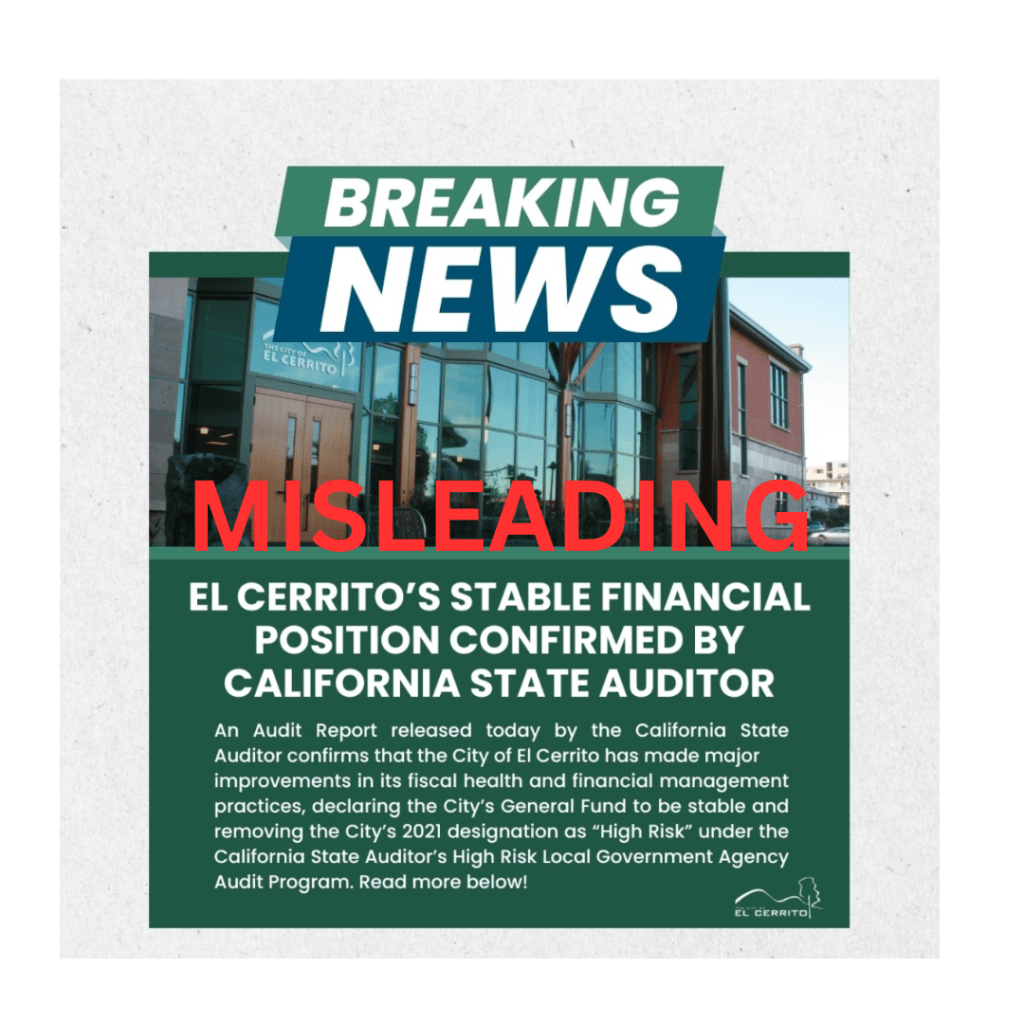
The City of El Cerrito has recently announced its removal from the California State Auditor’s High-Risk Local Government Agency Audit Program. While this may sound like a victory, it’s important to understand what this actually means. The “high risk” designation applies to only the worst 3% of cities in California. Being removed from this list doesn’t signify true financial stability—it simply means the city is no longer among the absolute worst financial performers.
Persistent Financial Challenges
El Cerrito’s removal from the high-risk list doesn’t erase its ongoing financial issues. Here are some of the most pressing concerns:
Unfunded Liabilities:
The city still carries significant unfunded pension and retiree health liabilities, which pose a serious risk to its financial future. The amount of $89 million owed to Cal Pers exceeds the entire operating budget amount.
2. Non-Disclosure of Unrestricted Reserves:
Transparency is still lacking. The city has yet to disclose the state of its unrestricted reserves, leaving residents in the dark about the true financial health of their community.
3. High Payroll Costs with Flat Revenue:
El Cerrito continues to have the highest payroll per capita in Contra Costa County. For a city of its size, this level of expenditure is unsustainable and diverts funds from other critical needs. Worse yet, with flat revenue, the high payroll cost will continue to drain on unrestricted reserves, leaving the city vulnerable to future financial crises.
Don’t Be Misled
Residents should not be misled by the city’s announcement. Removal from the high-risk list is not a declaration of financial health—it simply means El Cerrito is no longer at the absolute bottom. The city’s financial stability is still precarious, and critical issues like unfunded liabilities, excessive payroll costs, and the lack of reserve transparency remain unresolved and over 400 cities in California are more financially stable.
Call to Action: Demand Accountability
Residents must take action to ensure their voices are heard. It’s vital to hold the City Council accountable for addressing these persistent financial issues and for improving transparency in fiscal management.
We urge citizens to contact the City Council and City Clerk to express their concerns. Specifically, request that your letters or emails be included as part of the public record in the meeting packet. This ensures that your concerns are not just heard but are formally documented.
How to Take Action
1. Write a letter or email to the City Council expressing your concerns about the city’s financial management and lack of transparency.
2. Request that your correspondence be included in the meeting packet for the next City Council session.
3. Follow up by attending council meetings or reviewing the meeting materials to ensure your voice is represented.
Conclusion
El Cerrito’s announcement may seem like progress, but the truth is far less reassuring. Don’t be misled. While being removed from the high-risk list is a step forward, the city’s finances remain unstable and need serious reform. El Cerrito risks falling into fiscal disarray without addressing issues like unfunded liabilities, lack of unrestricted reserves, and unsustainable payroll costs. Residents must stay vigilant and demand greater transparency and accountability from their local government to secure a sustainable future.
 El Cerrito Committee for Responsible Government (ECCRG)