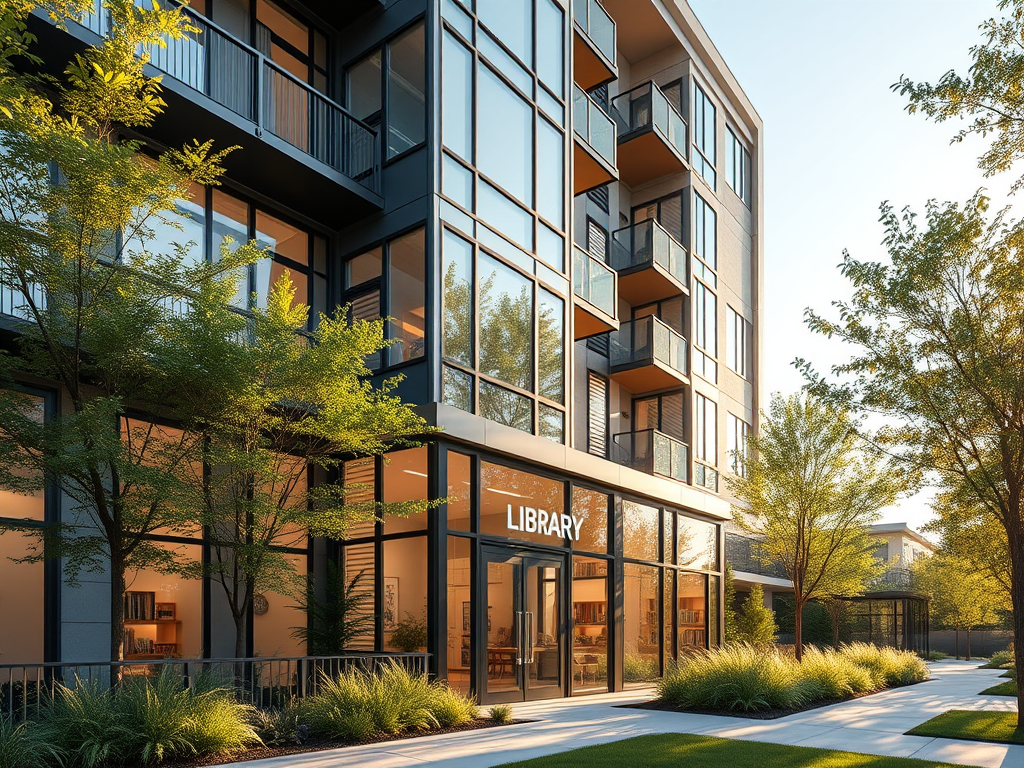
El Cerrito voters are being asked to approve a June ballot measure that would fund a 20,000-square-foot library with a price tag that is extraordinarily high for a city of this size—an assumption rooted in outdated usage patterns rather than current reality. Library foot traffic has declined structurally, not temporarily, as residents increasingly rely on digital access and shorter, purpose-driven visits. Peer cities are responding by building smaller, more flexible libraries aligned with modern demand. A right-sized library for El Cerrito would likely range from 9,000 to 14,000 square feet maximum.
Approving a significantly larger building would lock residents into decades of higher operating and maintenance costs for space that may never be fully used. This document explains why size—and an exceptionally high price tag—are critical reasons this proposal deserves scrutiny.
Another Reason the Proposed Library Deal Misses the Mark
El Cerrito Is Being Asked to Overbuild for a Use Pattern That’s Declining
In June, El Cerrito voters will be asked to approve a library project that assumes the city needs — and should permanently maintain — a 20,000-square-foot library.
That assumption deserves scrutiny.
Not because libraries aren’t valuable.
But because how libraries are used has fundamentally changed — and this proposal does not reflect that reality.
Foot Traffic Is Down — and That Matters
Across California and nationally, in-person library visits have declined over time. This is not a short-term or post-pandemic anomaly; it reflects a structural shift driven by:
- Digital books, audiobooks, and databases
- Online renewals and holds
- Shorter, more purpose-driven visits
- Reduced need for large physical collections
Libraries remain important civic institutions. But they are no longer high-traffic, all-day destinations in the way they were when many legacy buildings were designed.
Designing a major capital facility as if those usage patterns will rebound risks oversizing a building for demand that may never return.
Other Cities Are Adjusting. This Proposal Does Not.
Recent library projects show that cities are increasingly right-sizing facilities to reflect current usage.
Larkspur, a city of roughly 13,000 residents, explicitly acknowledged declining library foot traffic and significantly reduced the size of its new library. The resulting library footprint is approximately 6,845 square feet — intentionally smaller than historic norms — while still delivering modern, accessible, and flexible space.
El Cerrito has roughly double the population. That does not justify building more than three times as large.
The key takeaway is not that El Cerrito should replicate another city’s exact size, but that building decisions should reflect how libraries are actually being used today.
What a Right-Sized Library for El Cerrito Looks Like
Rather than relying on outdated benchmarks, a more defensible approach is to size the library based on current population and modern service models.
For cities in the 25,000–30,000 population range, contemporary planning norms increasingly fall between:
0.35 to 0.55 square feet per resident
Applied to El Cerrito, that suggests:
- 9,000–10,000 square feet for a lean, digital-first model
- 11,000–12,000 square feet for a balanced, flexible model
- 13,500–14,000 square feet as an upper bound that still reflects discipline
A 20,000-square-foot library sits well outside this range and assumes sustained high foot traffic, large physical collections, long dwell times, and staffing levels to support them indefinitely.
Those assumptions have not been clearly demonstrated.
What This Means for June Voters
– What This Means for June Voters
A “Yes” vote does not just fund a library—it commits El Cerrito residents to maintaining a 20,000-square-foot building for decades, regardless of whether usage justifies it. If foot traffic continues to decline, residents will still be responsible for the staffing, utilities, and long-term maintenance of excess space. Once built, the size cannot be undone.
Why This Matters for the Ballot
This is not only a construction-cost question.
Approving a 20,000-square-foot library with an unusually high price tag commits El Cerrito property owners to decades of:
- Higher staffing requirements
- Higher utilities and maintenance costs
- Larger future repair and replacement obligations
- Reduced flexibility if usage continues to decline
Once built, the square footage is permanent. If demand does not materialize, the city cannot scale back the building.
That makes this a long-term financial decision — not a one-time capital expense.
The Risk Voters Are Being Asked to Accept
The June ballot measure asks residents to fund a library sized for yesterday’s usage patterns at a price that is far too high for today’s realities.
Even for residents who value libraries and support public investment, it is reasonable to ask:
Why is El Cerrito being asked to overbuild when other cities are deliberately building smaller?
If that question cannot be answered clearly and with data, caution is warranted.
Frequently Asked Questions
Is this argument anti-library?
No. The issue is not whether El Cerrito should invest in a library, but whether the proposed size reflects how libraries are actually used today.
Won’t a larger library attract more users?
There is no clear evidence that larger buildings reverse long-term declines in foot traffic driven by digital access and changing habits. Size alone does not create demand.
What about future growth or new programs?
Flexibility matters more than raw square footage. Smaller, adaptable spaces can support evolving programs without locking the city into unnecessary fixed costs.
Isn’t it better to build big once rather than expand later?
Only if demand is reasonably certain. Overbuilding shifts risk to residents, who must pay to operate and maintain unused space indefinitely.
Bottom Line
A well-designed, right-sized library can still serve the community, adapt to future change, and protect public finances.
A 20,000-square-foot library assumes a future that looks increasingly unlikely — while locking residents into permanent costs.
Proponents argue that delaying construction will only make the project more expensive. But common sense says the greater risk is locking property owners into an already overpriced deal. The city carries almost no financial risk; residents carry all of it. That is a legitimate reason for voters to question whether this proposal is the right deal for El Cerrito.
VOTE NO until El Cerrito develops a reasonable plan
 El Cerrito Committee for Responsible Government (ECCRG)
The excessive square footage proposals for an El Cerrito library don’t even take into account that the nearby Kensington Library and Albany Library likely reduce further the requirements for an El Cerrito library.
LikeLiked by 1 person
Agreed. Other cities are doing it right Larkspurs library will be about 7,000 sq ft and unlike el Cerrito, they applied for grants
The new Larkspur Library project has a total budget of approximately $19.7 million, increased from an earlier $16 million estimate to cover enhancements to the commons area and habitat garden. Construction began in 2024 with a planned completion in early 2026.
Key Project Financials:
Total Budget: ~$19.7 million
Funding Sources:
$6.5 million from The Commons Foundation
~$6.2 million from state grants
~$6.76 million from city funds (general reserve/measures)
$220,000 from Refugia Marin
Contractor: Alten Construction
Architect: Noll & Tam
LikeLike