A concerning shift continues to unfold in the conversation around the proposed library tax and it is not about the merits of a library. It is about how neighbors are being treated.
Since the pro camp can’t defend many years of poor management, fiscal irresponsibility, or poor planning on this project, they have resorted to personal attacks. We’ve seen it and are not surprised by it, but some comments have gone too far.
In a recent exchange on Blue Sky, one yes supporter who describes herself as a young mother advocating for libraries suggested that residents over 80 are going to die anyway so they should contribute more now so her children can benefit.
That statement should give all of us pause.
Not because it is shocking in today’s online discourse but because it reveals how quickly a policy debate can lose its grounding in respect, shared community, and basic decency.
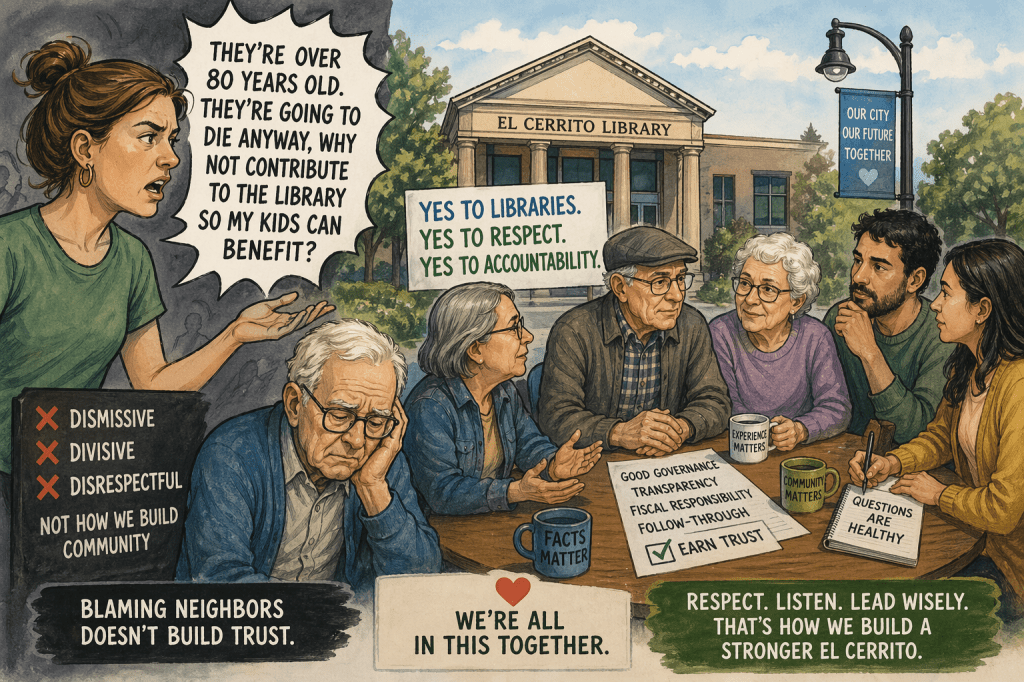
This community includes people at every stage of life. Young families raising children. Working professionals. And seniors, many of whom have lived here for decades, paid into the system, supported past measures, and helped build the very community we are now discussing.
Reducing any group, especially our oldest residents, to a calculation about how much more they should contribute before they are gone is not advocacy. It is dismissal.
And it undermines the very argument being made.
Because this is not a question of whether children deserve access to libraries. Of course they do. That is not in dispute.
The real question is whether this specific proposal is the right approach and whether it reflects sound financial stewardship, transparency, and accountability.
Those concerns do not disappear because someone is older.
In fact, they often come from experience. From having seen multiple tax measures come and go. From watching how funds were promised, allocated, and sometimes redirected. From living through decisions that led to where the city stands today.
That perspective is not something to be brushed aside. It is something to be valued.
El Cerrito residents across generations have consistently contributed. Sales taxes have risen. Parcel taxes have been approved. The real property transfer tax was increased. These decisions were not made lightly and they were not made by one age group alone.
So when someone raises a concern today, whether they are 35 or 85, it deserves to be addressed on the merits.
Not dismissed based on how many years they may have left.
If the case for this measure is strong, it should be able to stand without targeting neighbors. Without framing one generation’s needs against another’s. Without suggesting that some voices matter less because of their age.
A healthy community does not ask who matters more.
It finds a way to respect everyone at the table and to make decisions that reflect both shared values and responsible governance.
That is the conversation worth having.

