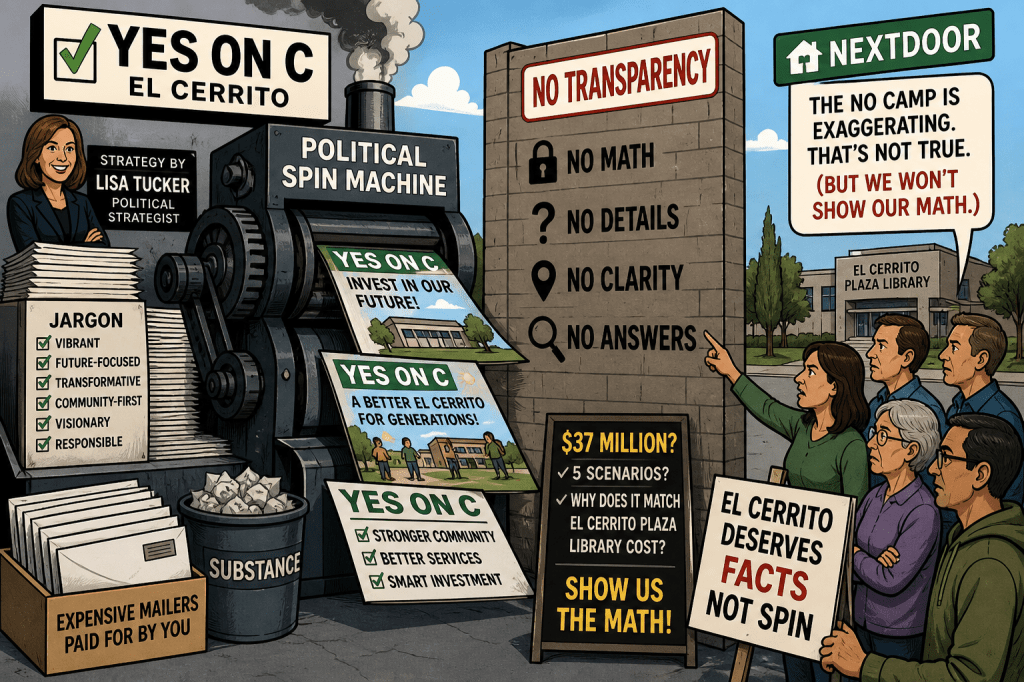
El Cerrito residents are watching something familiar unfold: a polished political campaign built on messaging tactics, carefully crafted flyers, glossy mailers, and talking points that sound persuasive until you stop and ask a simple question.
What does any of it actually mean?
The Yes on C campaign appears to have embraced a professional political playbook, with strategist Lisa Tucker reportedly involved in shaping communications. That may explain the tone of the campaign materials. They are heavy on slogans, emotional appeals, and polished language. But when voters look for clear answers, specifics often disappear.
This is not a statewide race. This is El Cerrito. Neighbors deserve facts, not campaign theater.
The Mailers Look Slick. The Math Is Missing
Voters keep hearing that opponents are exaggerating the cost of the initiative. That is a serious accusation.
So where is the campaign’s math? Where
If critics are wrong, then show the numbers. Show the assumptions. Show the tax impact by parcel type. Show the total borrowing costs if financing is involved. Show how long residents will pay. Show what happens if construction bids come in higher.
Instead, residents are often met with dismissive language, personal attacks and broad reassurances.
That is not transparency. That is messaging.
Five Scenarios? Then Why Does the Price Tag Match the Plaza Plan?
Supporters often claim there are multiple possible locations or five scenarios still in play.
But many residents are asking an obvious question:
If there are truly five open scenarios, why does the $37 million price tag tied to the tax initiative match the publicly discussed cost of a new library at El Cerrito Plaza?
That question deserves a direct answer.
Because from the outside, it appears voters are being asked to approve funding for a project whose likely direction is already known, while being told everything remains flexible.
If that is not the case, explain it clearly.
Nextdoor Is Not a Substitute for Public Accountability
The same campaign style has shown up on Nextdoor: repeat the talking points, minimize concerns, accuse skeptics of misinformation, and avoid detailed answers.
But El Cerrito residents are not passive consumers of campaign copy. They are homeowners, renters, taxpayers, parents, seniors, and professionals. Many know budgets. Many understand debt. Many can recognize when language is being used to blur rather than clarify.
And increasingly, that playbook does not appear to be working.
When residents ask for numbers, they should get numbers.
When residents ask for location clarity, they should get clarity.
When residents ask about alternatives, they should get honest comparisons.
This Vote Should Be About Substance
No one is against libraries. No one is against civic investment. No one is against planning for the future.
But many are against being sold a vague narrative wrapped in consultant-grade language.
El Cerrito deserves a campaign willing to speak plainly:
What exactly are we paying for?
Where exactly will it go?
What exactly will it cost over time?
What alternatives were seriously considered?
Why should voters trust projections that are not fully explained?
Those are not anti-library questions.
They are pro-accountability questions.
El Cerrito Is Smart Enough for the Truth
Political strategy can help package a message. It cannot replace substance.
Glossy mailers fade. Nextdoor posts disappear. Talking points change.
But taxes remain. Debt remains. Decisions remain.
El Cerrito voters deserve more than jargon.
They deserve the truth

