El Cerrito’s financial challenges did not begin with Donald Trump. They did not begin with changes in federal policy. And they are not primarily driven by reductions in federal funding.
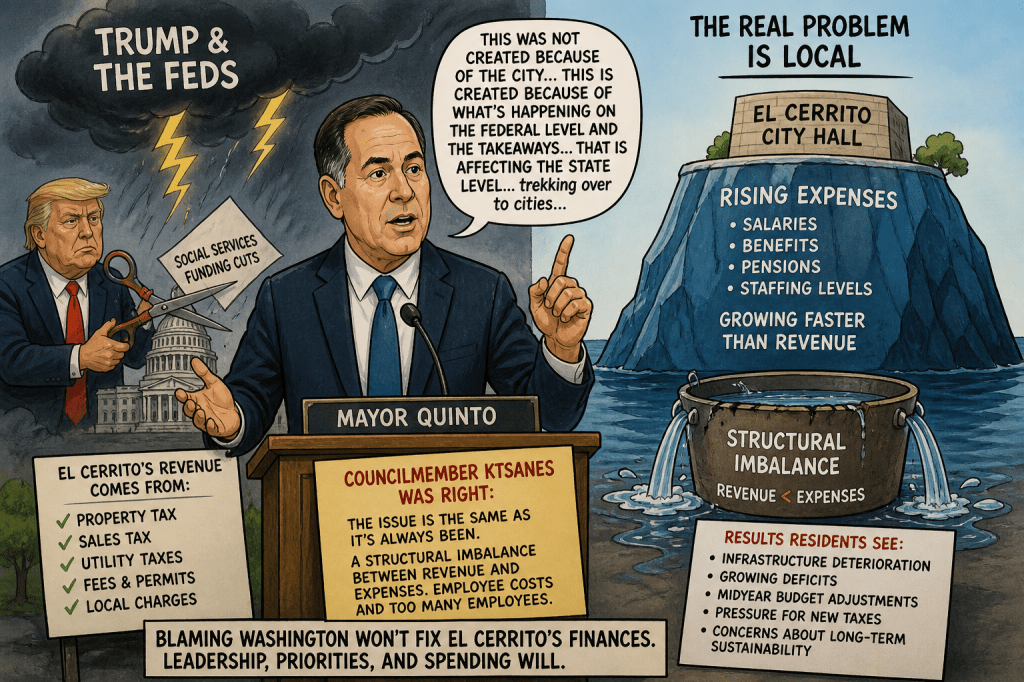
That narrative may be politically convenient, but it is not supported by the city’s own financial structure.
At a recent meeting, Mayor Gabe Quinto stated:
“This was not created because of the city again this is created because of what’s happening on the federal level and the holes that they are making and the takeaways they are doing on social services and cuts on the federal level that is affecting the state level…”
The problem is that El Cerrito receives relatively little federal funding for its ongoing General Fund operations.
The city’s core revenue sources are local:
- Property taxes
- Sales taxes
- Utility users taxes
- Fees and permits
- Local assessments and charges
This is not a city dependent on Washington for day-to-day survival.
The issue is the same issue El Cerrito has faced for years: a structural imbalance between revenue growth and expense growth.
Expenses are rising faster than recurring revenue.
That is the problem.
And it is not a new problem.
The State Auditor previously identified El Cerrito as fiscally high risk because the city spent beyond its means, depleted reserves, and relied on short-term borrowing to manage cash flow. The city’s own financial history shows that these problems existed long before the current federal administration debates.
Councilmember William Ktsanes was correct when he pointed to employee costs as a major driver of the imbalance.
The largest expense category for nearly every California city is personnel:
- Salaries
- Pensions
- Health benefits
- Retiree obligations
- Staffing growth
El Cerrito is no exception.
In fact, prior operational analyses already indicated the city had staffing levels that exceeded operational necessity in several areas. Yet instead of slowing growth, city leadership expanded management positions, approved compensation increases, and continued building long-term obligations into the budget structure.
That is not a federal policy issue.
That is a local governance decision.
And residents have seen the consequences:
- Infrastructure deterioration despite dedicated taxes
- Growing deficits
- Midyear budget adjustments
- Pressure for new taxes
- Increasing concern about long-term sustainability
The city continues to frame these discussions as though outside forces are primarily responsible, but residents are increasingly asking harder questions:
- Why do expenses continue growing faster than revenue?
- Why were temporary windfalls treated like permanent money?
- Why did COVID-era surpluses not create lasting stability?
- Why are taxpayers repeatedly asked to close gaps without meaningful structural reform?
Over the past several years, El Cerrito benefited from extraordinary financial circumstances:
- Millions in federal ARPA funding
- Surging property tax revenue during the housing boom
- Increased sales tax collections
- Real property transfer tax growth
- Economic recovery funding
Those were temporary boosts.
But instead of fundamentally restructuring operations, the city expanded ongoing commitments.
Now that the temporary money is fading, the underlying imbalance is reappearing.
Again.
None of this means federal and state decisions have zero impact on cities. Of course they do. Economic conditions, inflation, and statewide cost pressures affect everyone.
But suggesting that El Cerrito’s financial condition was “created” by federal actions ignores years of local financial decisions that contributed directly to where the city stands today.
Fiscal responsibility requires honesty.
And honest conversations begin with acknowledging that El Cerrito’s challenges are largely homegrown.

