El Cerrito has a pension problem that’s been compounding for years. Instead of meeting it head-on, the city has continued to apply minor fixes to a rapidly growing financial burden. One glaring example? The decision to open a Section 115 Trust fund with just $1 million, despite the city’s economic advisors recommending at least $5 million.
To put it plainly, El Cerrito’s unfunded CalPERS pension liability stood at approximately $70 million in 2021 when the trust was opened. The current liability has now ballooned to $89 million. Placing $1 million in a Section 115 Trust under those conditions is the financial equivalent of tossing a glass of water on a house fire.
This is not a new issue. In March 2021, NHA Advisors warned of the growing pension pressure and its strain on El Cerrito’s operating budget. The California State Auditor echoed the concern, assigning the city a zero score for future pension liability planning. The message was clear: El Cerrito needed to do something—anything—beyond the minimum.
From the NHA Advisors’ 2021 presentation:
“The rapidly increasing (and uneven) repayment shape of UAL is causing added pressure on the city’s budget.”
“Planning for and evaluating options to manage these rising costs is important for budget predictability and fiscal health.”
Over seven years, the miscellaneous plan UAL grew from $13.3M to $ 20.7 M.
The safety plans UAL soared from $28.2M to $ 49.6 M.
Despite these red flags, the city only pays the actuarial minimum yearly, while the liabilities and required payments keep growing. These CalPERS payments are mandatory, leaving fewer dollars for essential services, infrastructure maintenance, or a long-awaited senior center.
Worse, El Cerrito continues to miss opportunities to stabilize long-term costs. In 2021, a serious proposal was to issue pension obligation bonds—not for risky investments, but to refinance the city’s pension debt at fixed rates. It was a conservative fiscal strategy, not a speculative one. The city let the opportunity pass, and the consequences are now being felt in escalating annual pension costs.
The state auditor report states:
“The amount El Cerrito pays toward its pension liability continues to grow because the city pays only the minimum amount required each year as determined by an actuary.”
El Cerrito’s pension generosity far exceeds that of its neighbors, like Albany, yet the city has failed to reexamine the sustainability of these plans.
Meanwhile, revenues have increased:
Real Property Transfer Tax (RPTT) has surged, adding $3.3 million compared to FY 2018.
Housing sales continue to reset property tax values upward.
Sales tax revenue is booming, thanks to changes in the law.
Despite this, key services are shrinking. The senior center remains closed. The crime rate drives businesses away, and those who stay hire private security. The Pavement Condition Index (PCI) is deteriorating. The city runs deficits even while revenue streams have grown.
And now, the council is prioritizing $2 million for the swimming pool, but nothing for a senior center?
Where’s the comprehensive budget review? Why wasn’t the Financial Advisory Board (FAB) discussed before budget assumptions are locked in? FAB recommended a $1 million starting surplus buffer, but that advice was ignored.
If the city is serious about fiscal responsibility, it must:
List primary fiscal needs upfront in budget discussions.
Conduct scenario analyses.
Engage residents, the FAB, and the council collaboratively from the outset.
Before proceeding, disclose the actual cost estimates of new projects (e.g., bike lanes, Greenway, Richmond Street).
Share survey results with the public.
Justify and prioritize spending based on precise data, not preference.
And critically, FAB must be fully included when NHA Advisors return to discuss pension planning. Expertise is only helpful if it’s applied.
The community is watching. Council Member Ktsanes has taken a step toward transparency by holding open office hours. Others should follow suit—and commit to hearing from all residents, not just those who already agree.
El Cerrito must break this cycle of delay and deflection. It’s time to stop throwing cups of water at a five-alarm fire. The stakes—for our city’s fiscal health and community well-being—are simply too high.
The City of El Cerrito is considering a proposal to add a dedicated bike lane on Richmond Street — a move that would eliminate residential parking on one side of the street and significantly impact the daily lives of long-term residents. While the city promotes the project as a step toward equity, sustainability, and safer streets, Richmond Street homeowners and renters are raising serious concerns — not just about process, but about fairness, safety, and the long-term consequences for the community.
Why Now — and Why Richmond Street?
The proposed Richmond Street bike lane sits just two to three blocks away from the Ohlone Greenway — a dedicated, multi-use path that already supports bicyclists, pedestrians, and joggers. According to many residents, the Greenway is sufficient for bike traffic, and the city’s energy and dollars would be better spent enhancing that existing infrastructure rather than duplicating it on a residential street.
Using the Greenway instead of Richmond Street adds approximately five minutes or less to most bike commutes — a minor inconvenience compared to the major disruption this new project would cause for people who rely on on-street parking, including seniors, residents with disabilities, and caregivers.
Displacing the Most Vulnerable
This isn’t just about convenience. Richmond Street has long been home to a diverse population, including elderly residents and those with limited mobility. Many of these individuals rely on accessible curbside parking to go about their daily lives. Removing this access — without clear alternatives or accommodations — will have a disproportionate impact on these community members.
The proposal threatens to erode a neighborhood fabric built over decades. The real outcome, as residents see it, is a shift toward a younger, wealthier demographic that can afford to adapt, while long-standing residents are pushed aside. That’s not equity. That’s displacement.
Left Out of the Conversation
Despite the far-reaching implications of the proposal, many Richmond Street residents say they were never meaningfully consulted. There was no robust outreach, no thoughtful engagement, and no attempt to understand the very real and practical implications for the people who live there. Instead, neighbors learned of the plan through secondary channels, leaving them scrambling to understand and respond before the project advances further.
What About Safety?
Ironically, the city’s justification hinges on improving safety. But Richmond Street is already considered a walkable neighborhood. Residents support that vision — but believe the root cause of pedestrian and cyclist safety issues lies not in street design, but in driver behavior.
Speeding, failure to yield, and lack of traffic law enforcement are the true culprits. Installing a bike lane won’t fix these problems. What will? Enforcing existing speed limits. Adding speed humps. Increasing citations for reckless driving. Promoting driver education. These are practical solutions that preserve accessibility while enhancing safety for all.
Show Us the Numbers
Perhaps most concerning of all: the city refuses to release detailed cost estimates for the Richmond Street bike lane. Multiple studies have been conducted, but none of the financial data has been made public. At a time when El Cerrito continues to face budget challenges and mounting infrastructure needs, the lack of transparency raises serious questions.
What will this project cost — in dollars, in displacement, in disruption? Until the city provides a clear answer, residents are right to question the motives and the math.
A Better Way Forward
Equity should not come at the expense of those who have already invested in El Cerrito. A smarter path would improve and promote the existing Ohlone Greenway while preserving the character, accessibility, and livability of Richmond Street.
Residents are not opposed to bike infrastructure. They are opposed to ill-conceived plans that prioritize form over function, and newcomers over neighbors. It’s time for city leaders to slow down, listen closely, and put community at the center of the conversation.
Call to Action
If you believe the city should prioritize transparency, protect vulnerable residents, and support walkable, accessible neighborhoods without displacing the people who live there:
Contact the El Cerrito City Council:
Mayor Carolyn Wysinger cwysinger@ci.el-cerrito.ca.us
Mayor Pro Tem Gabe Quinto gquinto@ci.el-cerrito.ca.us
Councilmember Lisa Motoyama lmotoyama@ci.el-cerrito.ca.us
A City Manager’s job is to implement the vision of the City Council—but also to provide clear, measurable results that benefit residents. In a city our size, results should be visible. Here are a few areas where metrics matter:
• Infrastructure – Have road conditions, lighting, and city facilities improved over the past five years? Are projects completed on time and on budget?
• Community Services – Has the city expanded or cut services for seniors, youth, and low-income residents? Are there performance reports to show how many people are served?
• Public Safety – Are emergency response times getting better or worse? Are staffing levels adequate?
• Civic Engagement – Is the city engaging more residents in decision-making—or fewer? Are meetings accessible and well-publicized?
• Financial Health – Has the city stabilized its budget and built reserves, or are we still treading water despite high taxes?
These aren’t political questions. They’re practical questions. And in a community like El Cerrito, they should be easy to answer.
The Bottom Line
No one is expecting perfection—but we are expecting progress, transparency, and accountability. If a City Manager claims the mission is to “make people’s lives better,” then residents have every right to ask: Better how? Better for whom?
Karen Pinkos has held this role since 2018. That’s more than enough time to show measurable, community-wide improvement.
We love El Cerrito. That’s why we speak up. And it’s why we should keep asking questions—because our community deserves answers.
As El Cerrito prepares its FY 2025–2026 budget, city staff are touting a “balanced” financial plan. But residents should take a closer look. Beneath the headlines and hopeful proclamations lies a sobering fiscal reality: We are inching toward more profound structural instability, masked by one-time funding shifts and unsustainable reserve draws.
The $4.5 Million Ask and the Reserve Drain City staff have proposed $4.5 million in new, unbudgeted spending. Rather than funding these items through sustainable revenues, the city relies on reserves that barely meet the minimum guidelines of Government Finance Officers Association (GFOA). In other words, this $4.5 million request depletes reserves to a level lower than GFOA recommendations. At the same time, we are spending savings we can’t afford to lose—especially with another economic downturn that is always possible.
Even more troubling, this isn’t a one-time problem. The city’s own reserves chart—buried deep in the staff presentation—shows a downward slope. No plan is shown for turning it around. How low will we go before serious service cuts or tax increases hit the table?
What’s the Real Deficit? Residents deserve transparency. The city talks about being “balanced,” but there are no precise projections of actual future deficits in the latest materials. What are the expected shortfalls in FY 2026, 2027, and beyond? What’s the plan to cover them?
The $89 Million Elephant in the Room: Unfunded Pension Liability Any discussion of El Cerrito’s $89 million in unfunded CalPERS pension debt is absent from the city’s latest budget materials. This figure, from the last available reporting, is not a small change—it is one of the city’s largest obligations.
With stock markets running flat this year and CalPERS likely to miss its investment target, we can reasonably expect the city’s required pension contributions to rise again. Yet no projections for UAL (Unfunded Actuarial Liability) payments were provided, and there’s no analysis of how recent raises have impacted the long-term pension obligation. This is a serious oversight.
Missing Services, Crumbling Infrastructure Meanwhile, basic services continue to erode. The city continues to promote the idea of a new library, even as there is still no senior center—just years after the original facility was shut down and leased out. Capital maintenance appears to be lagging across the board. Declining infrastructure, disappearing services, and empty promises—these are the symptoms of a city prioritizing image over fundamentals.
Inconsistent and Unverifiable Revenue Figures The numbers themselves also raise red flags. The figures presented for the Real Property Transfer Tax (RPTT) do not match previously reported amounts, and city and county numbers are inconsistent. Residents should not have to reconcile inconsistent revenue data from public sources. We deserve accuracy and honesty.
Cash Flow Warnings Ignored The city knows it walks a tightrope every fall, as reserves drop to a critically low point before December’s property tax receipts arrive. Yet this cash flow crunch is mentioned only in passing. One-time revenue infusions do not fix structural deficits. They mask them.
Time for a Real Conversation El Cerrito residents aren’t asking for miracles. But we are asking for transparency, accountability, and honest dialogue. Open and frank public conversation about the city’s serious financial condition must exist. That includes precise projections of deficits, full disclosure of pension obligations, and honest discussions about what we can—and cannot—afford.
Before committing to another building, campaign, or considerable promise, let’s focus on maintaining what we already have.
📢 Take Action Contact your City Councilmembers today and ask them to prioritize fiscal responsibility and community services over symbolic projects and unsustainable spending:
We told you in April. And now you see for yourselves The City of El Cerrito is preparing to adopt its Fiscal Year 2025–2026 budget. On paper, it’s being presented as “balanced.” But longtime residents and close watchers of the city’s finances know better: this isn’t new, and it certainly isn’t sustainable.
In recent years, this cycle has become all too familiar. The City Council approves a balanced budget in June—then by mid-year, city staff return to request additional spending authority. Often, these requests include re-appropriating money that was unspent from the prior year, or funding items that weren’t included in the adopted budget.
The Missing Surplus: A Lost Opportunity
This year is no different. The City had the opportunity to adopt the Financial Advisory Board’s (FAB) recommendation to build in a $1 million surplus—a smart, prudent buffer that would have protected against unforeseen mid-year costs.
But they didn’t. And when the inevitable mid-year “asks” come, they’ll likely dip into reserves—again.
This is not fiscal discipline. It’s budgeting by hope.
$89 Million in Pension Debt and No Real Plan
Even more alarming: the city has an unfunded CalPERS pension liability of $89 million. That number should make every resident pause. Pensions are guaranteed obligations—not optional. The city must pay them, regardless of the economic climate or available revenue.
Yet only $1 million has been set aside to address this massive debt. That’s barely over 1% of what’s owed. Every year the city delays addressing this, the problem grows. And the longer we wait, the more it will cost us—not just in dollars, but in lost services.
This Budget Isn’t Balanced—It’s a Shell Game
Calling this budget “balanced” hides the real risks. A truly responsible budget would:
• Build in a surplus to cover expected mid-year changes,
• Stop using reserves to plug holes,
• Acknowledge long-term obligations, like pensions, and start funding them now,
• Include realistic projections based on past spending patterns—not optimistic assumptions.
Residents Deserve Better
The people of El Cerrito have stepped up repeatedly to help the city. They’ve approved sales tax increases. They’ve shown up at town halls. They’ve asked tough questions—and they’ve been patient. But patience isn’t a financial strategy. Residents deserve a city that is honest about its challenges and serious about fixing them.
It’s Time to Take Action
If you believe in protecting El Cerrito’s financial future, it’s time to act. Contact your City Council. Demand transparency, accountability, and a budget that doesn’t just check boxes—it addresses real needs.
Email Your City Council:
• Mayor Carolyn Wysinger — cwysinger@ci.el-cerrito.ca.us
• Mayor Pro Tem Gabe Quinto — gquinto@ci.el-cerrito.ca.us
• Councilmember Lisa Motoyama — lmotoyama@ci.el-cerrito.ca.us
In 2018, El Cerrito transitioned from a general law city to a charter city, a move that, on the charter City Status: El Cerrito’s Governance Gap.
Unlike general law cities, which operate under the oversight and legal framework of the state of California, charter cities like El Cerrito have significant autonomy—and with that autonomy comes a concerning lack of governance. While the decision to become a charter city may have seemed like a straightforward financial win at the time, it has exposed El Cerrito to structural weaknesses that threaten the integrity of local government.
One of the most alarming governance gaps involves the unchecked influence of the City Manager on City Council decisions. Under the current charter, the City Manager can make requests that significantly impact policy and operations, often without sufficient oversight or independent analysis. This dynamic can lead to decisions prioritizing short-term gains over the community’s long-term well-being.
Effective governance requires a balance of power and rigorous decision-making processes. When council members rely heavily on recommendations from the City Manager without thorough public discussion or alternative viewpoints, the result can be policies that do not reflect the community’s needs or priorities. This concentration of influence undermines democratic principles and erodes public trust.
Moreover, the lack of governance safeguards means that the City Council may approve initiatives with far-reaching implications without fully understanding the consequences. From budget allocations to development projects, decisions driven primarily by administrative convenience rather than comprehensive analysis can have lasting negative effects on the city.
The shift to charter city status was driven in part by the promise of increased revenue from the real property transfer tax. While this revenue stream has provided short-term fiscal relief, it has come at the cost of governance safeguards essential for long-term stability. Revenue generation should never override the foundational principles of transparent, accountable, and community-rooted governance.
Call to Action: Strengthen El Cerrito’s Governance
El Cerrito must act now to close this governance gap. We urge city leaders to amend the charter to establish clearer, enforceable guidelines for City Council decision-making, particularly regarding requests from the City Manager. By doing so, we can restore trust in our local government and ensure that decisions are made with the community’s best interests in mind.
Make your voice heard. Contact the El Cerrito City Council to support this essential reform:
Even better, attend a City Council meeting in person to voice your concerns and advocate for stronger governance standards. Together, we can protect the integrity of our city and secure a more accountable future for El Cerrito.
When El Cerrito’s current city manager assumed office, the city held an AA credit rating, a mark of financial stability and prudent management. Fast-forward to today, and the city is hanging on to a BBB rating, a stark drop that raises serious concerns about financial governance and the city’s economic future. This decline reflects poorly on management and places El Cerrito at significant financial risk, as it teeters just above junk bond status.
What Does a Credit Rating Mean?
A credit rating is a measure of a city’s ability to meet its financial obligations. Higher ratings, such as AA-, signal low credit risk and responsible fiscal management. Lower ratings, like BBB, indicate a greater risk of default, higher borrowing costs, and reduced investor confidence.
For El Cerrito, the AA- rating represented a time when the city was seen as financially healthy and capable of funding essential services and future projects. Now, the BBB rating tells a very different story, one of financial instability, rising debt, and questionable budget practices.
The Decline: A Timeline of Fiscal Missteps
When the city manager took over, El Cerrito was on relatively solid financial ground. However, over the years, several key decisions have contributed to the erosion of the city’s creditworthiness:
Uncontrolled Spending: Budgets have consistently run deficits, with expenditures far outpacing revenues.
Lack of Transparency: Reports and audits have pointed to insufficient oversight and a lack of clear financial strategies.
Poor Financial Planning: Reserve funds, intended to serve as a buffer during economic downturns, have been depleted.
In 2020, the city’s credit rating plummeted to BBB- near-junk status, reflecting the consequences of these ongoing issues. While the BBB rating indicates a slight improvement, it remains alarmingly low and reflects persistent fiscal challenges.
The Cost to Residents
The drop in El Cerrito’s credit rating isn’t just a technical financial issue—it has real-world consequences for residents.
Higher Borrowing Costs: The city pays more to issue bonds for infrastructure projects, meaning less money for roads, parks, and public safety.
Risk to Essential Services: Financial instability threatens funding for critical services like police, fire, and public works.
Decreased Investor Confidence: With a lower rating, fewer institutions are willing to invest in the city’s bonds, further limiting resources.
A Call for Accountability
Residents and stakeholders in El Cerrito should demand better financial management from their city leaders. The current situation is unsustainable, and the path forward requires:
Transparent Budgeting: Regular public updates on the city’s financial health and decision-making processes.
Strategic Cost Reductions: Thoughtful cuts to spending without compromising essential services.
Rebuilding Reserves: Establishing and adhering to a disciplined savings plan.
Your Voice Matters: Hold El Cerrito’s Leadership Accountable
El Cerrito residents, your city needs your voice now more than ever. As the city faces ongoing financial challenges and struggles to regain stability, it’s crucial that your concerns are heard by those in charge. The City Council must know that you demand transparency, accountability, and action to address the issues that have led to the city’s alarming decline in financial health.
How to Make Your Voice Heard
You can directly address the City Council by submitting your comments to the City Clerk. Here’s how:
Write Your Comments: Share your concerns, questions, or suggestions regarding the city’s financial management, priorities, and leadership.
Submit Your Comments: Email or call the City Clerk’s Office with a request to include your comments in the City Council packet.
Ensure Public Visibility: By submitting your comments to the official City Council packet, your message becomes part of a public document that must be made available to all residents.
Be sure to include your name, contact information, and a clear request for your comments to be added to the City Council packet.
The Time for Action is Now
Residents like you are the key to driving change. By speaking up, you can ensure that El Cerrito’s leadership prioritizes fiscal responsibility, transparency, and the well-being of the community.
Can El Cerrito Recover?
The city’s financial future depends on strong leadership and a commitment to reform. While regaining an AA- credit rating may be a long-term goal, even incremental improvements in fiscal management can restore confidence and stabilize the city’s finances.
El Cerrito’s decline from AA- to BBB serves as a cautionary tale for other cities. For El Cerrito, it is a wake-up call—a reminder that fiscal health requires not just words but meaningful action.
Let’s work together to secure a brighter future for El Cerrito. Your voice matters—make it heard!
El Cerrito has often been lauded for its progressive initiatives and gestures championing inclusivity and community engagement.
However, a closer examination reveals a recurring pattern: while the city excels in presenting an image of progressiveness, tangible outcomes and services often fall short of promises. This disconnect between appearance and reality raises concerns about the city’s commitment to translating symbolic actions into meaningful support for its residents.
The Illusion of a Senior Center
For over five years, El Cerrito has lacked a dedicated senior center. Yet, the sign at Hana Gardens proclaims the existence of a “Senior Citizen Community Center.” In reality, this facility offers minimal services, failing to meet the comprehensive needs of our senior population. Merely displaying a sign without providing corresponding services is misleading and unacceptable. The city must estabish a fully functional senior center or remove the deceptive signage.
Misplaced Priorities in Budgeting
El Cerrito’s financial management has been a subject of concern for years. The city has consistently depleted financial reserves and often relied on short-term loans to continue operating. Despite this, officials continue to tout budget awards that focus on presentation rather than fiscal responsibility. True accountability requires addressing the root causes of our financial instability, not celebrating superficial accolades.
Compounding these issues, the city frequently introduces mid-year budget increases, indicating a lack of sustainable financial planning and exacerbating fiscal challenges. Furthermore, there is a notable absence of mechanisms to measure the effectiveness of public services. Without such assessments, it’s impossible to determine whether resources are being utilized efficiently or if the community’s needs are being met.
A Call for Genuine Transparency and Community Engagement
While the city claims to value transparency, actions suggest otherwise. Public engagement often feels like a formality, with residents’ comments acknowledged but not truly considered. Meaningful dialogue between the City Council and the community is essential. El Cerrito should adopt practices from other municipalities that prioritize active and sincere engagement with their constituents.
Concerns Surrounding the Proposed Library
The city’s approach to the proposed new library exemplifies these transparency issues. Public forums have been limited to presentations followed by brief Q&A sessions, restricting meaningful community input. Financial analyses related to the library project have not been adequately disclosed, leaving residents questioning the basis for decisions and cost projections. Additionally, the city appears fixated on a 21,000-square-foot facility without thoroughly exploring alternative options that might be more financially prudent or better aligned with community needs. Such an approach not only undermines public trust but also raises concerns about the city’s commitment to responsible fiscal management.elcerritocommitteeforresponsiblegovernment.com+1California State Auditor+1
Sanctuary City Initiative: Substance or Symbolism?
El Cerrito has recently garnered attention for its initiative to become a sanctuary city for the LGBTQ+ community, aiming to position itself as a haven for individuals fleeing intolerance. Under the leadership of Mayor Carolyn Wysinger, the first out Black lesbian mayor in California, the city has established itself as an LGBTQ-friendly community, featuring Northern California’s first LGBTQ-majority city council. San Francisco Chronicle
While these milestones are commendable, it’s crucial to assess the tangible support systems in place for both current and prospective LGBTQ+ residents. Declaring sanctuary status is a significant step, but it must be accompanied by concrete services such as housing assistance, mental health support, and community programs tailored to LGBTQ+ needs. Without these, the designation risks being merely symbolic. Effective integration of new residents requires active involvement from existing community members. Initiatives that foster mutual understanding and support are essential to building a cohesive community.
Recommendations for Meaningful Implementation
To ensure that El Cerrito’s initiatives translate into genuine support for its residents, the city should:
Develop Targeted Services: Establish programs addressing the specific needs of seniors and LGBTQ+ individuals, including healthcare, housing, and employment support.
Foster Inclusive Dialogue: Engage both new and existing residents in meaningful conversations to promote understanding and integration.
Ensure Fiscal Responsibility: Allocate resources wisely to support these initiatives without compromising the city’s financial stability.
Measure Effectiveness: Implement mechanisms to assess the impact of services provided, ensuring they meet the intended goals and adapt as necessary.
El Cerrito stands at a path of symbolic gestures without substantive action, which will only further erode public trust. It’s time for the city to prioritize genuine improvements over mere appearances. Residents deserve a city that not only listens but acts decisively to address their needs. The era of performative politics must end; it’s time for real change.
If you’ve ever attended a City Council meeting in El Cerrito, you’ve likely heard the City Clerk say something like, “The Council cannot respond to public comment.” It sounds final, almost like it’s against the law for elected officials to engage. But here’s the truth: there’s no law in the Brown Act that prohibits the City Council from responding to your public comment.
Let’s clear this up.
The Brown Act is Meant to Ensure Public Access, Not Silence
The Ralph M. Brown Act was created to guarantee your right to attend and participate in meetings held by your local government. It mandates that agendas be posted in advance, that meetings be open to the public, and that you must be allowed to comment on any item within the City’s jurisdiction — even if it’s not on the agenda.
According to the Brown Act, elected officials may “briefly respond” to public comments on topics not on the agenda. They can also refer questions to staff or propose adding the topic to a future agenda .
In other words, they’re allowed to talk to you — they just choose not to.
Council Silence Is a Choice, Not a Requirement
So why do they remain silent?
Because of internal policy — not state law. The El Cerrito City Council has adopted rules that prohibit real-time dialogue with the public during meetings, even though the law allows for brief responses. That choice runs directly counter to the spirit of transparency and open government that the Brown Act represents.
Social Media Isn’t a Substitute for Dialogue
City Council members are often quick to hop on social media to share personal wins, pose with local groups, other elected officials or announce initiatives. The City Manager writes a monthly newsletter. These are all carefully crafted messages that allow them to control the narrative — not engage in actual, spontaneous dialogue.
But when it comes to live meetings — the one place designed for real-time public input — they stay silent. That silence isn’t mandated by law; it’s self-imposed. And it undermines public trust.
El Cerrito Residents Deserve Better
If we value transparency, responsiveness, and authentic community engagement, then we need to demand better. The Brown Act gives the Council the room to engage with us — and they should take it.
Let’s hold our representatives accountable. Not just to the letter of the law, but to its spirit.
The following blog was heavily influenced by a detailed social media post written by a longtime El Cerrito resident.
The El Cerrito City Council’s library campaign to move the historic library from a location that the City already owns—and that sits adjacent to El Cerrito’s largest and oldest elementary school—is pathetic. They’re acting like the President of the United States: unwilling to admit anything or tell residents the truth.
They have no alternative plan to finance the library construction other than a parcel tax. That’s it. Let’s be honest: there is no other option. Property taxpayers will be left holding the bag, covering the principal and interest payments on $1.6 million in construction costs for a new library building. The City has no budget for library construction and debt service. It cannot borrow due to its weak financial condition. It can barely afford to pay for its bloated budget as it is!
So let’s ask the obvious: what other funding sources exist, and who would borrow the money and have the ability to service that debt? No one. Which is why rebuilding the library at its current location is the only viable alternative. Any other claim is a diversionary tactic.
Developer Capture and Self-Dealing
The City has been captured—plain and simple—by a Developer who desperately needs El Cerrito residents to contribute $21 million to make their housing project viable. This is not about libraries; it’s about using the library as a financial lever.
Two years ago, the City gave land and made a loan to this same Developer. That’s called self-dealing. And it should have nothing—nothing—to do with the library. Let the City and Developer build housing if that’s what they want to do. But leave the library out of it.
So why did the City pay a construction manager $45,000 to study tenant improvements at a location where there’s no financing in place? Because the Council is negotiating for the Developer—not for residents. That’s a breach of trust and a failure of fiduciary duty.
An Illogical and Uninspired Location
The plan calls for a 20,000 sq ft library (coincidentally the same footprint as the first floor of the Developer’s six-story, 69-unit building) located at a major transportation hub where 760 new apartment units are already planned—with no parking.
Who wants a public library in the dingy first floor of a mixed-use building with constant foot traffic, noise, and density? I’d much rather see a beautiful, 12,000 sq ft, two-story glass-and-steel library, flooded with light, with high ceilings and sweeping views of the hills and Bay. That is a library.
We don’t need more “community space.” We drive by the El Cerrito Community Center on Moeser Lane and hardly see activity. It’s already next to the pool, the park, and the performing arts theater. We are not lacking for community space—we are lacking vision.
Reasonable, Available Alternatives
Contra Costa County gave Pleasant Hill $1.1 million to temporarily relocate their library during construction. El Cerrito has multiple recently vacated retail sites that could serve as temporary library space—and many of those property owners would likely welcome a civic tenant, given the retail market’s outlook.
But the City isn’t interested in reasonable alternatives. They’ve committed to a developer-driven plan and are now trying to sell us on a library that no longer feels public, inspired, or worthy of the community it serves.
Say No to the Parcel Tax. Say No to the TOD Library Plan.
This is your money. You should have a say in how it’s invested. Say NO to a Barnes & Noble-style library buried in a private development. Say NO to new community space we don’t need. Say YES to an architecturally significant library on public land that already belongs to us.
And until the City Council shows us all the cards—a full financial plan, transparent justification for the chosen location, and an honest comparison with the current site—I’m voting NO on any library parcel tax.
I urge you to do the same.
Let your Councilmembers know you expect real leadership—not developer loyalty:
Mayor Carolyn Wysinger
📧 cwysinger@ci.el-cerrito.ca.us
Mayor Pro Tem Gabe Quinto
📧 gquinto@ci.el-cerrito.ca.us
Councilmember Lisa Motoyama
📧 lmotoyama@ci.el-cerrito.ca.us
Councilmember Rebecca Saltzman
📧 rsaltzman@ci.el-cerrito.ca.us
Councilmember William Ktsanes
📧 wktsanes@ci.el-cerrito.ca.us
City Clerk
📧 cityclerk@ci.el-cerrito.ca.us
Make them show their cards—because right now, they have nothing.
Originally published on April 5, 2024 | Updated March 2025
Local government positions should be about service—improving communities, making informed policy decisions, and ensuring fiscal responsibility. However, as we have seen in El Cerrito, motivations for seeking office can sometimes stray far from these principles.
Since our original post in April 2024, the El Cerrito City Council has seen changes. Two new council members, Rebecca Saltzman and William Ktsanes, have joined, while three previous members—Carolyn Wysinger, Gabe Quinto, and Lisa Motoyama—continue to shape city policies. While new leadership presents an opportunity for fresh ideas, it is also a moment to ask whether these officials truly prioritize the needs of residents or if their agendas are driven by personal ambition, ideological pursuits, or deference to special interests.
El Cerrito has faced ongoing financial challenges, and the need for responsible governance has never been greater. The question remains: Are our city leaders prepared to make tough, data-driven decisions in the interest of fiscal stability and public trust, or are they continuing down the same unsustainable path?
As we move forward, we urge residents to remain engaged, ask hard questions, and hold elected officials accountable—not just for what they promise, but for what they deliver.
For a deeper dive into this topic, read our original post here.
El Cerrito has recently witnessed several prominent business closures, raising alarm about the city’s economic climate. Barnes & Noble, a fixture at El Cerrito Plaza for over 20 years, shut its doors in January 2025, leaving 22 employees without jobs.
Company officials said they “didn’t have the opportunity to renew our lease” at that location, suggesting that factors beyond just sales were at play – hmmmmm. On the other hand, Joann Fabrics, another major retailer, also announced it will close its El Cerrito store as part of a Chapter 11 bankruptcy restructuring that is shuttering over 500 locations nationwide. These departures follow a broader trend of brick-and-mortar struggles, but local issues are intensifying the challenge in El Cerrito.
Other big-name retailers in the city are feeling the pressure as well. CVS pharmacy has closed one store and grapples with repeated theft and safety incidents – in one case, two suspects assaulted an employee during a confrontation. Even Target, which operated in El Cerrito, is part of the conversation: moving to Richmond, citing rampant shoplifting and employee safety concerns. Each closure or cutback not only leaves empty storefronts but also fuels residents’ concerns that high operating costs and rising crime are driving businesses away.
Crime and Public Safety Trends: Crime rates in El Cerrito are a serious concern for both residents and businesses. By the numbers, this city of about 25,000 experiences a disproportionately high level of crime. In 2023, El Cerrito’s overall crime index was 342 (on City-Data’s scale) – about 1.4 times the U.S. average and higher than 92% of U.S. cities. This translates to roughly 45 reported crimes per 1,000 residents, which is “one of the highest crime rates in America compared to communities of all sizes”. Most of these incidents are property crimes (like theft and burglary) rather than violent crimes, but the rate of offenses is high by any measure.
The strip mall housing the Bank of Montreal (formerly Bank of the West), Safeway and other companies are retaining, private security to safeguard employees and patrons.
How does El Cerrito compare to its neighbors? It sits in an area with varied crime levels. Quiet nearby smaller communities such as Kensington and Hercules have crime indexes around 142 and 92, respectively, indicating far lower crime rates.. Albany and Pinole also fare better (around the low 200s). El Cerrito falls in between: not as dangerous as the worst hotspots, but notably less safe than many small Bay Area cities. In fact, El Cerrito’s crime rate is roughly on par with its immediate neighbor San Pablo, a city known to grapple with similar socio-economic challenges. This comparison suggests that El Cerrito’s public safety issue is real, even if it’s not alone in facing these problems.
Types of crime affecting businesses: The biggest headaches for retailers in El Cerrito stem from property crimes – shoplifting, organized retail theft, burglary, and the occasional robbery. Police data and incident reports paint a troubling picture for store owners. For instance, in one three-week span in January 2024, multiple incidents hit El Cerrito Plaza: a would-be shoplifter at Barnes & Noble pulled a knife on an employee who tried to stop him; two days earlier, suspects at the CVS had physically attacked a staff member after an argument. That same month, a Walgreens employee was shoved and threatened by a thief stuffing items into his jacket. , and security guards at Safeway were elbowed and pepper-sprayed in a struggle with a repeat shoplifter. In another case, grocery shoppers loading their car in the Safeway parking lot became victims of an armed robbery at gunpoint. These examples illustrate how what begins as property crime can escalate into violence, endangering workers and customers alike.
Such frequent theft and occasional violence have direct economic consequences. Stores face mounting losses from stolen merchandise and must invest in additional security (or risk employees getting hurt if they intervene). The threat of organized retail crime looms large – in late 2024, El Cerrito police partnered with local stores in a special operation and managed to thwart five thefts in one day, arresting nine suspects involved in coordinated shoplifting sprees. While this successful sting was a win for law enforcement, it underscores that organized groups are targeting retailers in the area. When crime rates rise to this level, businesses may respond by reducing hours, hardening their stores (e.g. locking up products), or ultimately closing locations that become unprofitable or unsafe. Indeed, the wave of Bay Area store closures by chains like Target and Walgreens has often been attributed to “retail theft causing losses and threatening the safety of employees and shoppers”. El Cerrito’s own crime trend feeds into that larger narrative, making it a key factor in the city’s business retention struggle.
Economic Challenges: Taxes and Business Climate
Beyond crime, El Cerrito’s economic policies and tax environment are also driving forces behind recent closures and the difficulty in attracting new businesses. The city’s cost of doing business is notably high when compared to neighboring areas, largely due to local tax rates and fees that add financial burden on retailers.
High sales tax: El Cerrito imposes one of the highest sales tax rates in the region at 10.25%. While this rate brings revenue for city services, it creates a price disadvantage for businesses. Shoppers are savvy; many are willing to drive to nearby cities like Albany or Berkeley for big purchases to save a percent or two on sales tax. Many El Cerrito resident have packages delivered in other cities to avoid the additional sales tax El Cerrito imposes. As one local analysis put it, El Cerrito’s steep tax “creates a barrier for businesses and consumers,” effectively incentivizing people to shop elsewhere for expensive items. For small businesses with thin profit margins, losing customers to slightly cheaper jurisdictions is a serious concern. It puts El Cerrito retailers at a distinct competitive disadvantage and can depress sales over time
Other taxes and costs: In addition to sales tax, El Cerrito has higher property-related taxes than many nearby cities. The city’s real estate transfer tax (applied when property is bought/sold) is higher than in surrounding communities, which “discourages…small business owners from relocating to El Cerrito” by making it costly up-front to purchase a site
Likewise, ongoing property taxes in El Cerrito tend to be higher than in similar Contra Costa County cities. Neighboring municipalities such as Hercules, Lafayette, or Orinda not only enjoy lower tax rates but also often have reputations for safer neighborhoods and more business-friendly policies. When entrepreneurs weigh where to open a new store or restaurant, these comparisons can make El Cerrito less appealing. In short, a retailer looking at the East Bay might see El Cerrito as a place with higher taxes, equal or higher crime, and no obvious cost advantages – a tough sell when nearby options have lower operating costs and lower risk.
It’s important to note that not every recent closure can be blamed solely on local taxes or crime. Broader trends like e-commerce competition (hurting bookstores and hobby shops) and corporate decisions play a role. Barnes & Noble’s national strategy and Joann’s bankruptcy restructuring are part of industry-wide challenges.
However, local economic factors significantly compound these problems. High taxes and security costs chip away at profit margins, and a reputation for theft can deter both shoppers and prospective store tenants. The combination of these factors has created headwinds for El Cerrito’s retail sector. As the city loses longstanding businesses, it not only misses out on tax revenue but also risks a self-perpetuating cycle: empty storefronts can lead to less foot traffic and a weaker sense of community, which in turn make the city less attractive to the next wave of businesses. Breaking this cycle will require addressing both the public safety issues and the economic policy hurdles that exist today.
Strategies and Recommendations
Reversing these trends and revitalizing El Cerrito’s business environment will take a multi-pronged approach. Both immediate security improvements and longer-term economic policy changes are needed to restore confidence and draw businesses back. Below are several actionable strategies:
Bolster Security and Policing: Increase the visible safety presence in commercial areas to protect businesses. This could include more frequent police patrols at El Cerrito Plaza and other shopping hubs, and working closely with store owners on anti-theft measures. (Notably, when Oakland faced a surge in retail crime, the city responded with “more walking police patrols in merchant corridors” and other measures to support beleaguered shop owners.
El Cerrito can take a page from this playbook by dedicating officers or community safety ambassadors to high-traffic retail zones. Additionally, expanding initiatives like the December 2024 retail theft operation – where police partnered with stores and swiftly arrested multiple suspects– will send a strong signal to would-be thieves. Businesses should be encouraged to invest in better lighting, surveillance cameras, and alarm systems, potentially with city grants or rebates to offset costs. The goal is to make it clear that El Cerrito is not a soft target: coordinated theft rings and opportunistic shoplifters should know there’s a high risk of being caught.
Enforce and Leverage New Laws: Take advantage of recent state-level efforts to crack down on retail theft and hold criminals accountable. In 2024, California enacted a “landmark legislative package” of laws to combat organized retail crime. These new laws create stricter penalties for serial theft, allow prosecutors to aggregate multiple shoplifting incidents to reach felony thresholds, and remove the sunset on organized retail theft statutes
El Cerrito’s authorities should actively utilize these tools – for example, by aggressively prosecuting repeat offenders under the tougher statutes and collaborating with county and state task forces that target retail crime networks. By publicizing convictions and penalties, the city can also deter crime through awareness. In essence, better enforcement of laws can tilt the cost-benefit calculus for those considering theft. If the likelihood of jail time or felony charges goes up, some may think twice before raiding local stores.
Reduce the Tax Burden on Businesses: To address the “high taxes” problem that experts have flagged, El Cerrito should consider adjusting its tax and fee structure to be more competitive. One recommendation is to reduce the local sales tax rate (or avoid further increases) so that it aligns closer to neighboring cities. Even a modest reduction could help eliminate the incentive for shoppers to leave town for big purchases. City leaders might worry about losing revenue, but recapturing sales that currently leak to other cities can offset some of the difference. Another idea is to revisit the real property transfer tax and business license fees for new enterprises. Temporary reductions or rebates for businesses that sign long-term leases in El Cerrito could attract outside investment. Lowering ongoing property tax rates is tougher (since those are largely set by county/state formulas), but the city could lobby for special zones or state incentives for distressed commercial areas.
Offer Targeted Incentives and Streamline Permitting: Beyond tax cuts, El Cerrito can actively court entrepreneurs and retailers with incentive programs. This might include grants or loans for small businesses that fill vacant storefronts or tax credits for companies that hire locally. Streamlining the permitting and licensing process is also key – a faster, less bureaucratic process can be a selling point for opening in the city. For example, “offering grants, tax breaks, or streamlined permitting” were among the suggested steps to attract entrepreneurs in a recent local analysis. The city could establish an “open for business” task force to assist new business owners through the paperwork and even assign ombudsmen to troubleshoot issues like zoning or code compliance. These business-friendly moves can improve El Cerrito’s reputation and make it easier (and cheaper) to get a new shop off the ground.
Invest in Community and Marketing: Finally, El Cerrito should double down on its underlying strengths to change the narrative. The city’s location – nestled between major employment hubs and accessible by BART – is an asset, as is its tight-knit community vibe. A concerted marketing campaign could promote available retail spaces, highlighting not just the location but any improvements (safety or tax-wise) the city is making. Partnering with the Chamber of Commerce and neighborhood groups to host events (farmers markets, street fairs, etc.) can help drive foot traffic to commercial districts, making them more attractive to prospective tenants. On the safety front, fostering community watch programs and encouraging residents to report suspicious activity can augment police efforts and demonstrate unity against crime. In the long run, restoring vibrancy to places like El Cerrito Plaza will require drawing shoppers back – which happens when there’s a critical mass of thriving businesses and a perception that it’s safe and pleasant to shop there. By actively improving conditions and spreading the word, El Cerrito can start to turn the tide.
El Cerrito’s recent wave of store closures did not occur in a vacuum. They are symptomatic of deeper issues: a challenging business climate marked by high operating costs, and public safety concerns that directly impact retail viability. The data shows that the city’s taxes and crime rates are out of step with those in more business-friendly communities nearby, making it difficult for El Cerrito to retain and attract the businesses that keep a local economy healthy. Yet, these challenges are not insurmountable. With thoughtful policy changes – from tax relief to tougher crime deterrence – and a proactive strategy to support merchants, El Cerrito can reshape its narrative. The road to a revitalized retail scene will involve balancing fiscal needs with incentives, and balancing smart policing with community-building. By learning from both its neighbors and its own citizens’ feedback, the city has an opportunity to create a safer environment and a fairer playing field for businesses. In doing so, El Cerrito can work toward once again being a place where national retailers and local mom-and-pop shops alike want to set up shop, confident that they can succeed and grow alongside the community.
Sources: Recent news reports, police logs, and local analyses were used to inform this overview, including crime statistics and expert commentary on El Cerrito’s tax policies. These illustrate the scope of the problem and the consensus on possible solutions, providing a roadmap for city leaders and residents aiming to reverse the tide of business closures. The challenge is significant, but with coordinated action, El Cerrito can address the twin hurdles of high taxes and crime rates – and usher in a new chapter of economic vitality.
El Cerrito Residents Must Speak Up
If you are concerned about the city’s financial future, now is the time to demand accountability from city leaders. Tell the council to stop shooting El Cerrito in the foot, with short term solutions and start making responsible budget decisions.
Contact Your City Officials Today:
📧 Mayor Carolyn Wysinger – cwysinger@ci.el-cerrito.ca.us 📧 Mayor Pro Tem Gabe Quinto – gquinto@ci.el-cerrito.ca.us 📧 Councilmember Lisa Motoyama – lmotoyama@ci.el-cerrito.ca.us 📧 Councilmember Rebecca Saltzman – rsaltzman@ci.el-cerrito.ca.us 📧 Councilmember William Ktsanes – wktsanes@ci.el-cerrito.ca.us
📧 City Clerk – cityclerk@ci.el-cerrito.ca.us
El Cerrito residents deserve better than reckless spending and financial mismanagement. Urge the City Council to stop rubber-stamping reserve depletion requests and start prioritizing long-term financial health.
El Cerrito is making headlines for considering sanctuary status for LGBTQ+ individuals fleeing intolerance. It’s a compassionate gesture—and one that clearly reflects City Council’s values.
But let’s be clear: this kind of bold, front-page visibility is exactly what we should be demanding for our city’s pressing issues.
When will high taxes—some of the steepest in the region—make the front page of the San Francisco Chronicle?
When will the city’s precarious financial state, questionable spending, or its persistent public safety concerns command the same attention?
El Cerrito’s residents are paying a premium to live here, but continue to see declining services, limited accountability, deficit spending and minimal transparency on the issues that affect their daily lives.
And while the sanctuary proposal reflects the values of a City Council where four out of five members are LGBTQ+, it’s worth asking: is the Council advancing policies that reflect the full scope of its residents’ needs—or simply the headlines it wants to be known for?
We should never turn our backs on people fleeing hatred. But we also shouldn’t allow symbolism to eclipse substance. If El Cerrito can make national news for a resolution, then it can—and must—bring that same spotlight to the economic and safety concerns burdening its residents.
Visibility matters. Let’s make sure the right issues are getting it.
Contact Your City Officials
If you are concerned about El Cerrito’s priorities and want to see more attention given to pressing issues like high taxes, financial instability, and public safety, reach out to your City Council members:
• Mayor Carolyn Wysinger: cwysinger@ci.el-cerrito.ca.us
• Mayor Pro Tem Gabe Quinto: gquinto@ci.el-cerrito.ca.us
• Councilmember Lisa Motoyama: lmotoyama@ci.el-cerrito.ca.us
The City of El Cerrito’s General Plan, adopted in 1999, serves as the foundational policy document guiding decisions related to development, growth, infrastructure, and environmental management. Over the years, the city has undertaken updates to specific elements of the General Plan, such as the Housing Element, to comply with state mandates and address immediate community needs. For instance, the Housing Element was updated for the 2015-2023 cycle, with the current update covering 2023-2031.
Despite these minor updates, a comprehensive overhaul of the General Plan has not been realized since its initial adoption. Although members of the city council have described the need for a complete update, City Manager has not recognized the necessity of a full update and has included it as a priority in recent strategic plans. The process has been approached incrementally, focusing on individual elements rather than initiating a complete revision.
The City Manager, appointed in 2018, has the authority and responsibility to propose initiatives and request funding for significant projects like a comprehensive General Plan update. To date, such a proposal has not been presented to the City Council, resulting in a piecemeal approach to updating the plan year after year.
The absence of a comprehensive update may impact the city’s ability to effectively address evolving challenges and opportunities. A holistic revision of the General Plan would provide an integrated framework for sustainable development, environmental stewardship, and community well-being.
Engaging in transparent discussions about the costs, benefits, and funding strategies for a full General Plan update is crucial. Such dialogue ensures that the city’s planning efforts align with both community priorities and fiscal realities, paving the way for sustainable and cohesive development in El Cerrito.
In yet another example of the El Cerrito City Council’s evasive approach to accountability, the Mayor and city manager placed a discussion on the consent calendar—effectively avoiding meaningful public engagement and absolving themselves of any responsibility for their decision-making.
None of other four council members asked to pull it off consent. Instead, they said they had questions for city staff.
Because it was on consent, the public was not allowed to participate in the discussion at all. This move undermines the very purpose of transparency, which is to allow for public valid questions and comments and input on key financial decisions.
As it turns out, the city already had the funds allocated, but what they were actually doing was awarding spending authority for $400,000. Instead of treating this as a consent item, this expenditure should have been presented as a separate agenda item. By failing to do so, the council effectively limited public valid questions and comments and ensured that community members could not directly participate in the decision outside the predictable and often superficial questions council members tend to ask.
Had the public been allowed to ask questions, they might have inquired:
What are the upcoming forecasted costs for the next 12 months?
Are there any cost overruns anticipated, and if so, what are they?
This pattern of behavior is concerning. True transparency requires an open dialogue with the public—not just a performative discussion among council members and staff. When substantial financial decisions are made, the residents of El Cerrito deserve the opportunity to engage in meaningful discourse, not just to witness a choreographed exchange that skirts real accountability.
The council’s responsibility is to ensure that every dollar spent is justified, necessary, and in the public’s best interest. That responsibility includes fostering a process that invites real input, not one that tactically limits community participation. If they are confident in their fiscal management, they should welcome robust public engagement rather than confining it to procedural formalities that do little to challenge their decisions.
El Cerrito residents deserve better. If transparency is truly a priority, it’s time for the City Council to stop hiding behind technicalities and start allowing real, unfiltered public discourse on how our tax dollars are spent.
For those who wish to demand accountability, here are the contact emails for El Cerrito’s City Council members and City Clerk:
The upcoming El Cerrito City Council meeting has yet another significant financial issue—the cost overruns for the Richmond Street project—has been tucked away on the consent calendar. Like the $400,000 del Norte overrun, this placement is troubling but, unfortunately, not surprising.
Placing important financial matters on the consent calendar has become a tradition in El Cerrito. You may recall that in 2019, the city’s Comprehensive Annual Financial Report (CAFR, now known as the Annual Comprehensive Financial Report or ACFR) was also placed on the consent calendar, minimizing public discussion of the city’s financial state. This pattern of avoiding open debate on key fiscal decisions raises serious concerns about transparency and accountability.
What Does This Mean for the Budget?
At the midyear budget adjustment, it was noted that the deficit for FY 2025 had increased by $1 million—a concerning development for a city that has struggled with financial stability. Now, without much explanation, there is a new expenditure. How will these overruns affect the general fund? There’s no clear statement in the meeting packet addressing this, and given that much of the Richmond Street project remains unfinished, what are the projections for future additional cost overruns?
This lack of fiscal clarity is especially worrisome when the city is already under financial strain. Without a full, transparent discussion, residents are left in the dark about how their tax dollars are being spent.
Bike Lanes vs. Infrastructure Neglect: What’s the Plan?
One of the city’s more perplexing decisions is the installation of a bike lane on a major road for cars while allowing the Ohlone Greenway—one of the city’s most critical bike and pedestrian routes—to deteriorate. If the city is prioritizing alternative transportation, why isn’t it maintaining its existing infrastructure? Additionally, the new bike lane will only cover a few blocks, leading many to question the purpose and overall strategy behind this decision.
Does El Cerrito have a comprehensive plan for road maintenance and improvements? Even with a dedicated tax for street repairs, the city’s Pavement Condition Index (PCI) continues to decline every year. If the city is collecting money specifically for roads, where is it going? Are there clear goals in place to reverse the deterioration, or are we just watching our streets crumble year after year?
Residents deserve answers. The city must explain:
The full financial impact of the Richmond Street cost overruns and how it will affect the budget.
A long-term strategy for infrastructure improvements, including streets, bike lanes, and pedestrian pathways.
Why critical financial matters are buried in the consent calendar rather than given the full discussion they warrant.
El Cerrito taxpayers have the right to know where their money is going. It’s time for the City Council to prioritize fiscal responsibility and transparency, not just hide inconvenient financial realities from the public.
What do you think? Should the city be more transparent about its spending? Let us know in the comments
The City of El Cerrito, like many municipalities, manages a complex budget with competing priorities. While some items seem routine, a closer look often reveals significant financial decisions that deserve public scrutiny.
One such item on the recent consent calendar—Item E—raises important questions about fiscal responsibility and transparency. Typically, consent calendar items cover routine matters or resolutions with no or no financial impact. However, in this case, the City Council is considering a substantial financial commitment buried within a procedural vote.
Breaking Down Item E
Item E pertains to the El Cerrito del Norte Transit-Oriented Development (TOD) Complete Streets Project. Specifically, the council is being asked to approve an additional $400,000 in contract change orders for construction, bringing the total approved change order amount to $1,340,000. The project, identified as City Project No. C4014 and partially funded through Federal Project No. CML 5239(029), aims to enhance accessibility and transportation infrastructure near the El Cerrito del Norte BART station.
On the surface, this may appear to be a necessary step in advancing a critical infrastructure project. However, the broader budgetary context raises concerns.
Why $400,000 Matters
During the last meeting, the City Council approved a $1 million withdrawal from unrestricted reserves. This means that a $400,000 increase—while seemingly small in isolation—represents a significant portion of the city’s funds. Given El Cerrito’s financial challenges in recent years, residents and stakeholders should ask whether this expenditure is essential or if it could have been anticipated in the original contract.
Moreover, approving large expenditures via the consent calendar limits public discussion and oversight. Should a $400,000 allocation be treated as routine?
Fiscal Responsibility and Public Trust
El Cerrito has faced ongoing financial scrutiny, including concerns about budget deficits, reserve depletion, and tax increases. Transparency in financial decisions—especially those involving reserves and major projects—is critical to maintaining public trust. If infrastructure improvements are truly needed, residents deserve a full accounting of cost overruns, contract management, and the long-term impact on city finances.
This issue highlights the need for greater oversight in how El Cerrito handles its budget and reserves. City leaders should provide clear justifications for additional expenditures, particularly when they involve dipping further into public funds.
What’s Next?
As residents and local stakeholders, we must ask key questions:
• Why weren’t these additional costs anticipated in the original contract?
• How will this $400,000 affect other city priorities?
• Is there a more transparent way to handle major financial decisions rather than bundling them into the consent calendar?
Make Your Voice Heard
El Cerrito’s financial future depends on responsible planning and transparent governance. While infrastructure projects are vital, the way funds are allocated and approved should not be overlooked. Residents deserve to know where their money is going and why it’s being spent.
Community members are encouraged to attend Tuesday’s meeting and share their concerns with the City Council and City Clerk:
Let them know that financial decisions of this magnitude deserve more transparency and public input. Demand accountability for budget allocations and ask for a full explanation of these cost increases.
On Tuesday March 4th, El Cerrito staff returned to the city council with a request to allocate an additional $60,000 to the Human Resources budget for legal fees. While the city has already spent over half a million dollars on a sexual harassment case, the El Cerrito Committee for Responsible Government anticipates another legal issue—perhaps not as costly but still a significant personnel matter.
So, what kinds of personnel issues might require $60,000 in legal fees? Here are some possibilities:
Employee Disciplinary Matters & Investigations
Legal fees often come into play when cities handle disciplinary issues involving employees. This could include:
• Defending against wrongful termination claims if an employee disputes their dismissal.
• Reviewing and responding to employee grievances, including allegations of unfair treatment, discrimination, or retaliation.
• Conducting internal investigations into employee misconduct, ethics violations, or workplace disputes to ensure due process and legal compliance.
Litigation & Employment Disputes
Even minor employment disputes can become expensive when attorneys get involved. Legal fees might be spent on:
• Defending against lawsuits related to discrimination, harassment, or hostile work environment claims.
• Settling disputes over wage and hour violations, particularly if employees claim they were not properly compensated.
• Responding to retaliation claims if an employee alleges they faced adverse actions after reporting misconduct.
HR Compliance & Policy Development
Cities must ensure that their employment policies align with federal and state laws to avoid future legal problems. Legal fees could be used for:
• Drafting and reviewing personnel policies, including workplace behavior standards and disciplinary procedures.
• Ensuring compliance with employment laws such as the Family and Medical Leave Act (FMLA), Americans with Disabilities Act (ADA), and Equal Employment Opportunity Commission (EEOC) regulations.
• Conducting legal training for HR staff and department managers to mitigate risks before they escalate into costly disputes.
Severance Agreements & Employee Separations
When employees leave—whether voluntarily or involuntarily—legal fees are often required to protect the city from potential lawsuits. This could involve:
• Negotiating and drafting severance agreements to prevent future legal claims.
• Handling disputes related to layoffs or terminations to ensure compliance with labor laws.
• Structuring early retirement packages that align with pension regulations and financial constraints.
Is $60,000 a Significant Legal Budget for These Issues?
That depends on the scope of the issue:
• For minor personnel disputes or ongoing legal consultation, $60,000 could cover several months of legal services.
• For a major employment lawsuit, this amount is relatively small, as legal costs can quickly exceed $100,000—especially if a case goes to trial.
• For HR policy development and compliance efforts, it may provide short-term legal support but is unlikely to cover more extensive reforms.
Why Does This Matter for El Cerrito?
Given the city’s history of expensive legal battles, residents have every right to question this request. Is this funding a proactive investment to prevent future lawsuits, or is the city bracing for another costly legal dispute?
If this is another significant personnel issue, transparency is key. Before approving more taxpayer dollars for legal fees, the city council should provide clarity on what this money will actually cover.
For a city already struggling with financial challenges, every budget decision matters. If El Cerrito is preparing for another legal fight, residents deserve to know why.
A concerned citizen recently wrote to the El Cerrito Committee for Responsible Government, outlining multiple areas where the city could achieve meaningful reductions—potentially saving nearly $1.4 million annually without compromising public services. Meanwhile, the city plans to spend over $1 million in unrestricted General Fund reserves to cover unbudgeted over-expenditures from the first part of fiscal year 2025. These expenses were not designated as priorities at the start of the year and include costs the city knew about well in advance or should have anticipated.
Fire Department: The Unnecessary Fourth Battalion Chief
For years, El Cerrito’s Fire Department operated effectively with three Battalion Chiefs (one per shift). Yet the city recently added a fourth Battalion Chief position outside of past practice, with no clear justification. The department is now managed by a Fire Chief and four Battalion Chiefs overseeing divisions like Fire Prevention and Training. The fully burdened cost of each Battalion Chief is substantial – one Battalion Chief’s total compensation exceeded $360,000 in 2022. Adding a fourth position at roughly $340,000 per year is a significant expense that could be better allocated elsewhere without affecting front-line fire services.
Police Department: Redundant Leadership Roles
El Cerrito’s Police Department currently has three lieutenants and one captain in its leadership ranks. For a department of its size, this structure is disproportionate to the number of officers and the actual operational needs. Each police lieutenant carries a high cost; for example, in 2023, one lieutenant’s total pay and benefits topped $428,000. A police captain, serving as an additional management layer, also draws a substantial salary (one past captain cost about $268,000 annually even a decade ago, likely more today). The concerned citizen suggests that trimming the hierarchy – reducing lieutenants from three to two and eliminating the captain position – would save around $525,000 per year without impacting public safety. Streamlining in this way would still leave ample supervision for officers while cutting excess overhead.
City Hall Administrative Staffing
Over the last five years, City Hall staffing has expanded beyond what a city of El Cerrito’s size truly needs. It appears the City Manager’s office has been padding the ranks. Notably, the city now employs both an Assistant City Manager and an Assistant to the City Manager – redundant executive support roles in a small city. El Cerrito’s Assistant City Manager position alone commands a six-figure salary (about $170,000 in 2021, with total compensation likely well above $250,000). The Assistant to the City Manager, essentially a chief aide, also earns a substantial salary (about $120,000 in 2020, plus benefits). Eliminating these two positions could save roughly $480,000 per year in salary and benefits. These cuts target administrative bloat at City Hall, not public-facing services.
City Manager’s Contract: Costly and Contradictory Perks
The concerned citizen also examined the City Manager’s contract and found some troubling details. In 2014, El Cerrito moved to eliminate city-paid pension contributions (EPMC) for employees as a cost-saving reform. In fact, the current City Manager herself, when she was Assistant City Manager, advocated for ending the practice of the City paying the employee’s share of pension contributions to save money. However, upon becoming City Manager, she negotiated this generous benefit back into her own contract. The contract stipulates that the city will report and pay the employee’s 9% CalPERS contribution as additional compensation – effectively restoring the perk of Employer-Paid Member Contributions and inflating her pensionable salary by 9%. This kind of “do as I say, not as I do” move runs counter to the city’s earlier stance on pension reform. Additionally, the City Manager receives a hefty monthly car allowance of $450, despite living just a few miles from City Hall. These perks add tens of thousands of dollars of extra cost each year.
A Clear Path to Fiscal Responsibility
The concerned citizen’s message to the committee aligns with the council member’s remarks: if the city wants to expand spending in some areas, it must find excess to cut elsewhere. The recommendations outlined – eliminating an unjustified Fire Department management post, trimming redundant police brass, cutting City Hall bloat, and reining in costly executive perks – could save nearly $1.4 million per year combined. Importantly, these are not cuts to essential services or public-facing programs; they target unnecessary administrative overhead that has crept up over time.
These common-sense reductions provide a clear path to put El Cerrito on better financial footing without compromising public safety or services. If the city’s leadership is serious about fiscal responsibility, such cost-saving opportunities should be front and center in the midyear budget discussion.
Contact Your City Officials
If you are concerned about El Cerrito’s budget priorities, email your City Council members and request that your correspondence be added to the official City Council packet.
In a troubling echo of past financial mismanagement, the El Cerrito City Council recently voted 4-1 (with Councilmember Ktsanes dissenting) to withdraw $1 million from city reserves, leaving just $11 in unrestricted reserves. This is the same reckless budgeting approach that previously led to El Cerrito’s going concern warning, high-risk designation, and a dismal BBB- bond rating.
Residents may recall the June 4, 2019, City Council meeting, when City Manager Karen Pinkos and then-Finance Director assured the public that the city’s finances were sound. They dismissed concerns about reserve levels and fiscal sustainability then the City landed on the State High Risk for bankruptcy list and dropped to a BBB- bond rating. Fast forward to today, and Karen Pinkos is still the City Manager—overseeing the same financial mismanagement that put El Cerrito in crisis.
Why Does This Matter?
• Unrestricted reserves are a safety net. They should be available for emergencies and unexpected shortfalls—not routine overspending.
• A depleted reserve fund weakens El Cerrito’s financial standing. The city is already under state scrutiny and struggles with its credit rating.
• This decision signals continued fiscal irresponsibility. Without meaningful reforms, El Cerrito risks further financial instability, jeopardizing essential services.
Councilmember Ktsanes’ dissenting vote underscores the need for responsible financial stewardship. Unfortunately, the rest of the council has chosen to ignore the gravity of past mistakes, rubber-stamping another reserve depletion request instead of demanding a real plan for reducing expenses.
El Cerrito Residents Must Speak Up
If you are concerned about the city’s financial future, now is the time to demand accountability from your elected officials. Tell the council to stop draining reserves and start making responsible budget decisions.
Contact Your City Officials Today:
📧 Mayor Carolyn Wysinger – cwysinger@ci.el-cerrito.ca.us
📧 Mayor Pro Tem Gabe Quinto – gquinto@ci.el-cerrito.ca.us
📧 Councilmember Lisa Motoyama – lmotoyama@ci.el-cerrito.ca.us
📧 Councilmember William Ktsanes – wktsanes@ci.el-cerrito.ca.us
📧 City Clerk – cityclerk@ci.el-cerrito.ca.us
Hold Leadership Accountable
El Cerrito residents deserve better than reckless spending and financial mismanagement. Urge the City Council to stop rubber-stamping reserve depletion requests and start prioritizing long-term financial health.


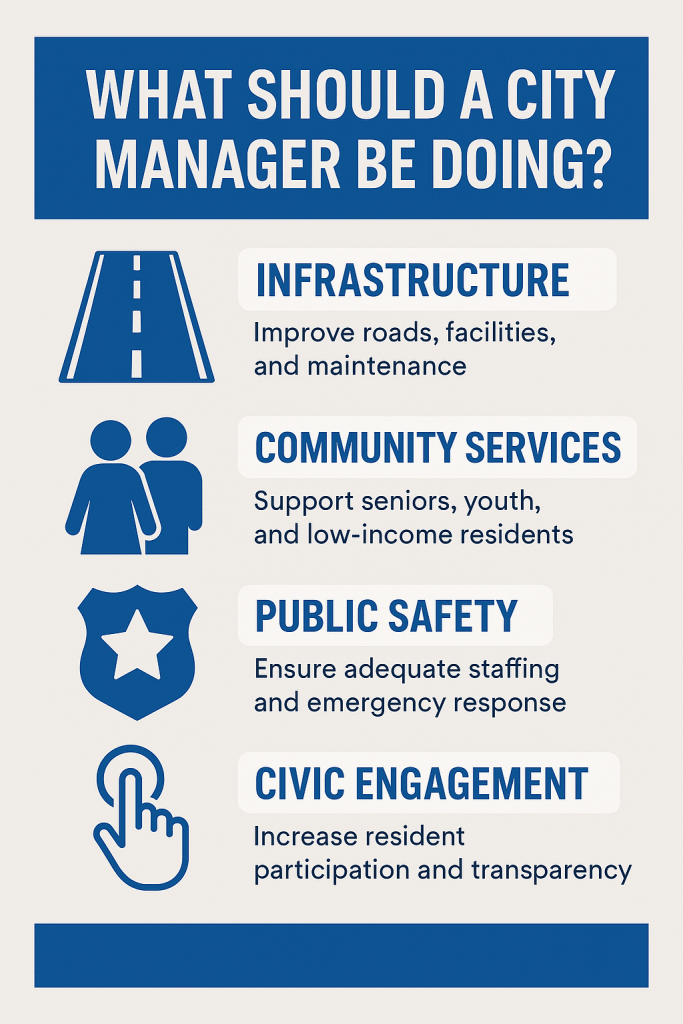

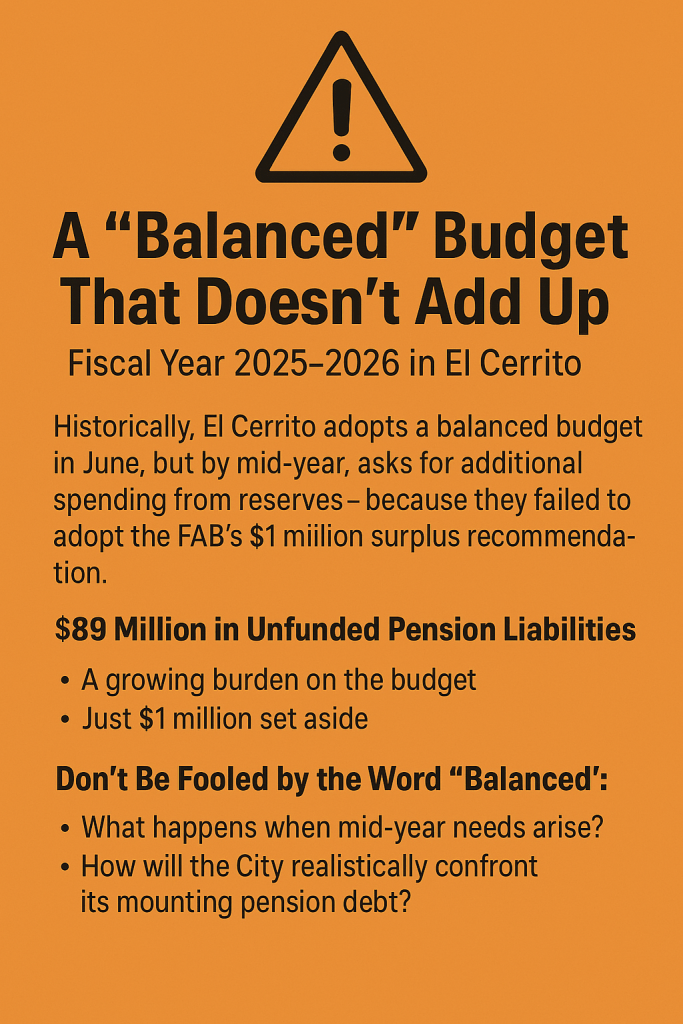












 El Cerrito Committee for Responsible Government (ECCRG)