In recent weeks, the push for transparency regarding the El Cerrito library surveys has gained momentum. A concerned citizen’s communication with former council member Greg Lyman highlights the ongoing struggle to obtain the survey data and reports that taxpayers funded.
The Issue at Hand
The surveys in question were conducted to gather community input on the proposed new library. However, despite the investment of public funds, the results have not been made available to the public. This lack of transparency is troubling, particularly for those who advocate for open government and accountability.
A Call for Action
The citizen’s letter to Greg Lyman emphasizes the need for cooperation between different stakeholders to secure the release of this vital information. Whether you support the Plaza library project or believe it is financially unfeasible for the city, the release of the survey data is crucial for informed decision-making. The community deserves to understand the feedback collected, which can significantly impact future planning and proposals.
Greg Lyman’s Response
Greg Lyman, a long-serving former council member and now a leader of the Plaza Station effort, responded to the concerned citizen’s plea. He acknowledged the conversation and the need for incorporating public input in future proposals. However, he also noted that the past surveys pertained to a funding measure that is no longer relevant. His focus is on developing a new proposal that includes more detailed preliminary designs and a clear timeline.
The Path Forward
To ensure the city acts in the best interest of its residents, it is imperative that both sides—those in favor of the new library and those concerned about its costs—unite in demanding the release of the survey data. By doing so, we can foster a more transparent and accountable government.
What You Can Do
Support this effort by writing to the current council members and urging them to vote for the release of the survey data and reports. This information belongs to the taxpayers, and its availability is a cornerstone of open government. Here is a link to contact the City Council: El Cerrito City Council.
Your voice matters. By advocating for transparency, we can ensure that the decisions regarding the new library are made with complete information and reflect the community’s true preferences and concerns.
Sample Email to Council Members:
Subject: Urgent Request for Release of Library Survey Data
Dear Council Members,
I am writing to express my concern regarding the withheld survey data and reports related to the new library proposal. As a taxpayer, I believe it is essential for this information to be made available to the public to ensure transparency and informed decision-making.
I urge you to push for the immediate release of the survey data and reports. This will allow both community members and council members to engage in meaningful discussions based on accurate and complete information.
Thank you for your attention to this matter.
Sincerely, [Your Name]
By coming together and demanding transparency, we can ensure that the future of our community’s library is decided through an open and informed process. Let’s work together to make our voices heard and uphold the principles of open government.
In the City of El Cerrito, leadership often touts their decision-making as strategic. However, upon closer inspection, it becomes evident that many of these decisions are nothing more than transactional and tactical. True strategy involves long-term vision and comprehensive planning, but the city’s recent actions demonstrate a lack of such foresight.
Short-Term Budget Fixes
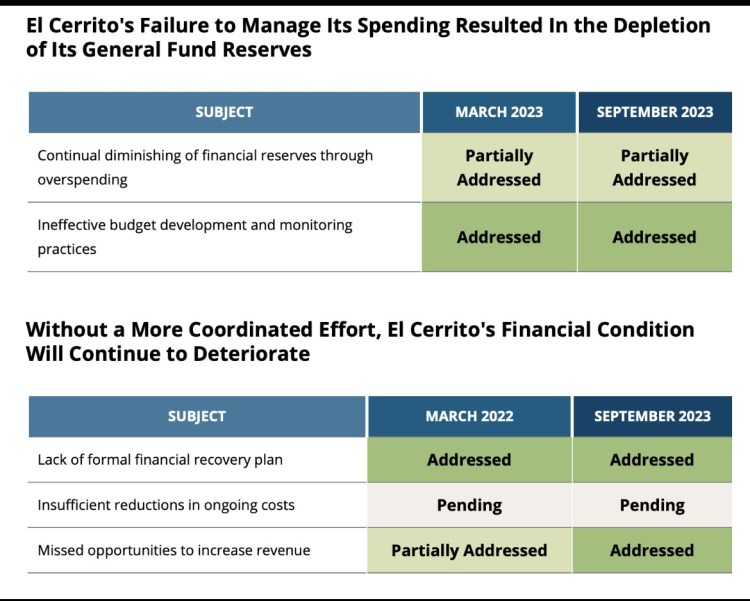
One clear example is the city’s approach to budgeting. For the past several years, El Cerrito has balanced its budget primarily through the use of reserves. While this may offer a temporary fix, it does not address the underlying issues of fiscal mismanagement and overspending. Rather than developing a sustainable financial plan, the city resorts to depleting its reserves, which is a tactical move at best. True strategic financial management would involve creating a plan to increase revenues and decrease unnecessary expenditures, ensuring long-term fiscal health.
The Library Relocation Project
Another instance is the proposed relocation of the city library. The city’s decision to move the library to a rented location, despite owning the land at the current site, is puzzling. This move is presented as strategic, yet it overlooks the long-term implications. Renting the new site at market rates, while the sale of the current property is not fully disclosed, points to a lack of genuine strategic planning. A truly strategic approach would involve a thorough cost-benefit analysis and transparency about the financial outcomes of such a move.
Addressing Pension Liabilities
El Cerrito’s handling of its pension liabilities further illustrates this point. The city has over $85 million in unfunded pension liabilities, with only a fraction of that amount set aside. City management’s tendency to downplay this significant economic debt is concerning. Rather than devising a strategic plan to address and reduce these liabilities over time, the city continues to operate without a clear resolution in sight, treating the issue as a distant problem rather than a present and pressing challenge.
Leadership and Diversity
Moreover, the city’s efforts in leadership and diversity also reflect tactical rather than strategic thinking. The current leadership does not reflect the diverse community it serves, which hampers effective decision-making and community engagement. A strategic approach would involve actively recruiting and retaining a leadership team that represents the community’s diversity, thus fostering a more inclusive and innovative environment.
Revenue
While the city has experienced some positive developments in revenue generation, primarily through enhanced sales tax collections from local businesses, the composition of these businesses—including massage parlors, liquor stores, adult stores, and a cannabis outlet—suggests a need for a broader and more balanced economic base. Although potentially lucrative in the short term, the presence of three Pilates studios appears unsustainable for a city of 25,000 people. Additionally, the absence of economic development leaves numerous commercial spaces empty and lots vacant, reflecting the deeper issue of overreliance on tax increases, which burdens residents and stifles economic growth.
Revitalizing San Pablo Avenue, a key commercial corridor, could transform it into a bustling hub. Proposed improvements include better pedestrian pathways, green spaces, and art installations, aiming to increase foot traffic and attract new businesses. Diversifying business sectors is essential for creating a resilient economy. Incorporating professional services, healthcare, educational institutions, automotive services, technology, manufacturing, and beauty services can attract high-value services and generate substantial revenue. To support these efforts, El Cerrito must prioritize enhancing safety, reducing bureaucratic hurdles, addressing crime concerns, making the city more business-friendly, and ensuring a prosperous future for its residents and business community.
Conclusion
In summary, while the City of El Cerrito may label its actions as strategic, a closer look reveals that these decisions are primarily transactional and tactical. True strategic decision-making requires a long-term vision and an integrated problem-solving approach, something the city has yet to fully embrace. Until then, we remain concerned about the sustainability and efficacy of the city’s leadership and financial management.
Join the Conversation
We encourage community members to engage in discussions about how we can drive true strategic change in El Cerrito. Let’s push for transparency, long-term planning, and inclusive leadership that genuinely reflects the needs and values of our diverse community.
Here is how you can help:
Share this post with other residents.
Comment on the post.
Attend the monthly Financial Advisory Board meetings in person.
Post on social media.
Voice your concerns with the Council.
Council meetings are remote and in-person, but public comment is now limited to in-person attendees. If you want to contact City Council Members or the City Managers, all their emails are below:
In El Cerrito, the commitment to public safety is evident in the significant compensation packages allocated to our fire department and city management. However, the disparity between our city’s spending and that of nearby cities raises concerns. While protecting citizens is paramount, the financial burden on our community is substantial, and the need for new taxes is a direct consequence of these high expenditures.
High Salaries in El Cerrito
According to Transparent California, the total compensation for key positions in El Cerrito has seen substantial increases over recent years:
City Manager: From $325,876 in 2019 to $359,412 in 2023, a 10.3% increase.
Assistant City Manager: From $241,834 to $330,863, a 36.8% increase.
Finance Director: $282,482 (latest figure).
Public Works Director: From $269,537 to $331,407, a 23.0% increase.
Community Development Director: From $264,396 to $300,921, a 13.8% increase.
Recreation Director: From $260,745 to $299,816, a 15.0% increase.
City Clerk: From $203,716 to $276,276, a 35.6% increase.
Additionally, the fire department’s top earners have seen their total compensation, including overtime, soar:
Fire Captain: $481,284
Fire Captain: $441,487
Fire Lieutenant: $424,795
Fire Chief: $412,926
Fire Lieutenant: $376,071
Fire Engineer: $375,981
Fire Captain: $367,875
Fire Engineer: $365,817
Fire Engineer: $362,828
Fire Engineer: $345,385
El Cerrito now has four battalion chiefs, while neighboring Albany and nearby Hercules both with similar size, operates with zero. The total compensation for fire captains and battalion chiefs in El Cerrito is approaching $600,000, with six top earners receiving over $100,000 in overtime, the highest being $203,490.
Comparison with Nearby Cities
Albany, a nearby city, maintains an excellent standard of public safety without incurring such high costs. Kensington, which contributes about 30% of El Cerrito’s fire department budget, highlights the imbalance in our spending.
State Auditor’s Report
The California State Auditor’s report emphasizes the fiscal challenges El Cerrito faces due to chronic overspending. The need to review staffing levels and compensation is more pressing than ever. The city’s financial management has resulted in El Cerrito being ranked as the 13th most likely California city to face bankruptcy. The excessive reliance on reserves and the handling of pension liabilities further exacerbate our financial woes .
The Need for a Balanced Approach
The fire department’s excellent work is undeniable, but we must question whether the current staffing levels and compensation packages are sustainable. It is essential to find a balance that ensures public safety without imposing excessive financial burdens on the community. Reviewing the state auditor’s recommendations and reassessing our budget priorities could help mitigate the need for constant tax increases.
In conclusion, while public safety is a top priority, El Cerrito must explore more sustainable financial strategies. Nearby cities manage to protect their citizens effectively without such high costs, suggesting that significant savings could be realized through prudent management and budget adjustments. This approach will help maintain public trust and financial stability in the long term.
For more detailed information, you can view the data from Transparent California here and the state auditor’s report here.
As the re-election of current Mayor Tessa Rudnick approaches, it’s time for us, the community of El Cerrito, to reflect on our leadership and the promises made to us. Our leaders have pledged to enhance our community with new projects like a library, a senior center, and improved services. Yet, the reality of these commitments has been questionable, especially regarding resource allocation and fiscal management.
The Measure V Dilemma
Measure V, which amassed over $15 million, was initially intended for projects like the new library and senior center. However, in February 2020, the city council redirected these funds to address a $1.5 million overtime expense and bolster the general fund reserves. Sadly, it seems that these funds have been used to cover reckless budgetary decisions rather than fulfilling their original purpose. This shift in priorities is not just an individual failure but a broader crisis of responsibility and ethical conduct among our elected officials. This breach of trust threatens our community’s unity and confidence in our leadership.
Measure R and Accountability
Measure R was designed to maintain essential services in El Cerrito, funding priorities such as rapid 9-1-1 response times, neighborhood police patrols, fire protection, emergency medical services, disaster preparedness, after-school programs, and the upkeep of city parks and open spaces. Despite the funds from Measure R and the General Fund being determined annually through a public budget process, there has been a lack of genuine fiscal accountability. The city’s claim of transparency is questionable, given that the Financial Advisory Board has not been involved in reviewing Measure R expenditures, as promised.
Leadership in Comparison
A conversation with a city manager from a similarly sized and successful city highlighted a key difference in approach: prioritizing essential needs over personal interests and having clear funding plans for desired projects. El Cerrito’s leadership could greatly benefit from this perspective, especially considering the significant financial influx from the Real Property Transfer Tax and the American Rescue Plan Act (ARPA) funds, which totaled over $24 million. The absence of concrete action toward the library and senior center projects has led to growing disillusionment among residents.
The Need for Change
The repeated failures to deliver on key community requests have eroded trust in the city’s leadership. Before considering further tax measures to fund unfulfilled promises, necessary reforms and accountability must be implemented. Residents are encouraged to engage more actively in city governance by attending Financial Advisory Board and council meetings to demand greater transparency and accountability.
Questions for Mayor Rudnick
As Mayor Tessa Rudnick seeks re-election, it’s crucial to ask why she does not support the release of survey reports or data for the two library surveys or the 2024 forever tax. Despite her claim of being data-driven, the refusal to release this data for public analysis raises concerns about transparency and openness in El Cerrito’s government.
It’s also time for her to publicly acknowledge the reality of city finances.
Budget and Fiscal Responsibility
The El Cerrito City Council passed its budget on a 5-0 vote, but this decision seemed pre-determined, with little genuine discussion or consideration of public comments. The council’s narrative suggested that the city is doing well, yet the actual financial situation tells a different story. The federal bailout, not fiscally responsible actions, rescued El Cerrito. The lack of public comments on the budget may indicate a lack of faith in the council’s willingness to address concerns.
Staff Sacrifices and Leadership Accountability
Mayor Rudnick’s praise for staff sacrifices lacks clarity on what specific sacrifices were made. This further underscores the need for further independent scrutiny and accountability in city leadership. The city’s failure to align pension payments with its unfunded liability has resulted in an enormous $85 million pension liability, placing our financial future at risk. The absence of performance standards for city leadership allows for a range of behavior without consequences, leading to mismanagement and potential legal issues.
Ignoring Unacceptable Behavior
A glaring example of this lack of accountability is the failure to address the City Manager’s behavior during a city council meeting, where she directed inappropriate comments to a subordinate, telling the Public Works Director to “shut the (#$&%) up.” Such conduct is entirely unacceptable for a public official and reflects poorly on the city’s leadership. Mayor Rudnick’s silence on this matter raises serious questions about her commitment to maintaining professionalism and respect within our local government. This incident undermines public trust and sets a troubling precedent for acceptable behavior in our city’s administration.
The Role of the City Attorney
It’s likely that Mayor Rudnick consults with the city attorney to understand the legal requirements of her role. However, her standard should be much higher than merely adhering to the law. She should strive to do what’s right for the community, even when it’s not explicitly required of her. Leadership involves making decisions that are ethically sound and in the best interests of the residents, not just following the minimum legal standards. This higher standard of accountability and integrity is essential for rebuilding trust and ensuring effective governance in El Cerrito.
Conclusion
As we approach the re-election of Mayor Tessa Rudnick, it’s essential to vote for a leader who genuinely puts the community’s interests first. Our city’s future depends on leaders who prioritize transparency, accountability, and responsible fiscal management. Engage actively, ask the tough questions, and demand the changes needed to ensure a better El Cerrito for all.
On Tuesday, the El Cerrito City Council voted 4-0 to put a measure on the November ballot to extend our city’s Measure R one percent sales tax “until voters end it.” While the council members briefly considered a 30 or 35-year sunset, they ultimately decided on an indefinite extension. This decision raises significant concerns about accountability for fiscal management.
Why would our City Council want to make it so hard for future voters to renew or not renew a tax that generates about $4 million a year for the general fund? Measure R is currently a 12-year tax that expires in 2027. By changing it to an indefinite extension, the council effectively takes away the voters’ existing right to renew or not renew the tax every 12 years. This reduces fiscal accountability and transparency.
The city manager and council members discussed the repeal process as an easy task. However, the reality is quite different. Here’s the process to end such a tax:
Initiating the Ballot Process: Voters must place a local initiative on the ballot. This requires a multi-step process:
Collecting Signatures: Signatures from 10 percent of all registered voters in El Cerrito must be collected. As of today, there are 17,458 registered voters, so 1,746 signatures would be needed.
Filing Requirements: Before collecting signatures, voters must prepare and file a notice of intent and pay a $200 filing fee.
Petition Certification: If the petition contains the required number of signatures, the City Council must take one of the following actions:
Adopt the Ordinance: Without alteration, within 10 days of petition certification.
Order an Election: Immediately.
Order a Report: Pursuant to Elections Code Section 9212. Upon presentation of the report, the City Council must either adopt the ordinance within 10 days or order an election.
Many urged the City Council members to reconsider this decision. Instead of an indefinite extension, the ballot measure should ask voters to extend Measure R until a fixed expiration date. This would ensure continued oversight and accountability for the city’s fiscal management.
Instead, they ignored us, with the Mayor saying those who requested a sunset would vote “no” anyway. The City consistently relies on Godbe Research, citing data to support their decision. What they didn’t disclose was that Godbe designed the questions around the desired result. This reliance on biased research undermines the integrity of the decision-making process and further distances the council from the community’s best interests.
The city council was diametrically opposed to a 12-year renewal, citing that they’ll go back to the voters with a sunset if the measure fails in November.
El Cerrito, a city facing financial difficulties, continues to experience increasing expenses while essential services for residents diminish. A significant and often overlooked aspect of this issue is the city’s growing senior population. According to 2010 data, 1,188 households (11.7%) had someone living alone who was 65 or older. Despite the evident need for senior services, the city has failed to address this critical issue adequately.
In 2018, the then-mayor urged residents to support the real property transfer tax, promising to fund a new senior center. However, the senior center was closed a few years ago and rented out to Kensington, with no further council discussions on reopening or addressing the needs of our elderly population. This decision left many seniors without a dedicated space for socializing, receiving services, and engaging in community activities.
While the city claims financial constraints, it seems there are funds available for other purposes. On April 30, 2022, the city manager spent $583.66 at San Rafael Joe’s for a departmental head dinner. The detailed expenses from that evening reveal a significant amount spent on food and beverages:
Espresso (2): $6.50
Cappuccino (3): $12.00
Calamari Appetizer (2): $24.50
Bruschetta (2): $22.00
House Salad: $6.75
Prime Rib (4): $152.00
Veal Scaloppini: $25.50
Veal Parmigiana: $25.50
Chicken Piccata: $21.00
Veggie with Snapper: $22.00
Prawns Saute: $24.50
Tiramisu (2): $10.00
Bread Pudding: $7.50
NY Cheesecake: $7.50
Crème Brulee: $7.00
Cup Chowder: $7.00
Gratuity: $84.62
Total Due: $507.70
These expenses highlight a concerning trend of frivolous spending within the city’s government, even as it struggles to provide essential services to its residents. The city’s financial priorities appear misaligned with the needs of the community, particularly its vulnerable senior population.
As a resident of El Cerrito, it is crucial to hold our city officials accountable for their spending decisions and advocate for a more transparent and responsible allocation of our tax dollars. The city must prioritize essential services, such as reopening a senior center, to support and enhance the well-being of our elderly residents. It is only through vigilant oversight and active participation that we can ensure our city funds are used wisely and for the benefit of all residents.
At the upcoming July 17 council meeting, council members are expected to propose a “forever tax” to be placed on the November ballot. If approved by the voters this tax will be imposed on the sale of tangible personal property and the storage, use, or other consumption of such property. The proposed tax rate would be one percent (1.0%) of the sales price of the property. Revenue from this tax would be collected by the California Department of Tax and Fee Administration and remitted to the City of El Cerrito. Notably, this tax would remain in effect indefinitely until ended by voters, requiring a simple majority vote for approval.
This proposed tax is designed to be a general fund tax, meaning it will need just 50 percent plus one vote to pass. In contrast, a dedicated library tax currently requires a two-thirds majority. Additionally, a state proposition on the ballot for the library forever tax aims to lower the required percentage to pass construction issues down to 55 percent.
One significant consideration is that a forever tax has never been repealed by El Cerrito voters. Once implemented, these taxes tend to remain in place indefinitely. Moreover, adding repeal measures to the ballot is both expensive and time-consuming, further complicating any future efforts to reconsider such taxes.
Others are concerned about the city’s push to get voters to enact new taxes that never expire. Placing an expiration date on each tax gives voters a clear opportunity to vote yes if they are satisfied with how money is being spent and no if they are not. To say that voters can repeal a tax if they don’t like it is absurd since this places a tremendous burden on citizens to figure out the process and collect a large number of signatures. That’s why it is wise to enact taxes that expire within a reasonable amount of time. If the council votes on July 17 to place a “forever” sales tax extension on the ballot, the council needs to break their silence, engage the public, and discuss their reasoning.
Voters in El Cerrito will not only decide on the forever tax but also weigh in on significant measures at the state and regional levels. One notable item is the Bay Area affordable housing bond measure, which aims to raise $20 billion for affordable housing, potentially increasing property taxes by a few hundred dollars per year. Other state bond measures will also be up for consideration, reflecting a broader effort to address housing and infrastructure needs across California.
The introduction of these measures highlights the ongoing fiscal challenges and priorities within our community and state. As we approach the November election, it will be crucial for residents to understand the implications of these taxes and bond measures on our local economy and public services.
For more details on the July 17 council meeting agenda, you can visit the El Cerrito city portal.
Stay informed, and make your voice heard at the ballot box this November.
As the El Cerrito City Council election approaches, we, the residents, must strive for integrity and fairness in our electoral process. Independent candidates offer fresh perspectives and new ideas that can drive positive change in our community. However, recent history has shown us that underhanded tactics can undermine the democratic process.
Remembering the Last Election
In the last election, we were thrilled by the candidacy of an independent candidate who articulated her views clearly and made them accessible to everyone. Despite lacking the backing of powerful political machines, her campaign resonated with many of us. Unfortunately, her efforts were met with deceitful opposition. A prominent city hall booster on Nextdoor took it upon himself to distort her views and disparage her at every turn. Just days before the Election, a series of malicious posts attacking her emerged from a single unfamiliar account, never seen before or since. These posts were suspiciously cheered on by the same city hall booster.
Several dedicated residents worked tirelessly to flag and remove these posts before they could cause significant damage. While this might not have been the sole reason she lost, it was deeply troubling to witness such dirty tricks in our local election.
Another independent candidate in a previous election faced similar challenges. His campaign, which brought innovative ideas for revitalizing San Pablo Avenue, saw a large number of his signs torn down. It’s disheartening to think people would stoop so low, but it’s not surprising given the baseless comments thrown around on Nextdoor by the city hall booster.
The Need for a Fair Election
The last election was marred by corruption on multiple levels. One candidate placed his signs out well ahead of the allowed period. Given the proximity to the election, the City Manager, Karen Pinkos, appeared to be publicly supporting a council member, Gabe Quintos, which is prohibited by ICMA rules. This luncheon occurred at Tigon restaurant on November 3, 2022. This year, if you witness any such indiscretions, please write to the ICMA to report them.
El Cerrito deserves a fair election where all candidates, especially independents, have an equal opportunity to compete for the three available seats. Through awareness, education, and advocacy, we can ensure that every candidate has a fair chance.
Call to Action
Let’s stand together for a fair election. If you see unfair tactics or violations of election rules, speak up and report them. Support independent candidates who bring new ideas and perspectives to our city council.
Join the movement for fair elections in El Cerrito. Together, we can make a difference.
By staying vigilant and advocating for fairness, we can uphold the democratic values that make our community strong. Let’s ensure that every candidate has the chance to be heard and that the residents of El Cerrito can make informed choices free from manipulation and deceit.
The El Cerrito city manager has chosen to drag her feet on the state auditor’s 2021 recommendation to conduct a crucial staffing needs study. Instead of addressing this significant issue, she has announced a slew of other initiatives as priority measures, pushing the study to the back burner.
Not so coincidentally, this delay aligns perfectly with the planned property tax measure—a $300 per year forever tax. This measure seems to be a strategic move to avoid any reductions in overstaffing by increasing revenue instead. Unfortunately, her mismanagement may cost El Cerrito residents dearly.
El Cerrito has the largest Police department per capita in Contra Costa County but with all those guns, the crime rate remains among the highest in Contra Costa County. Remarkably, El Cerrito is the only northern California city of 25,000 people with four battalion chiefs in its fire department. Additionally, the city manager’s office includes an assistant city manager and an executive assistant, making it the only city of its size in Contra Costa County with such a large city manager’s office. This overstaffing is a clear indicator of inefficient management that the proposed tax measure aims to sustain.
The residents of El Cerrito deserve better. We deserve transparent, accountable leadership that prioritizes the financial health of our city and the well-being of its citizens. Ignoring the state auditor’s recommendations and opting for a perpetual tax increase is not the solution.
Call to Action: We urge all residents to voice their concerns and demand action. Attend city council meetings, write to your representatives, and let the city manager know that we will not stand for this mismanagement. Our city’s future depends on it.
Take Action Today!
Attend City Council Meetings: Your presence and voice can make a difference.
Contact Your Councilmembers: Write letters and emails expressing your concerns.
Spread the Word: Share this post and use the hashtags to raise awareness.
Together, we can ensure a better future for El Cerrito. Let’s hold our city leadership accountable and demand the transparency and responsibility we deserve.
The media has been buzzing with reports about fare evasion at BART stations, and rightfully so. As a paying BART rider or a taxpayer, it’s our money that’s being lost. BART staff estimates the revenue loss due to fare cheats at $10 million to $25 million per year, but recent conservative figures suggest that fare evaders constitute 4 to 5 percent of overall ridership. This translates to a staggering loss of $22 million to $35 million annually, potentially exceeding BART’s projected structural operating budget deficit of $327 million over the next decade.
Fare evasion manifests in various ways: riders hopping over, sliding under, or pushing open barriers, using elevators that bypass the fare gate system, walking through unlocked emergency swing gates, or piggybacking on others. The current debate centers on whether to continue the fare inspector program, which costs almost $2 million annually. However, the real issue lies in accurately estimating the revenue lost to fare evasion to make informed decisions on how much to spend on solutions.
BART board members Debora Allen, John McPartland, and Liz Ames had repeatedly called for a concise methodology to estimate fare evasion accurately and include these results in quarterly financial reports. They argue that taking fare evasion seriously supports the vast majority of riders who always pay the correct fare.
Unfortunately, BART Board member Rebecca Saltzman since 2012 avoided addressing fare evasion even when BART received $3.5 billion from a bond measure in 2016, which would have funded new faregates. She avoided addressing fare evasion despite its significant cost and safety implications, nor has she demonstrated financial responsibility in her tenure.
A recent tragic incident underscores the magnitude of the delay in addressing safety concerns at BART stations. On July 2, 2024, a 74-year-old woman was killed after being pushed into a moving BART train at Powell Street station by a man identified as a transient. This incident highlights the dangerous environment created by fare evaders and other unauthorized individuals on the premises.
Rebecca Saltzman currently serves on the BART Board of Directors, and her work there, along with her bid for City Council, reflects her dedication to public service. However, despite her commitment, she has not demonstrated fiscal responsibility or prioritized addressing fare evasion. This raises questions about her capability to tackle these critical challenges.
As voters consider her bid for City Council, they should carefully weigh her commitment to making BART a safer, more reliable, and fiscally responsible transit system against her track record.
El Cerrito residents are grappling with an unnecessary financial burden: a $35 permit fee for residents with alarm systems charged by the police department. While we understand the need for fees to cover false alarms, it’s troubling that our tax dollars aren’t covering the cost of police responses to actual break-ins. This fee is yet another layer in the city’s financial mismanagement, adding to the high costs and high crime rates that plague our community.
High Crime Rates and Police Staffing Concerns
Despite having the largest police staff per capita in the region, El Cerrito is not seeing a corresponding increase in safety. Our crime rate is alarmingly high, with 44 incidents per thousand residents. The likelihood of being a victim of violent or property crime here is 1 in 23, far above the national average.
Comparatively, Hercules, California, a city of similar size and population, experiences much lower crime rates with fewer police officers. Hercules residents face a 1 in 900 chance of encountering violent crime and a 1 in 92 chance of property crime. These figures highlight that having more officers doesn’t necessarily lead to better safety outcomes.
The Inefficiency of the $35 Alarm Permit Fee
In this context, the $35 alarm permit fee imposed by the El Cerrito Police Department adds insult to injury. While fees for false alarms can be justified, charging residents for the mere presence of an alarm system is unacceptable. Our tax dollars should cover these essential services, ensuring that residents are not penalized for the city’s fiscal mismanagement.
A Call for Fiscal Responsibility and Better Policing
El Cerrito needs to reassess its approach to both financial management and public safety. The city must prioritize fiscal responsibility, innovative solutions, and effective community policing strategies. Learning from successful models like that of Hercules can provide valuable insights.
Strong, collaborative relationships between law enforcement agencies and communities are crucial for deterring crime and enhancing safety. The principles of 21st Century Policing—emphasizing dignity, respect, empathy, and transparency—must be adopted to rebuild trust and improve community relations.
Engaging with the Community
As residents of El Cerrito, it is vital to stay informed and engaged with these issues. Participate in local governance, support reform initiatives, and voice your concerns about fiscal management and public safety practices. Together, we can push for changes that will make our community safer and more financially stable.
How You Can Help:
Share this post with other residents.
Comment on the post.
Attend the monthly Financial Advisory Board meetings in person.
Post on Next Door.
Voice your concerns with the City Council.
Participate in Council meetings, which are available both remotely and in person, although public comment is now limited to in-person attendees.
On June 27th, the City Manager presented at Juku Cafe, sponsored by the Chamber of Commerce. The event was not widely publicized and should have been advertised on EC social media channels well ahead of the event.
We also have concerns about the accuracy of some of the statements made during this event, particularly regarding the City’s debt load and financial stability.
Misrepresentation of Debt Load
During the presentation, the City Manager claimed the City has “very little debt.” This statement seems to ignore the reality of over $85 million in unfunded pension liabilities. These liabilities are economic debt, even if they are recorded off-balance sheet. The omission of such a significant financial obligation raises questions about the transparency and completeness of the information provided to the public.
Denial of Bankruptcy Concerns
The City Manager also stated that the City was never near going bankrupt. This assertion contradicts the concerns raised by various financial analysts and the State Auditor, who previously identified El Cerrito as the 6th most likely city in California to face bankruptcy. Given the chronic overspending, reliance on reserves, and significant pension liabilities, it’s hard to reconcile her statement with the facts particularly since the city is currently ranked 13th of approximately 400 California cities to face bankruptcy.
Upcoming Sales Tax Measure Vote
Another point of concern raised during the presentation was the City Manager’s focus on the upcoming vote to extend the 1% sales tax measure, set to expire in 2027. Her concern about this vote indicates the City’s reliance on this revenue stream for financial stability. This reliance further underscores the precarious financial situation of the City, despite claims to the contrary.
Call to Action
We urge anyone who attended the meeting at Juku Cafe to share their observations and perspectives. As residents, we must have a clear and accurate understanding of our City’s financial health. Transparency and accountability are essential for making informed decisions, especially with critical votes on the horizon.
Let’s ensure that the information we receive from our City leaders is complete and truthful. If you were present at the meeting or have any insights, please reach out or leave a comment. Together, we can hold our City management accountable and work towards a financially stable and transparent El Cerrito.
As we gather with family and friends to celebrate the 4th of July, the El Cerrito Committee for Responsible Government wishes everyone a joyful and safe Independence Day! This holiday is a time to reflect on the values that make our nation strong: freedom, democracy, and community.
In El Cerrito, we cherish these values by striving for transparency, accountability, and fiscal responsibility in our local government. Our commitment to these principles ensures that our community remains vibrant and sustainable for future generations.
Enjoy the fireworks, parades, and all the festivities that this special day brings. Let’s celebrate not just the birth of our nation but also our collective efforts to build a better El Cerrito.
Happy Independence Day!
Warm regards, El Cerrito Committee for Responsible Government
The City of El Cerrito has wasted hundreds of thousands of dollars on the Plaza project. Moreover, the city lost out on grant money, resulting in a few million dollars lost. The higher interest rate environment means the city would lose millions more in interest payments.
In fiscal year 2024, the city used reserves out of necessity. This mismanagement is evident in the city’s failure to strategically plan the library measure for the regularly scheduled November election, potentially costing taxpayers about $200,000 to run a special election. The council even scoffed at a construction bond.
The need was not for a professional presentation. The need was for city management to interact with the community instead of telling the community what it is intending to do. There were supposed to be community engagements to discuss the library location and parking at the Plaza. That has not happened.
Additionally, the City is providing misinformation about the costs of renovating or rebuilding on the existing library site. This misinformation is driven by their determination to complete the TOD affordable housing project, which relies on the subsidy for the 20,000 sq ft retail space the library will occupy to finance the construction of the building. A professional contact, the owner of a large construction company, has informed that renovating or rebuilding on the existing site would cost equal to or less than the $1,000 per sq ft price tag for the proposed 20,000 sq ft library. A new 12,400 sq ft building would cost $12,400,000, while a 20,000 sq ft building would cost $20,000,000.
Normally, the council rubber stamps whatever the city manager proposes. It is unclear if the $300 per year forever tax was ever approved by the council. Now, management will not state what its current proposal is or when the people will have a chance to vote on the library issue.
The proposed Plaza library is just a part of a large housing project. El Cerrito will be renters. Therefore, there is a great deal of uncertainty associated with the project. We don’t even know what management is going to propose for the tax measure or when it will be on the ballot.
We have already seen that the size of the library was reduced from 21,000 square feet to 20,000 square feet. We have also seen that the number of dedicated parking spaces was reduced from 63 to ZERO. It now appears as though the city will be donating millions of dollars worth of parking spaces.
There could be years of construction delays which might add millions of dollars to the construction costs. The city already lost out on multi-million dollar grants. The potential project faces a multi-million dollar increase in financing costs, given the current interest rate environment.
Also, while some seem to be comfortable with the top-down approach where the city manager makes all of the decisions and the council follows like sheep, many believe that the community should have meaningful input in the process.
With foot traffic and the borrowing of physical books in steep decline, the community does not need a 20,000 sq ft library with no parking to replace the current 6,500 sq ft library.
Since management and the council will apparently not listen to the community, and are not discussing alternatives. If you are not pleased with the options, you are free to vote NO.
– This article informed for publicly posted community engagement
A public information request for FAB member attendance sent to the City Clerk was met with the response, “check the website,” despite the fact that the website records are incomplete. This is how El Cerrito tax dollars are being utilized!
In the heart of El Cerrito, a troubling pattern has emerged that calls into question the effectiveness and integrity of our local government. Since January 2023, three Financial Advisory Board (FAB) meetings have been canceled due to either city staff cancellations or the inability to reach a quorum. This disruption has significant implications for the governance of our city, and the problem runs deeper than mere attendance issues.
Attendance and Participation: A Tale of Two Years
In 2023, the City Council appointed Council Liaison Wysinger to attend FAB meetings. However, Wysinger’s commitment was questionable at best, with attendance recorded at just one meeting. Admittedly, she’s not well versed in finances, and her lack of participation mirrors her interest in learning about municipal finance.
The contrast in 2024 is stark, as Council Liaison Fadelli attended most meetings, with another council member stepping in during his absence. This discrepancy highlights an inconsistency in engagement and commitment from our elected officials.
Leadership and Tenure: An Unbalanced Approach
A particularly concerning issue is the ongoing disparity in how leadership roles within the FAB are managed. A previous FAB chair held their position for nearly five years, yet the current chair is being forced out after just two years. This abrupt change raises questions about the fairness and rationale behind such decisions. The City Council and City Clerk are responsible for providing candidates for FAB, yet the selection process seems to lack transparency and consistency.
Absenteeism Among New FAB Members
Further complicating matters, three new FAB members, selected by the City Council, have been absent more often than present at FAB meetings. One previous member was even forced out due to an alleged rule violation, while others who fail to meet attendance expectations remain on the board.
Absenteeism undermines the effectiveness of the board and hinders its ability to fulfill its advisory role. This is particularly disturbing because the newly seated members were appointed during the most critical time of the year – during the budget process.
A quorum of three is necessary for a meeting and minimum of four is needed for subcommittee analysis, research and evaluation. Having an ineffective FAB is in the City Manager’s best interest.
Such selective enforcement of rules and seating uncommitted residents suggests a deeper issue within the governance framework of our city.
The Role of the City Manager
The City Manager’s influence over which items are presented to FAB adds another layer of concern. Many items of material financial impact are not reviewed by FAB and proceed to the council without the necessary advisory input. This systemic pattern of bypassing the board not only diminishes the role of FAB but also undermines the principle of thorough, informed decision-making in our city’s governance.
The Need for Accountability and Transparency
The issues of misapplied rules, inconsistent participation, and selective enforcement within El Cerrito’s City Council and FAB are alarming. They highlight a need for greater accountability and transparency in how our city is managed. The residents of El Cerrito deserve a government that is consistent, fair, and fully committed to the responsibilities it has undertaken.
Also, for greater transparency, FAB meetings should be recorded.
In conclusion, it is crucial for the City Council to reassess its approach to governance. Ensuring consistent attendance, fair treatment of board members, and transparent processes will help restore trust and effectiveness in our local government.
The future of El Cerrito depends on a council that is not only present but also fully engaged in serving the best interests of its community.
The City of El Cerrito’s recent decision to invest $250,000 in a housing developer for a speculative real estate development raises significant concerns, particularly when examined in the context of the Supplemental Property Tax. This tax, intended to fund “people and programs” such as after-school care and other city-sponsored activities, appears to be diverted to finance the construction of the first floor of a Transit-Oriented Development (TOD) housing project. This deviation from its original purpose deserves scrutiny and public awareness.
The Purpose of the Supplemental Property Tax
A Supplemental Property Tax is designed to support community programs and services. In El Cerrito, such funding could enhance various city-sponsored activities and initiatives. However, it is now being used to finance the TOD housing development—a project that benefits a private developer rather than the broader community.
Appropriate Financing for the Library
Construction bonds are the standard and suitable financial instruments for building or renovating public facilities like libraries. These bonds function similarly to home loans, eventually being paid off and retired. El Cerrito already benefits from the services of the Contra Costa County Library system, funded through a portion of property taxes paid by all county property owners. The 2024-2025 budget for this system is set at $43,978,078, reflecting a 6% increase from the previous year. This budget, accessible on the County website, provides detailed performance and operating statistics, offering transparency and accountability.
Questions About the TOD Housing Development
The financing scheme for the TOD housing development raises several questions:
Supplemental Property Tax Misuse: How does an annual property tax, intended for community programs, translate into $21,000,000 in proceeds to finance the library’s first-floor construction? The six floors of housing above this floor further complicate the financial justification.
Interest Costs: The City’s budget projects $1,600,000 in interest costs. If there is no traditional financing, how can these interest payments be justified? Who will bear this financial burden?
Unaccounted Funds: What happens to the remaining $900,000 in Supplemental Property Tax receipts?
These questions highlight the need for greater transparency and responsible fiscal management.
A Better Path Forward
The State of California has proposed a $20 billion affordable housing bond for Contra Costa and the surrounding nine Bay Area counties, which will be on the ballot on November 5th. This bond, coupled with a reduced requirement for voter approval, presents an opportunity to fund affordable housing projects without burdening local property taxpayers. Utilizing these state funds for the housing developer’s return on investment (ROI) is a more equitable solution.
Separate Projects for Separate Needs
Combining the library renovation with the housing project is impractical and misleading. Housing and library projects each have unique challenges and should be addressed separately. The library should be renovated or rebuilt on the existing site owned by the city, ensuring a larger, architecturally significant building that serves the community’s needs.
Influence from Blog Followers
One of our blog followers commented on the June 27th Library post, bringing to light several critical points and questions that have heavily influenced this blog. Their insightful commentary underscored the importance of transparency and fiscal responsibility, inspiring a deeper investigation into the issues at hand.
Conclusion
El Cerrito residents deserve transparency and accountability in how their taxes are used. Diverting funds meant for community programs to finance a private development undermines public trust. Let’s advocate for the responsible use of state funds for affordable housing and a standalone library project that honors the city’s commitment to its residents. Say yes to affordable housing and yes to a standalone library that serves as a beacon of community pride.
For those interested, they highly recommend reading the Contra Costa County Library budget available on the County website. It offers a wealth of information and insights into how our libraries operate and perform.
Let’s ensure our city’s decisions reflect the best interests of its residents, promoting transparency, accountability, and a commitment to community well-being.
In recent months, the City of El Cerrito has faced substantial public backlash over its decision to cut funding for the library. Despite the residents’ strong desire for this essential community resource, these budget cuts were implemented, leading to widespread discontent. Now, the City has proposed a new funding mechanism: a perpetual $300 annual property tax for each homeowner. This proposal, however, raises several red flags and demands closer scrutiny.
The Deceptive Tactic of the “Forever Tax”
At first glance, the $300 property tax might seem like a reasonable way to secure the necessary funds for the new library. However, this tax is not a temporary measure; it is designed to be perpetual. This “forever tax” tactic is misleading and raises questions about the true intentions behind the proposal.
The city’s residents have been vocal about their need for a new library, especially following the budget cuts. Leveraging this strong public sentiment, the City has proposed this tax under the guise of addressing the community’s demand. But is this really about funding the library, or is there more to the story?
The True Cost of the Library
The City claims that the new library will cost $21,000,000, a figure that many find questionable given the lack of detailed cost analysis. When we dig deeper, it becomes likely that the actual costs are likely significantly lower. The absence of a transparent breakdown of expenses suggests that the $21,000,000 figure might be inflated.
Land and Site Preparation: The city does not own the land at the new site but will be renting it. The costs of renting the new site should be clearly outlined, yet these details remain vague. Official documents indicate the city will pay market rent, despite claims that it will cost only $1.
Revenue from Current Site: The city will inevitably make money from the sale of the current library property, but this potential revenue has not been disclosed. This omission is troubling and raises questions about financial transparency.
Construction and Labor: Standard construction and labor costs should be clearly outlined, yet these details remain vague.
Design and Architectural Features: While there might be unique design elements, these alone cannot justify such a high total cost.
Technology and Equipment: Modern libraries do require advanced technology, but the costs for these can be estimated and should not result in such a large overall budget.
Without a detailed analysis, it’s hard to justify the $21,000,000 price tag. This raises the question: what is the real reason behind this inflated figure?
Excessive Spending and Mismanagement
The proposed perpetual tax appears to be a cover for the City Manager’s excessive spending. By overestimating the cost of the library, the City can divert funds to other areas without public scrutiny. This mismanagement of public funds is concerning and warrants further investigation.
Residents deserve transparency and accountability, especially when it comes to long-term financial commitments like a perpetual property tax. The City needs to provide a detailed breakdown of the library’s costs and justify the need for such a significant investment.
Holding the City Accountable
As residents, it is our responsibility to demand transparency and accountability from our city officials. Here are some steps we can take:
Demand Detailed Cost Analysis: Insist on a comprehensive breakdown of the library’s expenses. This should include land acquisition, construction, design, technology, and operational costs.
Question the Need for a Perpetual Tax: Why is a perpetual tax necessary? What are the projected long-term benefits, and how will these funds be managed?
Investigate Alternative Funding Sources: Are there grants, donations, or other financial contributions that can reduce the burden on homeowners?
Inquire About Revenue from Current Site: Demand transparency on how the revenue from the sale of the current library property will be utilized.
Clarify Rental Costs: Request official documentation clarifying the rental costs of the new site to ensure there are no discrepancies.
Engage in Community Discussions: Attend city council meetings, voice your concerns, and participate in community discussions to hold city officials accountable.
Conclusion
The proposal to fund the new library through a perpetual $300 property tax raises serious concerns about transparency and financial mismanagement. The residents of El Cerrito deserve a library, but they also deserve honesty and accountability from their city officials. It’s time to unmask the true costs and demand a fair and transparent approach to funding this vital community resource.
Let’s work together to ensure that our voices are heard and that our city leaders prioritize the needs and interests of the community.
The author of this blog is a heterosexual person of mixed race with a black mother, a white father, and a Jewish stepfather. Their father died when they were an infant. Moving to El Cerrito in 2022, the author was stunned by how “white” and presumably heterosexual the city leadership is, particularly given the diversity of the city council, which includes two openly gay members (one Asian and one African American), another Asian member, and one Jewish member.
Upon comparing the organization structure to the City Council, the author asked if they could write a blog about the lack of diversity and how it negatively impacts decision-making and financial stewardship.
The Importance of Diverse Leadership
Diverse leadership in city administration is not just a matter of representation; it is essential for effective governance. When leadership teams lack diversity, there is a tendency for groupthink to dominate decision-making processes. Groupthink occurs when people with similar backgrounds and perspectives make decisions in a way that discourages creativity and critical evaluation. This can result in flawed decision-making, as there are fewer challenges to ideas and methodologies.
People who look alike and share similar experiences often do not challenge each other’s thought processes, methodologies, or decisions. This homogeneity can be particularly detrimental in critical areas such as hiring decisions, financial health, and operational effectiveness.
Hiring Decisions
In hiring decisions, a lack of diversity can perpetuate a cycle of sameness. When leaders do not challenge each other’s perspectives, they are more likely to hire individuals who resemble themselves in background and outlook. This not only limits opportunities for minority and non heterosexual candidates but also stifles the potential for innovative and inclusive solutions that a more diverse workforce could provide.
Financial Health
In terms of financial health, diverse leadership is crucial for developing robust and equitable financial policies. Homogeneous teams may fail to consider the unique financial challenges faced by different community groups. This can lead to policies that are not only inequitable but also ineffective in addressing the broader financial health of the city.
Operational Effectiveness
Operational effectiveness is also compromised when leadership lacks diversity. Diverse teams are better equipped to understand and address the needs of a varied populace. They bring a range of perspectives that can identify potential issues and opportunities that a homogeneous team might overlook. This leads to more comprehensive and effective operational strategies that benefit the entire community.
This is particularly of interest as we reflect on sexual harassment and the aftermath in the police department.
It is also noteworthy given the high turnover in the Finance Director role and the city manager’s lack of action on many of the city auditor’s findings.
Ostracizing Non-White and Jewish Outsiders
A significant issue arising from a lack of diversity in leadership in an organization is the potential ostracization of non-white and Jewish individuals. When leadership is homogeneous, it can create an environment where outsiders—those who do not fit the predominant demographic—are marginalized or excluded from critical discussions and decisions.
This exclusion can manifest in various ways:
• Social Isolation: Non-white and Jewish individuals may find themselves socially isolated within the workplace, leading to a lack of collaboration and outreach opportunities.
• Bias in Decision Making: Homogeneous groups may unconsciously or consciously favor those who are similar to them, resulting in biased decisions that do not consider the needs and perspectives of diverse community members.
• Cultural Insensitivity: Policies and practices may reflect the majority’s norms and values, ignoring or marginalizing the cultural practices and needs of minority groups.
The ostracization of non-white, non heterosexual and Jewish individuals not only hinders the personal and professional growth of these individuals but also deprives the city of the diverse perspectives that are essential for innovation and comprehensive problem-solving. It creates a workplace culture that is unwelcoming and potentially hostile to those who are different, undermining efforts to build an inclusive and equitable community.
Current State of El Cerrito’s Leadership
El Cerrito, like many cities, faces challenges in ensuring that its leadership reflects the diverse community it serves. Diversity in city leadership is crucial not only for fair representation but also for incorporating a variety of perspectives in decision-making processes. Unfortunately, El Cerrito’s city leadership remains predominantly homogeneous, which raises concerns about the inclusiveness and effectiveness of its governance.
City Manager White Female known for having the 13th City Most likely to become bankrupt, a plummeting bond rating and building a predominantly white heterosexual team:
Attorney – Sky Woodruff, White Male
The City Attorney, Sky Woodruff, is a white male who oversees the legal affairs of El Cerrito. His office is responsible for providing legal advice to the City Council, representing the city in legal proceedings, and ensuring that city laws are enforced. While his legal expertise is undoubtedly valuable, the lack of diversity in this role can limit the breadth of perspectives considered in legal decisions that affect all residents.
City Clerk – Hollty Charlety, White Female
Hollty Charlety, the City Clerk, is a white female who manages elections, maintains city records. The City Clerk’s office is a critical point of interaction between the city government and its residents. A more diverse leadership in this position could foster greater trust, transparency and engagement from the community, particularly from underrepresented groups.
Community Development Department Director – Melanie Mintz, White Female possibly Jewish or by marriage.
Melanie Mintz leads the Community Development Department, which handles planning, building, economic development, housing, and environmental sustainability. While Melanie’s leadership ensures the city’s growth and development, the lack of diversity within the department’s leadership can hinder the inclusion of diverse community needs and priorities in development projects.
Finance Department – Crystal Reams and Budget/Financial Services Manager, Both White Females
The Finance Department, headed by Crystal Reams and supported by another white female in a key managerial role, manages the city’s financial resources. Financial management is crucial for the city’s stability and growth. However, a homogeneous team might overlook the financial needs and challenges faced by minority communities, potentially leading to inequitable financial policies.
Fire Department – Paul Keith, White Male
Paul Keith, a white male, leads the Fire Department, which is responsible for fire protection and prevention services. The Fire Department’s leadership significantly impacts community safety and emergency response. Greater diversity in this department could enhance cultural competence and improve service delivery to all residents, ensuring that emergency responses are inclusive and equitable.
Human Resources – Shannon Bassi, White Female
Shannon Bassi heads the Human Resources department, which deals with employment, labor agreements, compensation, and risk management. The HR department plays a pivotal role in shaping the city’s workforce. A diverse leadership in HR is essential to promote inclusive hiring practices and ensure that the city’s workforce reflects the community’s diversity.
Information Technology – Eric Ng, AsianMale
Eric Ng, the IT Director, is one of the few non-white leaders in El Cerrito’s city administration. His role in overseeing the Information Technology Division is critical for the city’s digital infrastructure and services. Eric’s position highlights the benefits of having diverse leadership, as it brings varied perspectives and experiences to the table.
Police Department – Paul Keith, White Male
Paul Keith also heads the Police Department, emphasizing the need for diverse leadership in law enforcement. The Police Department’s mission includes crime prevention and maintaining public safety. Diverse leadership within the police force can improve community relations, ensure fair policing practices, and enhance trust between the police and minority communities.
Public Works – Yvetteh Ortiz, Hispanic Female
Yvetteh Ortiz, a Hispanic female, leads the Public Works department, which oversees city engineering, maintenance, and clean water services. Yvetteh’s role underscores the positive impact of diversity in leadership positions. Her presence in the Public Works department demonstrates how diverse leadership can contribute to more inclusive and effective city services.
Outreach – Will Provost White Male
Reportedly with a robust skill set that includes research, economics, public speaking, Microsoft Excel, proposal writing, and more, Will Provost contributes valuable insights to the industry. Besides updating the website and engaging in community outreach, his job description remains somewhat unclear.
Conclusion
El Cerrito’s current leadership structure lacks diversity where nearly everyone is white particularly in key departments. This homogeneity can result in decision-making processes that do not fully consider the diverse needs of the community. It is crucial for El Cerrito to prioritize diversity in its hiring practices and leadership appointments to foster a more inclusive and effective government. By embracing diversity, the city can ensure that all voices are heard and that its policies and services meet the needs of all its residents.
Diverse leadership not only enhances representation but also strengthens the city’s ability to make well-rounded, innovative, and equitable decisions. It is time for El Cerrito to reflect the diversity of its community in its leadership, ensuring a more inclusive and prosperous future for all.
City Council, it’s great to see more color, LGBTQIA reflecting more diversity on the in City leadership. And , it’s not enough that you’ve made it, you also have a responsibility to create space for others who represent City Leadership.
A few months ago, keen-eyed residents noticed a significant update to the El Cerrito Wikipedia page. The addition was a statement detailing the findings of the State Auditor’s Report on El Cerrito’s precarious financial situation. This inclusion aimed to provide transparency regarding the city’s fiscal management issues, including reliance on reserves, massive pension liabilities, and unsustainable revenue streams.
However, the transparency was short-lived. A city insider recently removed this critical section from the “Economy” part of the Wikipedia page, replacing it with a rather mundane list of local businesses. In their haste to sanitize the city’s economic profile, they inadvertently left a business listed that’s actually located in Richmond, California—not El Cerrito. This move not only undermined the integrity of the information but also highlighted an attempt to shift focus away from pressing fiscal concerns.
Banned Books on the Mistreatment of Minority Groups
The censorship and alteration of information reminds us of the broader issue of banned books in America, especially those addressing the mistreatment of minority groups. These books have faced challenges and bans across the country for tackling controversial and difficult subjects:
“Maus” by Art Spiegelman – A powerful graphic novel portraying the Holocaust through the author’s father’s experiences, banned for its depiction of violence and language.
“The Bluest Eye” by Toni Morrison – This novel delves into the devastating impact of racism and poverty on a young Black girl, banned for its explicit content and themes.
“Beloved” by Toni Morrison – Another seminal work by Morrison, addressing the horrors of slavery and its aftermath on African Americans, banned for graphic content and themes of sexual violence.
“The Color Purple” by Alice Walker – This novel depicts the struggles of African American women in the early 20th century, banned for its explicit content and themes.
“The Absolutely True Diary of a Part-Time Indian” by Sherman Alexie – Primarily about a Native American teenager, this book addresses broader themes of racism and discrimination, banned for its language and depictions of violence.
“American Born Chinese” by Gene Luen Yang – A graphic novel exploring the challenges faced by Chinese Americans, banned for its themes and portrayal of racial stereotypes.
“George” by Alex Gino – This novel tells the story of a transgender girl named Melissa (who was originally named George). It has been banned for its themes of gender identity and LGBTQ issues.
“Drama” by Raina Telgemeier – A graphic novel about middle schoolers putting on a play, featuring LGBTQ characters and themes. It has faced bans for its portrayal of same-sex relationships.
These books are crucial for fostering understanding and empathy towards the experiences of minority groups in America. Censoring these books only perpetuates ignorance and misunderstanding. More importantly censoring doesn’t change the truth.
The Unedited Truth: El Cerrito’s Financial Realities
Today, the Wikipedia statement was replaced with a more extensive narrative outlining El Cerrito’s financial woes:
The State Auditor ranks El Cerrito as the 13th most likely California city to become bankrupt, underscoring the urgent need for financial reforms.
A Call to Action
El Cerrito may not like the story, but you can’t erase it. This will always be your history, but it doesn’t need to be part of the future. If you don’t like the story, change your behavior so the truth is written in a narrative you can live with.
Transparency, accountability, and a commitment to change are crucial. The removal of critical financial information from public records only serves to delay the inevitable reckoning with reality. It’s time for El Cerrito to face its fiscal challenges head-on and work towards a sustainable and honest future.
Management Presents Hyper-Expensive Library Proposal, Claims (without any evidence) It Will Save Money
The June 11th library proposal includes a highly contentious and costly plan for a new library, which management claims will save money in the long run. However, the financial implications and the logic behind these claims have raised significant concerns among residents.
Main Concerns
One of the primary financial issues overshadowing the budget discussion is the city’s unfunded accrued liability (UAL) for pension payments. In 2017, the UAL pension payment stood at $3.2 million. By 2031, this amount is projected to balloon to $9.7 million. This steep increase represents a considerable financial burden on the city’s budget and raises questions about the prudence of additional expenditures at this time.
Library Proposal Details
The proposed library plan has been a major focal point, sparking intense debate and scrutiny. Here are some of the key points:
Original Proposal: 21,000 square feet with 63 parking spaces.
Current Proposal: 20,000 square feet with zero parking spaces.
Value of Lost Parking: According to the city FAQ, the value of the lost parking spaces is estimated at $5 million.
Important Dates and Figures:
Referendum Date: Unknown
Tax Amount: $300 per property, forever
Cost of Ballot Measure: Approximately $200,000 spent so far.
Year Effort Began: 2002
Grants Won: Zero
Grants Given Out by State: Hundreds of millions of dollars
Interest Rate Environment: Very high
Construction Costs Environment: Very high
Contracts That Fix Costs: None
Library Ownership: Renter
Public Meeting Overview
The recent library meeting was standing room only, indicating high public interest and concern. Attendees were greeted with name tags and a sign-up sheet, although it was unclear who was collecting the information or what would be done with it. A five-page handout provided some answers to frequently asked questions. The audience comprised many older residents and individuals in their 30s to 50s.
Former councilmember Greg Lyman, who has been actively promoting the new library proposal, was seen monitoring attendees and taking notes. The city staff, along with Group 4 architects and county librarians, delivered a polished presentation, outlining the city’s long-standing efforts to secure a new library and the rationale for the proposed Transit-Oriented Development (TOD) library.
Timeline and Cost Projections:
Construction Start: Projected for 2026
Library Opening: 2028
Total Cost: Initially projected at $21 million but later mentioned as $28 million during the presentation.
Funding Details:
Market rate rent (no documentation to support claims of $1 for 99 years)
Construction Cost Share: Unclear
State Grant: The city is applying for a $50 million grant that includes housing, a library, and services. The grant requires a 50% matching fund, which could be covered by a proposed $300 “forever” tax on residents.
Meeting Dynamics and Feedback
The meeting, intended to be 45 minutes, extended over an hour, leaving only 23 minutes for a highly structured Q&A session. Attendees expressed frustration over the limited opportunity to ask questions, as question cards were only provided upon request. The format, while managing the overflow crowd, left many questions unanswered.
Key Issues Raised:
Parking: Many questions about the lack of parking were inadequately addressed.
Oversight: Suggestions for an oversight committee and the Financial Advisory Board (FAB) involvement were vague and lacked detail. This is particularly disturbing because the City Manager decides which items are presented to FAB and oversight on the RPPT revenue is severely lacking.
Alternative Plans: Questions about renovating the existing library on Stockton Street or the fate of the property if the library moves were not satisfactorily answered. Questions about moving the library to an existing location akin to the San Pablo library were not addressed.
Conclusion
Despite the extensive presentation and polished pitch, the proposal for a new 20,000-square-foot TOD library leaves many critical questions unanswered and concerns unaddressed. The financial strain of escalating pension payments, the high interest and construction cost environment, and the uncertain funding and tax implications make this a contentious issue for El Cerrito residents. As the City Council moves towards approving this budget on June 18th, the community remains divided and wary of the long-term financial impact.